Will you know it when you see it, high risk children dogs of war
Now market movements call the shots, business deals in parking lots
Waiting for the meat of tomorrow – “U.S. Forces” by Midnight Oil, released on their 1982 album 10, 9, 8, 7, 6, 5, 4, 3, 2, 1.
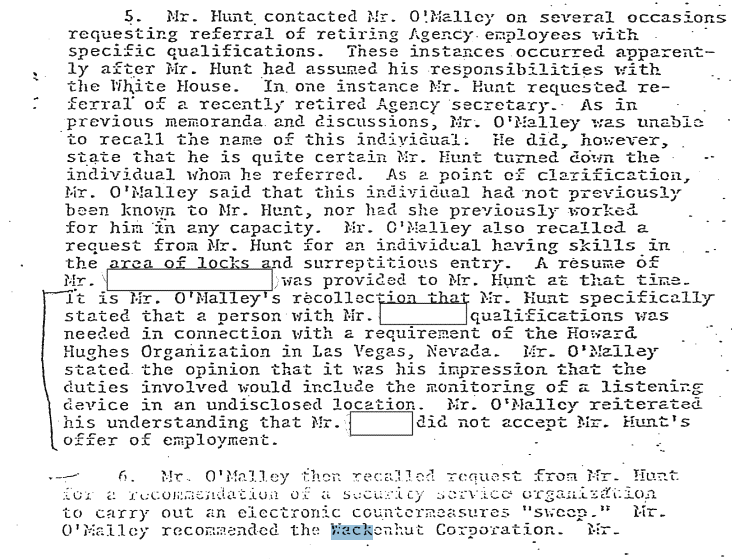
In a well-known TV interview (at the 14:15 mark), R.C. Horsch claimed that CIA connections linked the Wackenhut Corporation and former CIA agent Watergate burglar E. Howard Hunt, while Hunt was still an active agency officer.
The short version Raymond “R.C.” Horsch’s employment with the Wackenhut Corporation is unverified and based entirely on his own self-reported claims. No public employment records, corporate documents, or independent witnesses have ever corroborated that he worked there.
One of the example often cited against this claim is Horsch had a documented history of fabricating credentials, using stolen identities, and forging documents. For example, in the 1980s, he lived in New Zealand under the stolen name “Stanley Stokowski” while posing as an American scientist.
The claim is further compromised by his own timeline. Which has Horsch working for Wackenhutt in the 1960s. And it not until the 1980s, when you look at his New Zealand Australian connections, you do find Horsch associating with those who do have solid CIA and CIA mercenary ties. And curiously these folks would also have solid East Coast & LA Mafia connections. Founded in Sydney in 1973 by Australian by Frank Nugan, a mob laywer for the Austrlaian Calabrian mafia (close cousin to the East Coast syndicates ) and former U.S. Green Beret Michael Hand, an unarmed combat specialist in the CIA Phoneix assassination squads in Vietnam, the Nugan Hand Bank would bring down a government and become a buzz word for corruption and clandestine activities at their dirtiest.
The bank notoriously recruited high-ranking retired U.S. military and intelligence officials—including former CIA Director William Colby and Admiral Earl P. Yates. While Australia’s Stewart Royal Commission stopped short of proving the bank was an official CIA front, historians like Alfred W. McCoy and Jeremy Kuzmarov have extensively documented how its personnel overlapped with Southeast Asian covert networks and private security circles. Jeremy Kuzmarov note that operatives, fixers, and representatives linked to the Nugan Hand network—alongside figures tied to private security firms like Wackenhut—operated within the same anti-communist, mercenary, and covert-financing ecosystems spanning Southeast Asia, Central America, and the South Pacific and that certainly fits those with whom Horsch can be directly linked to. Official inquiries—most notably the Stewart Royal Commission—established direct financial links between the Mr. Asia drug syndicate (led by Marty Johnstone and Terry Clark) and Nugan Hand. When Frank Nugan died in 1980, investigators found a briefcase containing a list of prominent Australians alongside suspected drug traffickers using the same process Horsch would describe in regard to his own roles in narco trafficking and manufacturing which can be verified as accurate. Based on his own conviction for those very crimes.
The stamdard narative is Raymond Horsch moved to the South Canterbury region—settling in Clandeboye, near Timaru described by American journalist reading travel blogs and Auckland reporter who just cut and base the orginal news feed as “quiet costal town”. Yet far from being a quiet, Timaru in the 1980s served as a major hub for land and sea transport exports from overseas with a bustling port that served vessels coming and going from from New Zealand (Dunedin -Timaru -Lyttleton-Tauranga-Auckland) and then onto Sydney Melboure, East Asia, [back to Euorpe] on to Phialdelpha, Houston, the Panama Canal, Los Angelos a back to New Zealand an idetikit for the aviation routed Horsch partner Rutherford tried to establish ( counting the CIA as his clients) until politics would push his aside.
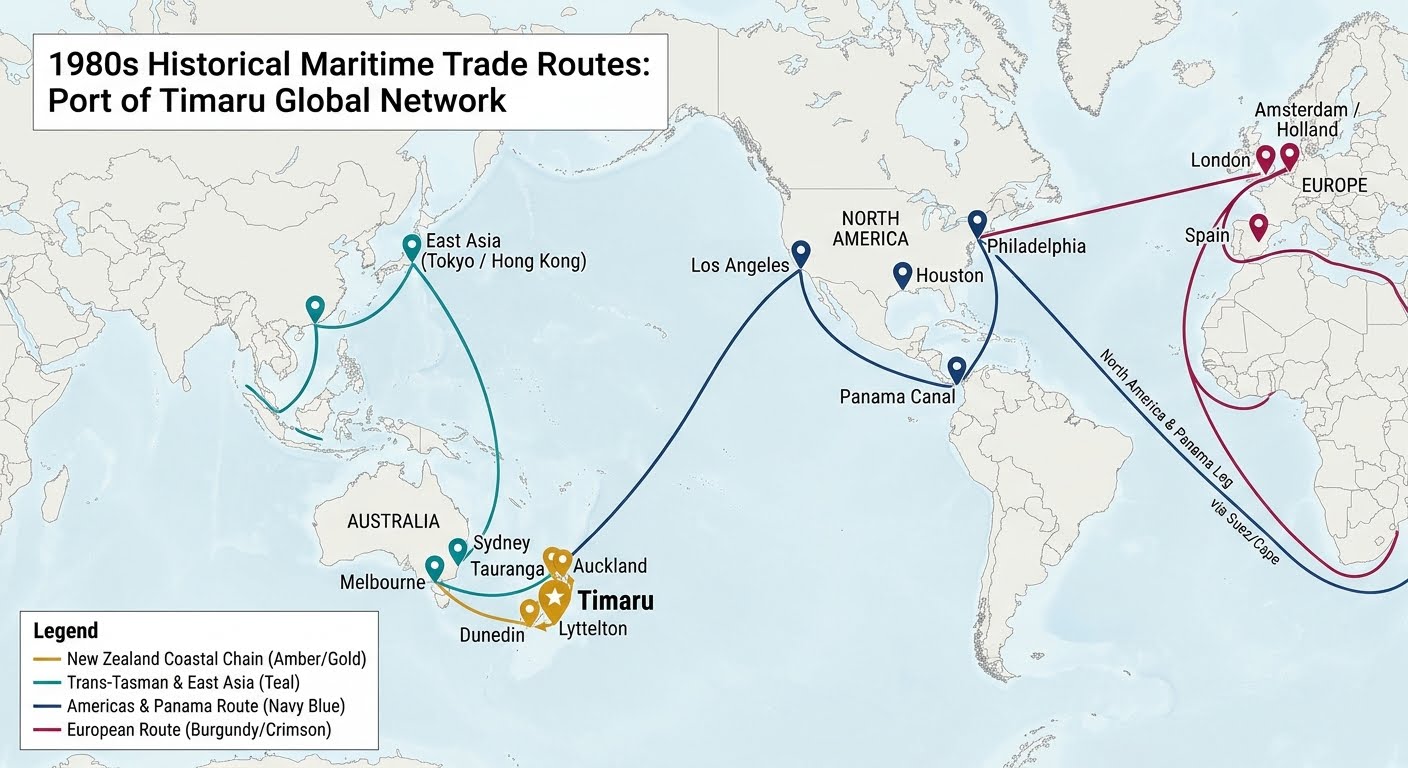
Horsch’s time in Clandeboye—which ended when he fled New Zealand, reportedly leaving behind weapons and drugs he later claimed he only ever used only for profit or sexual control—coincided with a volatile era in Canterbury. During the late 1970s and early 1980s, rival outlaw motorcycle gangs, including the Road Knights and the Devil’s Henchmen, clashed intensely over local distribution routes, while the Mr. Asia syndicate trafficked heroin and cannabis across the Tasman and into international markets. Examining this environment reveals overlaps with the wider networks investigatative reporter Casolaro later described as “The Octopus”.
THE REQUIEM OF DANNYBOY
Investigative journalist Danny Casolaro—who died under disputed circumstances in 1991—popularized the term “The Octopus” to describe a shadowy global network, much as New Zealand journalist Pat Booth had popularized “Mr. Asia” in 1978 when exposing Marty Johnstone and Terry Clark’s drug syndicate. Subsequent inquiries by alegion of reporters, investigators, acaemics, law men, historians and true crime pod casters have all linked Mr. Asia figures to Australia’s collapsed Nugan Hand Bank. The bank is described by equally vast number of investigators, and journalists to laundering Golden Triangle drug money (heroin, marijuana and has) and helped facilitate covert operations for rogue elements born in the deepest part of the US offical clandestine operations. Casolaro argued that the INSLAW/PROMIS software controversy, the collapse of Nugan Hand (1980), and the Iran–Contra affair (mid-1980s) were not isolated scandals, but interconnected “tentacles” of a single, self-sustaining apparatus. While official bodies like Australia’s Stewart Royal Commission confirmed Nugan Hand’s money laundering and ties to drug traffickers, they found no hard evidence proving direct CIA orchestration but the recoccurence of actors with such connections would be acknowledged. In state reports these numerous ad nausau links where usally down played. In media accounts journalist where not so quick dismiss such claims. And most historian to date have accept these connections most certainly existed.
In Casolaro’s account, when Congress restricted official covert funding, this rogue network bypassed oversight by leveraging stolen software, offshore banking, and sovereign tribal land to run its own agenda on behalf of right-wing elements in Washington and the alphabet-soup intelligence agencies of the USA.
Within the framework of Danny Casolaro’s “Octopus” theory, narcotics trafficking was not just an independent criminal enterprise. Instead, it served as the primary, off-the-books financing mechanism for black-market weapons development and covert paramilitary operations Congress was likely to say no to.
Casolaro’s notes—retrieved from his apartment after his death—focused heavily on a documented 1980 joint exotic weapons and a specialist private security venture between the Wackenhut Corporation and the Cabazon Band of Mission Indians in California, which sought to exploit the reservation’s sovereign status to sidestep federal regulations. Yet much of Casolaro’s broader findings depended on sources whose authenticity has been debated ever since—especially those offered up by Michael Riconosciuto, a controversial American programmer and convicted felon.
The main problem here is that Riconosciuto is a terrible source. The man in many ways a duplicate of Raymond Horsch: clearly highly intelligent, yet super manipulative, with a mastery of mixing truth with lies that mirrored Horsch’s own nature. According to biographical accounts, at the age of ten he invented a working telephone system, and at sixteen he was invited to take part in a laser research project at Stanford University. Then, like Horsch, Riconosciuto turned his genius to the dark side and began processing LSD and PCP. In 1973, he was sentenced to two years in prison—a brief sentence attributed either to the modest scale of the case, or to the influence of intelligence agencies eager to recruit him for their own operations on the basis of the ‘Valuble’ intelligence he could provide. Like Horsch that intellignce never resulted in obvious arrests or a reduction in crime. Whatever the case when Riconoscituo was arrested again in 1991 making methamphetamine, the justice system did not show him their usal leniency. Instead this time the government threw the book at him with a 30-year sentence, of which he served 26 years before his release in 2017. Riconosciuto claimed to have invented the fuel-air explosive, played a pivotal role in exposing the Nugan-Hand Bank, helped channel funds to the Contras and socialised with high-ranking intelligence officials, such at CIA boss William Casey (Wackenhutt’s laywer) the CIA man behind the Iran Contra Afair. Like Horsch whats said and what can be proved are two seperate categories.
LIFE WITH OUT MICHAEL (so much simpler).
Yet if we avoid simply repeating Riconosciuto’s claims and focus instead on what others have managed to verify using official records, we can confirm Casolaro was correct when he alleged a partnership between the Cabazon and Wackenhut. The Indian reservation did indeed serve as a testing ground for private weapons development.
Independent of Casolaro’s notes, investigative journalist Jonathan Littman conducted a massive, ground-level investigation into the Cabazon Band of Mission Indians’ business activities. Published in the San Francisco Chronicle in September 1991 under the headline “Tiny California Tribe’s Huge Clout,” Littman’s exposé directly confirmed that the Cabazon-Wackenhut venture had physically staged live weapons demonstrations on the reservation. Littman documented how a small band of Cabazon Indians went from barely scratching out a living to triggering a fierce legal battle over high-stakes bingo and card clubs. His reporting traced how a staggering quarter-billion dollars flowed into a (audit free) reservation where only about 30 tribal members actually lived—a financial and legal juggernaut that culminated in the historic 1987 Supreme Court ruling (California v. Cabazon Band of Mission Indians), paving the way for modern Native American casino gaming across the USA. Liltman wrote the venture had “demonstrated night-vision goggles for military visitors from Central America, met with top US Army officials about developing arms, proposed security measures for a Saudi Arabian palace and solicited proposals for biological weapons”
More controversial is the claim that the hub served as an intelligence-linked narco-money-laundering operation. While courts never legally proved these specific networks were part of an organized crime money trail, the underlying mechanics are well-documented—particularly in light of offshore laundering methods later exposed by the Panama and Paradise Papers.
In the early 1990s, electronic video poker machines became the centerpiece of a major legal battle and federal crackdown on the Cabazon and neighboring Morongo reservations in Southern California. Although the 1987 Supreme Court ruling legalized live card rooms and bingo, tribes and outside promoters quickly introduced hundreds of electronic machines, triggering FBI raids and organized crime prosecutions.
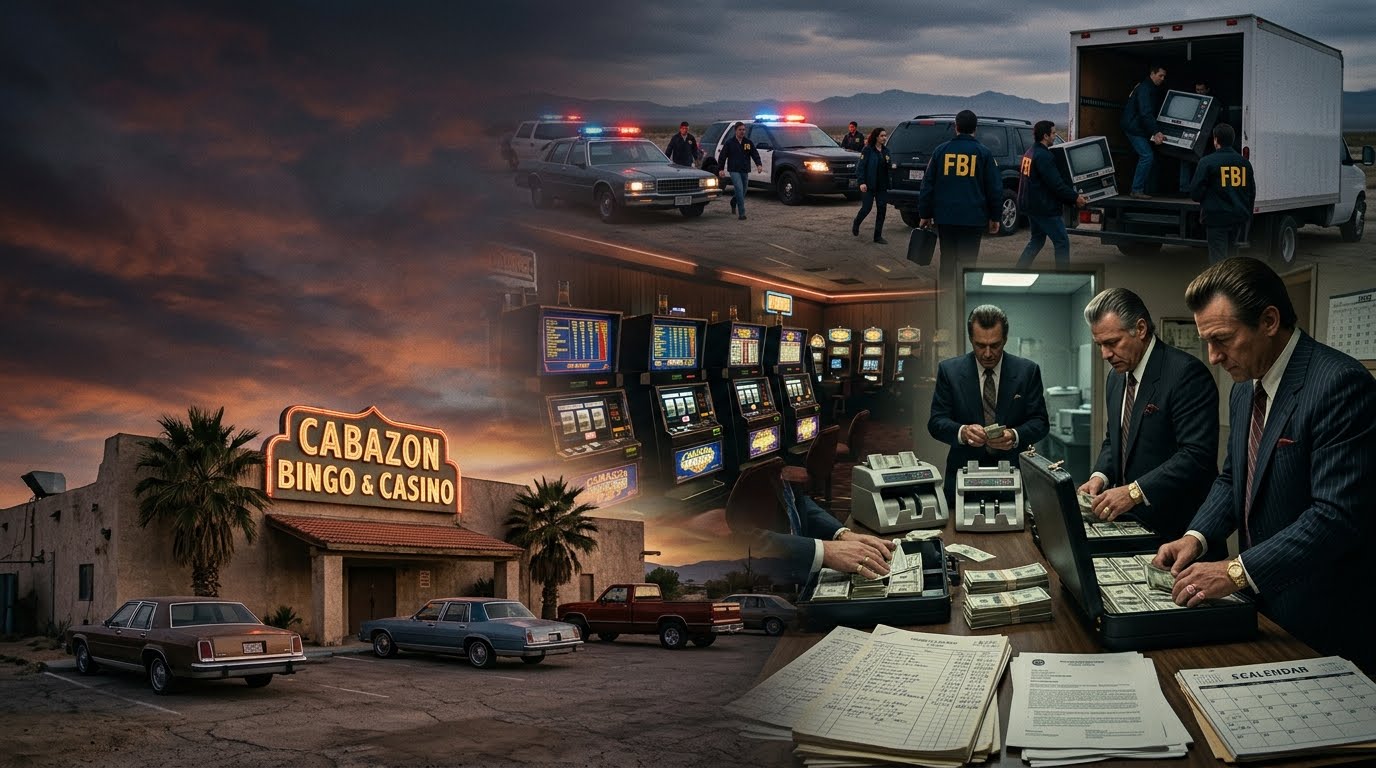
Earlier, a July 1987 FBI wiretap on Eugene Giaquinto—then president of MCA’s home video division—uncovered extensive links between reputed Mafia figures, corporate cash flows, and reservation gaming operations. (Separately, the Philadelphia mob also had documented ties to the adult film industry, including financing filmmaker Raymond “R.C.” Horsch’s 1973 debut.)
Among those intercepted on the 1987 wiretaps was arms dealer and alleged CIA contractor Robert Booth Nichols, a central figure in journalist Danny Casolaro’s “Octopus” investigation into Wackenhut. Nichols helped host weapons demonstrations on Cabazon land for foreign buyers, including Latin American military officials, Saudi royals, and Japanese arms dealers. Heading the California-based Meridian International Logistics (M.I.L.), also known as Meridian Arms which operated extensively across Australia and Japan, Nichols was suspected by federal investigators of using his Hawaii rum operations as a front for international heroin trafficking and money laundering.
In September 1987, Special Agent Thomas Gates of the Los Angeles FBI launched an investigation into Nichols and M.I.L. (documented in Meridian International Logistics, Inc. v. United States, 939 F.2d 740, 9th Cir. 1991). According to court records detailing Gates’s findings, the bureau suspected Nichols of involvement in a $500 million stock fraud linked to MCA, alongside ties to the Gambino crime family and organised crime in Japan—using a network of shell companies registered in Sydney and Pacific Rim island states to move massive blocks of worthless or heavily manipulated stock. In addition beyond the MCA connection, the Cabazon Indian Reservation’s early gambling operations were directly managed and financed by associates of the Los Angeles and Chicago Mafia families during the early 1980s. US Law enforcement identified Zangari (Rocky Big Foot) as a key lieutenant in the Coachella Valley crew of Los Angeles Mafia capo Vincent “Jimmy” Caci, operating under L.A. mob boss Peter Milano.
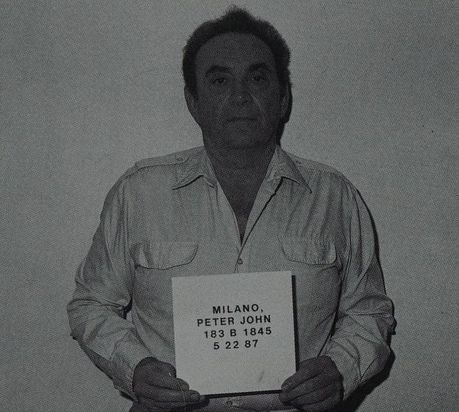
The wiretaps centered on Eugene Giaquinto, president of MCA’s Home Entertainment division (who also sat on MIL board of directors), who used his executive clout to steer lucrative videocassette-packaging contracts to a East Coast New Jersey firm—a conduit to funnel money to Edward Sciandra, the reputed acting boss of Pennsylvania’s Bufalino crime family—while also discussing video poker operations with mob figures supplying the Cazabon Indian Casinos. Conflict flared when Sciandra’s territory and business interests encroached on those of the rival Philadelphia crime family, later ruled by Nicodemo “Little Nicky” Scarfo—the very mob orbit, via Scarfo associate Salvatore La Russa, that financed Raymond Horsch’s early 1970’s pornographic films.
Agressive demands from the Philadelphia and New York crime families for kickbacks from the LA connected Giaquinto ( see as a possible return on their original investment in the Cazabon slot machines – each machine it own laundering machine) eventually forced a mob sit-down. To launder the agreed payoffs back to the East Coast network the West Coast leaned on commercial videocassette packaging contracts and the adult video pipeline—most notably New Jersey VHS box-printing firm North Star Graphics. Around the same time, that home-video world would act as cash conduit for International Video Entertainment (IVE), a company originally built by adult-video mogul Noel Bloom before being taken over by CEO José Menendez— killed in 1989 by his sons, Lyle and Erik, after what they testified was years of sexual abuse, with subsequent accusers also stating Menendez was involved in trafficking*1. The East Coast Adult movie circuit own mafia LA ties are exemplified by the gonzo series Streets of New York, directed by Neville Chambers (aka Neville Chester) the means by which LA Mafia in bed with Wackenhut could be found to be meeting it its obligations to the East Coast.
- MCA Child Stars, actors and musicans, where drugged and trafficked to friends of Menendez – the abuse used to keep childstars quiet or in line, during future contracts deals or as a tool for black mailed.
Crucially, those very 1990s Streets of New York releases also featured Raymond Horsch performing as a porn star. Horsch talks of his ties to the Pennsylvania Italian Mafia and picking up grocery bags of cash at the end of happy family meals involving mountains of pasta and “mama mias.” His insinuation is that this cash was for drugs he made and sold for the families, while never actually clarifying what the payments were for. However, Pennsylvania Crime Commission reports show the Mafia largely avoided direct street-level drug dealing, contracting that work out instead. The usual procedure was that the Italian families took cash for drugs—including the precursors Horsch used to make meth, which the Mafia held a regional monopoly on. Those payments were demanded partly for arranging shipments via their control of the longshore unions, partly as a street tax for the “license” to sell drugs in their territory, and partly to cover laundering drug proceeds through legitimate business fronts that street gangs lacked.
During that timeframe the drugs, according to the 1989 Pennsylvannia Crime Commission, were largely sold by allied Hispanic networks (dominated by Puerto Ricans) and biker street gangs like the Pagans and Warlocks—the exact groups Horsch identified as clients for the marijuana he grew and the meth he cooked. Even though Horsch operated in both worlds, the money flowed in completely opposite directions: in the drug trade, cooks and bikers paid up to the Mafia for protection and precursors, whereas in the adult film industry—where La Cosa Nostra directly bankrolled and controlled distribution from the 1970s to the 1990s, as corroborated by FBI cases involving Wackenhut’s John Philip Nichols and his failed countersuit—the Mafia actually paid out to finance producers. Thus, those post-meal bags of cash almost certainly came from Horsch’s porn movies rather than his drug operation.
In the 2012 motion for a reduced sentence, federal prosecutors stated that Horsch’s intelligence on child prostitution, drug trafficking, and fraud was “credible and reliable,” though too dated to support active investigations or new prosecutions. While the filing did not specify which years those events occurred in, we do know Horsch’s return to his porn career came after his misadventures in New Zealand—where he had fled in 1980 after getting caught making meth for biker gangs.
Those gangs were supplied by Dominican networks, who in turn took their cut after paying a commission to the Italian Mafia families (again according to the Pennsylvania Crime Commission 1989 data), those families held a regional monopoly on the chemical precursors needed to cook the drugs Horch would have need to make meth, then facilitated the laundering process through white-collar hedge fund, real estate, and casino-hotel development associates in downtown New York, Chicago, Atlanta, and Los Angeles.
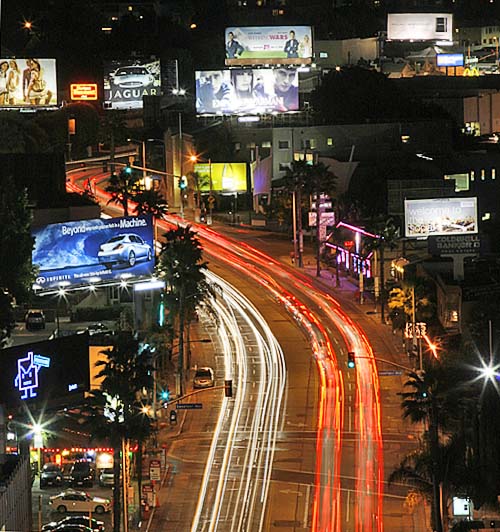
Regardless, Horsch’s 1990s New York adult movies bridged East Coast crime with the West Coast underworld in two ways: first through the money trail described above, and second through the Los Angeles underbelly via his friend and fellow adult filmmaker [Neville] Chesters/ Chambers—a man who doubled as a manager and “fixer” (and drug procurer) for several major rock acts, including The Who and Jimi Hendrix, inside the Laurel Canyon counterculture scene. That network sits squarely in the true-crime and parapolitics history of the Charles Manson murders and the Laurel Canyon narco-pipeline—a pipeline that supplied much of Los Angeles from the 1960s through the 1980s, including the street gangs (the Crips and the Bloods, famously recruited by Michael Jackson for his 1983 “Beat It” video off the Thriller album). The conduit between Laurel Canyon—with its mansions of stars and movie executives—and the rest of the city ran straight through the 22-mile Sunset Boulevard and its nightclubs at the canyon’s southern base, funneling drugs from middle-class suburbs all the way down to Skid Row LA version of Kensginton.
Across the Pacific, the Australian Federal Police (AFP) opened parallel files on Robert Booth Nichols alongside the FBI, investigating whether Meridian International Logistics (M.I.L.) was functioning as a shadow banking and logistics network for Pacific Rim–based organised crime across America, Japan, Australia, and New Zealand.
In a jailhouse confession following Danny Casolaro’s death, Michael Riconosciuto claimed that he and Nichols travelled to Pine Gap—the highly secretive joint U.S.–Australian defence and intelligence facility in Australia’s Northern Territory. However, no public or unclassified records released to date by the Australian Department of Defence, the AFP, or the U.S. Department of Defense confirm that either man ever held security clearance or gained physical access to the base.
So can either Nichols or Riconosciuto even be shown to have visited Australia at that time—or at any time?
In Nichols’ case, the answer is yes.
Nichols had documented business, property, and investigative ties in Australia—specifically in Sydney and New South Wales—with Meridian International Logistics operating there primarily during the 1980s, and Nichols’ personal business and alleged intelligence activities in the country dating back to at least 1972. That 1970s–1980s window overlaps directly with the years Raymond Horsch was operating across Australia and New Zealand, hobnobbing with local figures who actually did have Wackenhut links—even if Horsch was simply riding on their coattails.
By contrast, Michael Riconosciuto has no verified immigration, corporate, or travel records placing him in Australia at any time.
- Following his arrest on methamphetamine charges in March 1991, Riconosciuto gave extensive recorded interviews from prison to private investigator Ted Gunderson and researcher Alan Boyack. On pages 40–41 of the transcript of that 1991 interview, Riconosciuto detailed his alleged trip to Australia with Robert Booth Nichols, the Nugan Hand collapse, and Pine Gap. Guderson and Boyack claims have to date no other source than Riconoscuito a man who like Horsch like to make himself the main character in any stories he tells.
Federal filings and 2008 court records show that Robert Booth Nichols maintained financial and personal ties to Australia across two decades. In Meridian International Logistics, Inc. v. United States (939 F.2d 740), Ninth Circuit records documented that FBI Special Agent Thomas Gates investigated Nichols and his California-based firm, Meridian International Logistics, for suspected organised crime ties—pursuing leads on Nichols’ “potential illegal contacts” in Australia through U.S. legal attachés. Years later, during a December 2008 deposition in which bankruptcy trustees sought to trace Bayou Group fraudster Sam Israel’s missing $10 million, Nichols testified under oath that he held partial interests in properties and land in Queensland, Australia, alongside a residence in Honolulu.
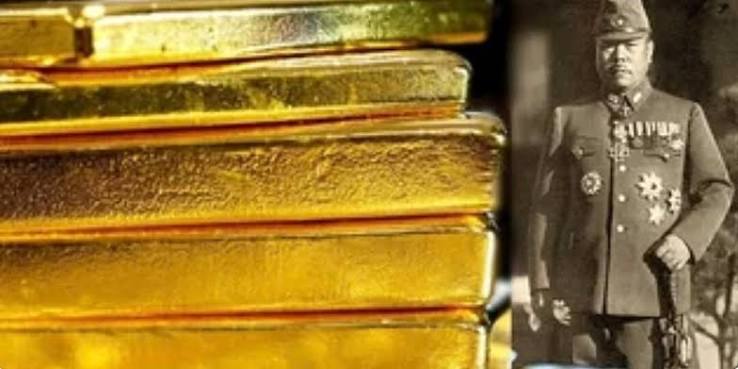
Nichols’ con against Israel centred on claims of covert CIA backing and secret access to lost World War II Japanese plunder (“Yamashita’s gold”) and historical Chinese treasury bonds—intelligence credentials Nichols admitted under oath in 2008 he could not verify. This fraud echoed earlier Cold War financial scandals carried out by Michael Hand and Frank Nugan. The duo sold their investors on a similar premise, claiming Nugan Hand Bank was a conduit for secret CIA and U.S. military funds in Southeast Asia while using retired U.S. military and intelligence brass as window dressing to mask a Ponzi-style check-kiting fraud. The operation was further enabled by an absence of audits or in-depth vetting from mainstream Australian and New Zealand correspondent banks, even though in reality much of what little money the bank held came from arms deals, drug-money laundering, mercenary operations, and illegal gold smuggling across Asia and Africa.
Around the time this was all unfolding, my dad started wearing a gold necklace, and our American winter houseguest at my father’s own dinner table was ‘Frankie’ —a Los Angeles ski executive who turned out to be an FBI agent of Italian descent. I never did find out why Frankie was in New Zealand; Dad would never say. We only got a glimpse of who we were dealing with after my sister spent a summer in LA, where Frankie hooked them up with some great blow. The necklace itself came from Ray Smith, a man my father knew through motoring and skiing circles.
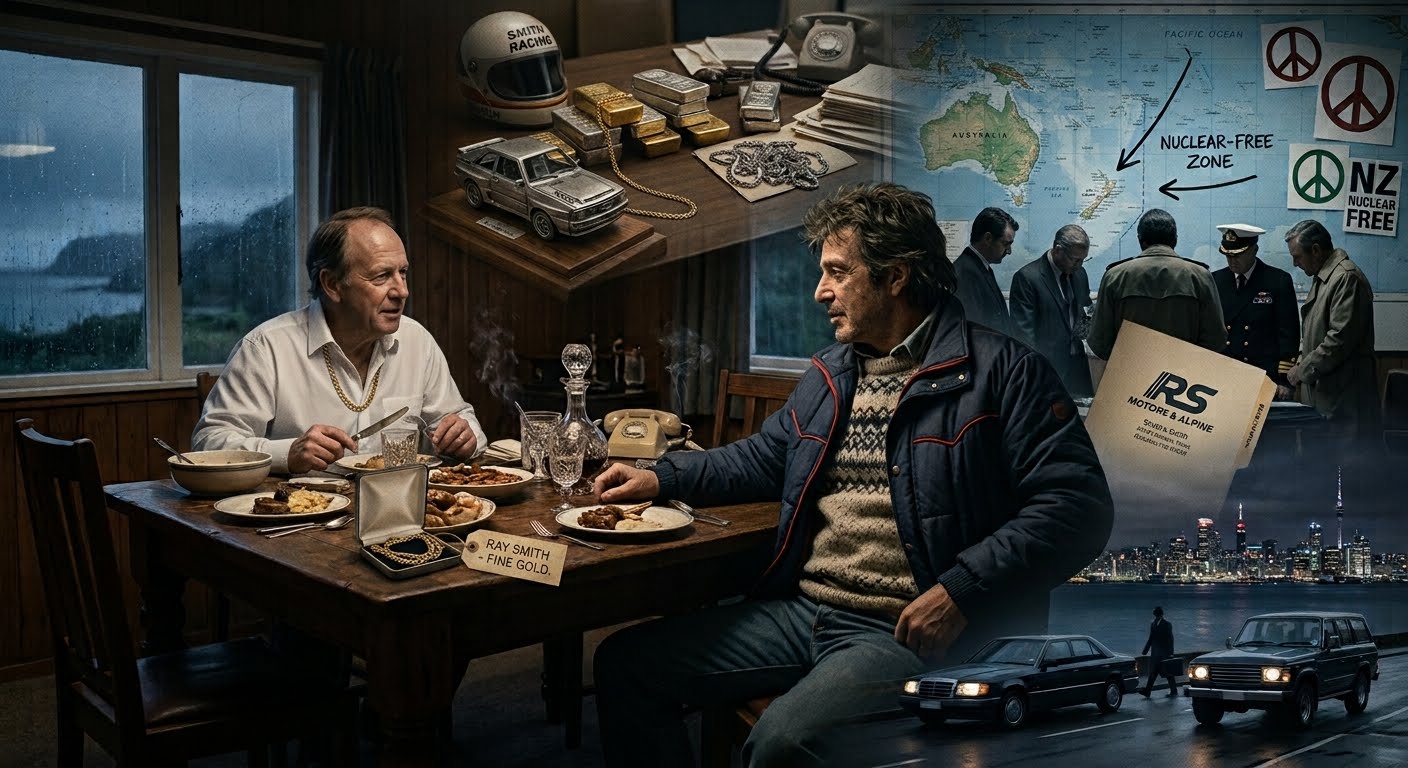
In my book State Secrets, I connect Smith, former CIA Deputy Director Ray Cline, and retired U.S. Navy Rear Admiral Lloyd Vasey through 1980s Cold War intelligence networks and New Zealand financial scandals. Notably, in 1985, both Cline and Vasey were involved in U.S. defence and intelligence efforts to push back against New Zealand’s newly adopted nuclear-free policy. While in New Zealand that year for a conference hosted by his Pacific Forum think tank, affiliated with the World Anti Commnist League, Admiral Vasey allegedly met directly with Smith. These U.S. intelligence-linked strategists overlapped with New Zealand’s loosely regulated 1980s financial sector, seeing local firms like Goldcorp now rubbing shoulders with figures tied to international covert funding and money-laundering networks. To put that in context, Smith cited Stuart Cairns as his chief silver supplier—a business tied directly into Italian silver-chain manufacturing networks through Cairns and Don Abel’s firm, the Italia Chain Company. Cairns and Abel were arrested in a major Auckland cocaine bust involving prominent National Party politician Ray La Varis alongside music and TV industry celebrities, though Cairns and Abel walked away facing only minor personal-use charges.
Major General John Singlaub and J.P. Nichols crossed paths through the 1980s covert-supply network the World Anti-Communist League (WACL). Singlaub’s own mercenary network in Africa was funded by James U. Blanchard III —a co-investor in the New Zealand luxury lodge Wharekauhau alongside a host of right wing firgures icluding former Bank of New Zealand (BNZ) consultant Sir Roger Douglas, who ironically was a Marxist activist in his student years before becoming Finance Minister under David Lange’s Fourth Labour government. Douglas later founding the ACT Party.
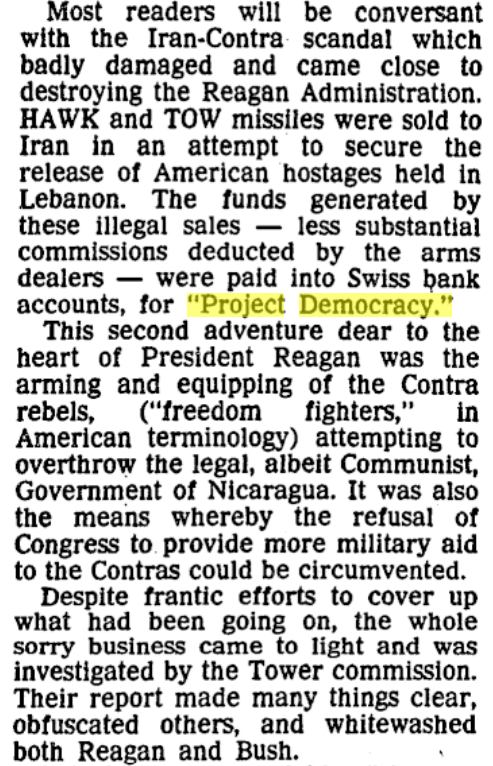
Blanchard had raised money for anti-communist mercenaries being recruited in Africa by selling minted gold coins. Singlaub himself was a former U.S. Army major general, an Office of Strategic Services (OSS) officer, and an early CIA operative who specialized in unconventional warfare during the Cold War. While he commanded covert operations in Vietnam as head of MACV-SOG—parallel to the CIA’s Phoenix Program, in which Nugan Hand Bank co-founder Michael Hand had served as a Green Beret—Singlaub maintained a lower public profile than Phoenix directors like Ted Shackley or William E. Colby, both of whom were also later linked to the bank. After retiring, Singlaub co-founded the Western Goals Foundation and established the U.S. Council for World Freedom, the American chapter of the World Anti-Communist League, becoming heavily involved in private efforts to supply the Contras during the Iran–Contra affair. Those operations included Project Democracy, the network run by Lieutenant Colonel Oliver North that TVNZ reported had ties to figures in Robert Muldoon’s inner circle.
Among them were former Muldoon cabinet ministers Hugh Templeton and Les Gandar, both linked to S.M. Andrews—an arms firm run by a Christ’s College old boy who boasted of his clandestine operations in Asia for the Royal Thai Air Force and the United States. They also formed Austral Air Services Ltd (formed on 29 April 1987_ as a wholly owned subsidiary of S. M. Andrews and Associates Ltd who, “among other company activities”, were the Dornier agent for New Zealand. Its subsidiary, Minerva International Security Consultants, based in Dunedin and Christchurch, used former members of the Rhodesian SAS for security work at mining companies in South Africa. The Project Democracy circle will also included former minister Rob Talbot, a U.S.–New Zealand Business Council associate, who had pitched the Horsch ethanol plant project to Muldoon’s cabinet.
During the Iran-Contra era, Nichols worked out of California’s Cabazon Reservation alongside Wackenhut on ventures tied to supplying weapons and logistics to the Nicaraguan Contras—the exact operation Singlaub helped direct and finance. By the time Nichols met hedge-fund manager Sam Israel in 2004, he had fused Nugan Hand’s CIA banking mystique with Singlaub’s late-1980s Yamashita gold hunt and “Black Gold” lore, convincing Israel that secret WWII gold reserves were being traded on a hidden Federal Reserve shadow market. So while Nichols was undeniably active in Australia, nothing confirms he ever had direct access to the Pine Gap signals facility, which had featured prominently in the Nugan Hand scandal. Following Australian Prime Minister Gough Whitlam’s dismissal by Governor-General Sir John Kerr in November 1975, investigative reports—including those highlighted by Project Censored and TIME—alleged that the CIA used Nugan Hand Bank to funnel money into Australian politics. The suspected goal was to destabilize Whitlam’s Labor government and bankroll the conservative opposition to keep Pine Gap secure—a repeat of the 1973 CIA-backed coup in Chile (recently dramatized in Wild Horse Nine) and a preview of what Singlaub, Casey, the WACL, and the CIA would get up to in El Salvador during the Reagan years. And yet while all that is true neither Nichols or Riconoscituo can ever be shown to have any connections to these stories beyond Nichols and Singlubs shared role in the WACL
In short, Riconosciuto is basically doing a Horsch—repeating what’s in the public record and embelishing it so as to plant himself at the centre of the story.
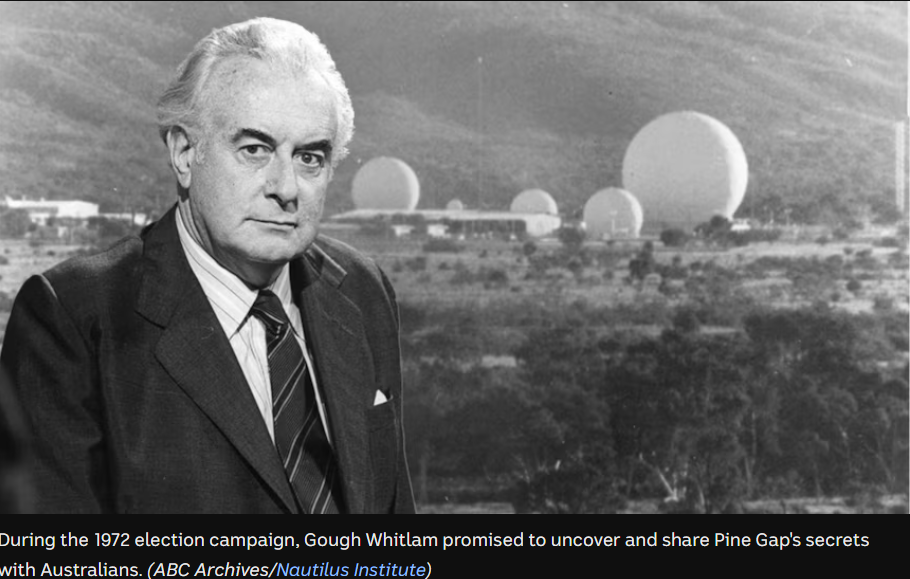
Yet here is where it gets interesting: in the 1980s and 1990s, the primary structural challenge for signals intelligence (SIGINT) intercepted by Pine Gap in the Australian Outback was exfiltration. Moving massive streams of data back to agencies like the NSA or CIA in the United States required bouncing signals off geosynchronous satellites down to major Pacific-facing West Coast ground terminals.
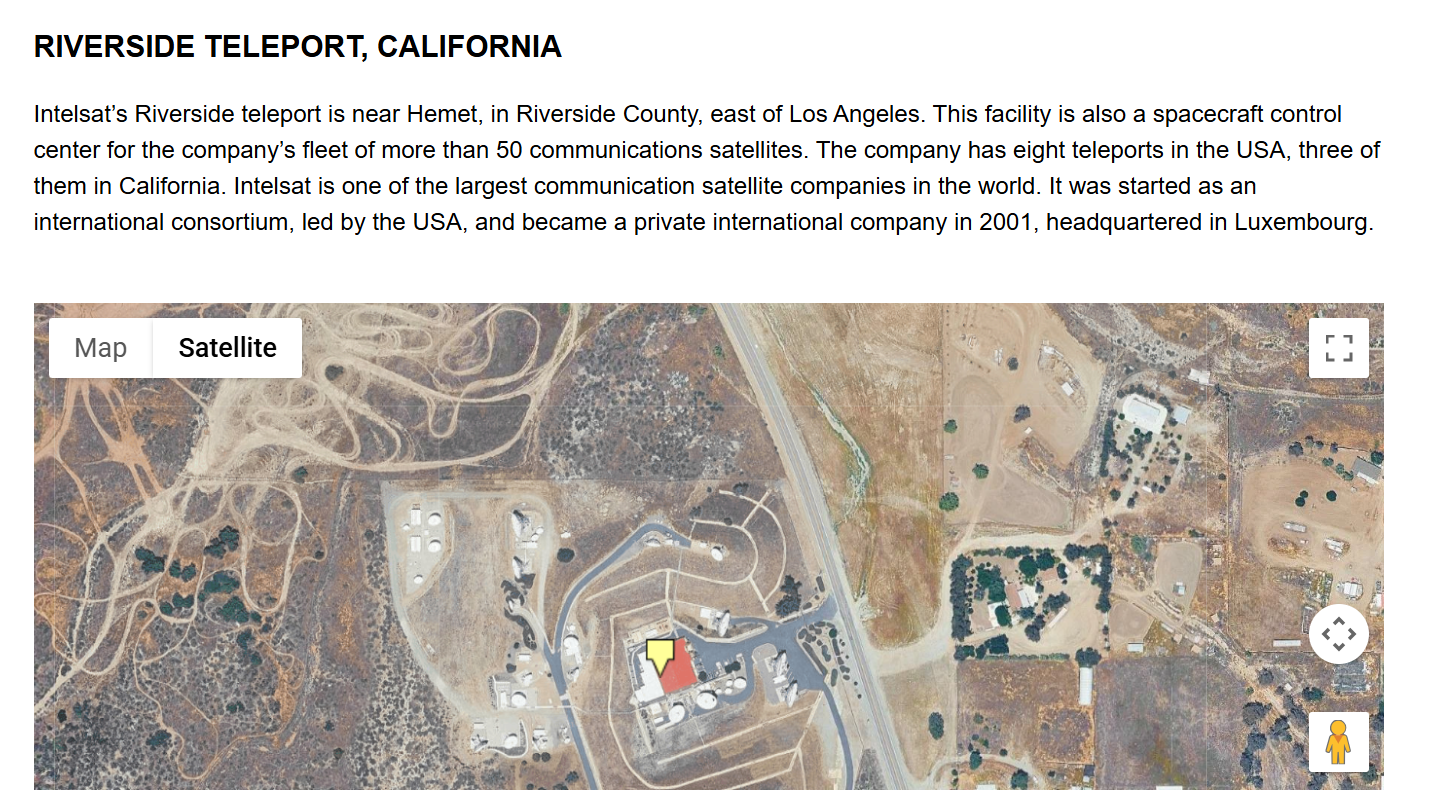
PacAmTel—later known as the Riverside Teleport—operated as one of Southern California’s key commercial-government hybrid satellite gateways. FCC and corporate regulatory filings trace the management of Riverside Teleport Corporation and Pacific America Teleport (PacAmTel LLC) directly to Damon Rutherford—the son of Christchurch lawyer John Gordon Rutherford, Raymond Horsch’s business partner in New Zealand. Originating out of New Zealand, PacAmTel’s founding orbit intersected with the University of Canterbury and its Mt John Observatory in South Canterbury—which housed a U.S. Air Force satellite-tracking station from 1969 to 1982 (and sat right where Horsch used to fly his plane)—as well as nearby Timaru’s subsequent role in developing unmanned weapons systems. Tellingly, the Riverside Teleport sits roughly 30 miles from the Cabazon Reservation. According to investigative records compiled by journalists independent of Casolaro, this precise relay loop—running from Waihopai in New Zealand and Pine Gap in Australia back to the Riverside Teleport in California—formed the operational highway through which modified PROMIS software was allegedly deployed and managed. By placing figures like the Rutherfords in charge of the teleports’ commercial and regulatory infrastructure, intelligence proxies could indeed theoritcally maintain visibility over backdoored data flowing between the United States and its South Pacific allies, well outside standard military oversight channels.
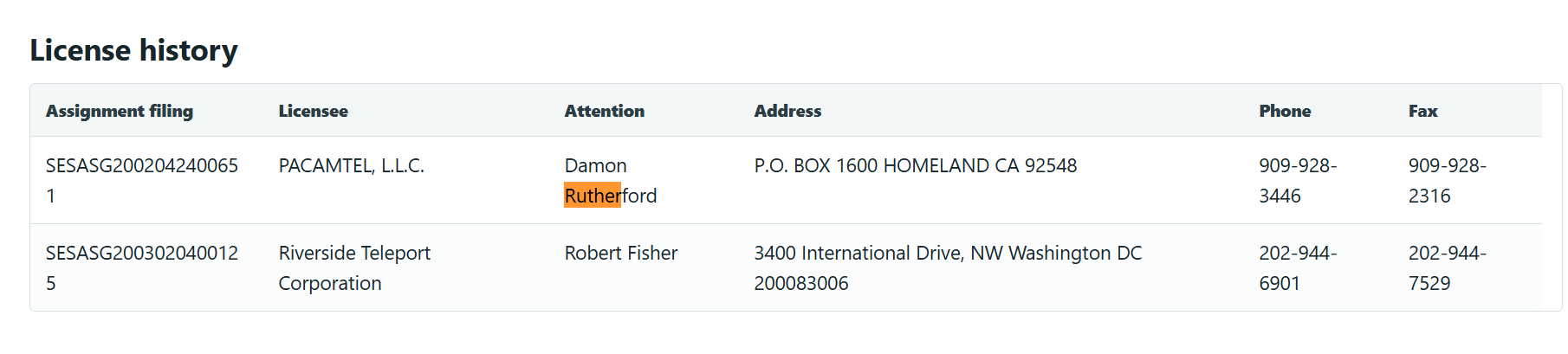
This raises the $64 million question: why did private-sector operators want to monitor backdoored communications between intelligence allies? Under Intelsat’s modernised footprint, the Riverside facility evolved into an active Spacecraft Control Centre managing telemetry, tracking, and commanding (TT&C) for a fleet of communications satellites. That trajectory blurred the line between commercial satellite licensing and early Five Eyes networks, validating the structural map Danny Casolaro had traced years earlier. The 2013 Edward Snowden leaks corroborated this picture, exposing the Joint Defence Facility Pine Gap (codenamed RAINFALL) as a core hub for global surveillance and U.S. military targeting—while revealing how heavy reliance on private contractors created severe security vulnerabilities and deep corporate-intelligence entanglement.
Hard evidence confirms that this private-sector overlap extended directly into covert weapons brokering. To attract foreign buyers looking to bypass congressional bans—particularly Latin narco-dictators, Saudi royals, and Japanese arms dealers—the joint venture used independent airshows and military aerospace roundups as a shopfront. Once vetted, prospective clients were pulled into private meetings or escorted to remote desert strips straddling the California–Nevada border, near Death Valley and the restricted ranges around Area 51 (Groom Lake). There, inside private hangars and out on the flats, they watched live-fire demonstrations of Cabazon-backed hardware straight out of Diamonds Are Forever.
The Bond parallel is apt, and it leads directly to the hardware flying those airshow circuits. Through the late 1970s and 1980s, the BD-5J microjet—famed for its appearance in Octopussy and one of only a few dozen jet-powered models completed from thousands of homebuilt kits—was a star attraction across North America. Yet the aircraft at these demonstrations was not N70CF, the Octopussy jet flown by stunt pilot J.W. “Corkey” Fornof. Instead, it was N177RB—an airframe Raymond Horsch claimed to own.
More precisely, it is the plane that Philadelphia Inquirer researcher Ryan Briggs stated—according to WHYY reporter Peter Crimmins, whom I spoke with in August—Horsch claimed was his. No official FAA record has surfaced to verify Horsch’s ownership, and I have yet to hear back from Briggs to confirm or contradict Crimmins’s account of Horsch’s ownership. The motivation for this seem straight forward an issue of media outlets wanting to mantain control of the story for the purpose of ratings and hits.
Digging deep to retrieve back dated data from archived logs original public footage of Horsch and the Bede 5 appears to have being pulled on the Rialto Report that produced the Crimmin Horsch interview. They also pulled down a shot of Horsch allegedling flying the Bed-5 in the Reno Air Race and while a photo a plane in the sky does not prove Horsch was the pilot the retrieved footage confirms the ‘Horsch’ Bede 5 was N177RB. That seemingly minor aviation detail pulls Horsch squarely back into the Wackenhut story—alongside the security giant’s CIA ties, its expansion into private prisons, and the fallout from that model on the rise of organised crime across the United States, Australia, and New Zealand. In New Zealand’s case, those exact threads go a long way toward vindicating Casolaro’s money-laundering claims.
Pinning down Horsch’s exact role inside Wackenhut remains a frustrating rabbit hole, yet the exercise reveals how clandestine operations linked to CIA aviation in Southeast Asia converge with New Zealand, Australia, and organised crime interests. The goal here is not to prove Horsch was a CIA asset or working for the Mob. Rather, he serves as a lens to trace how this ecosystem operated—and how it helped produce the real-life “Kensington Effect,” the mutated by-product of “Zombie Neoliberalism,” a protectorate of state capitalism, crony nepotism, and emerging techno-feudal fascism.
However, tracing who actually owned N177RB and its sister airframes in the United States and New Zealand illuminates the little Bond plane’s real role in defence intelligence and military technology.
For it underscores a critical point: whether or not Horsch was ever formally involved in intelligence work, or in Wackenhutt directly, he was unquestionably moving in the kind of circles where that exact world operated. It is also telling that, given how few BD-5s ever actually flew, a disproportionate number ended up in New Zealand—owned and flown by defence-aviation experts and military test pilots connected to ongoing defence aerospace research carried out right on the doorstep of Horsch’s Chemical Technology operation. Defence aerospace work that also adds a another signifigance to the telecommucation investments of Horsch New Zeland partner John Gordon Rutherford.
WILD (RED) HORSES 9
Horsch claimed he bought it from Richard Bach, the author of Jonathan Livingston Seagull. Bach did own a BD-5J—in fact, he owned two, selling both N177RB (the “RB” standing for Richard Bach) and its sister ship N153BD to Red Stevenson of Tulsa, Oklahoma, in the 1970s. George Marshall then acquired N177RB and crashed the aircraft in Merced, California, in September 1979. After being rebuilt, the Bede BD-5J passed through several hands before being sold to Mike Brundage, who was killed when it flamed out and crashed during an emergency landing at Vanderhoof, British Columbia, in Canada. That fragmented chain of custody may explain how Raymond Horsch could theoretically have owned the N177RB airframe—or spare parts from it—during an intermediate window. Photos clearly show him standing beside N177RB in Coors Beer livery, wearing a matching flight suit.
Yet even a cursory look at airshow records shows that plenty of VIPs and visitors allowed to pose beside the single-seat microjet on the tarmac were handed those exact promotional jumpsuits. That did not stop Horsch from printing posters claiming he was a “test pilot” who had flown in air races as an unauthorised participant—another act of fantasy that let Horsch play at being his father, the decorated WWII glider pilot. The timeline also potentially fits: following the September 1979 crash in Merced, the damaged airframe was acquired by Keith Hinshaw and a team of builders, who repaired the jet and flew it themselves through the 1980 season—including at Reno, Nevada. If there is any kernel of truth to Horsch’s claim of flying as an unauthorised competitor, it might have happened during that exact window—after the jet had been physically repaired, yet before it received full FAA accreditation.
Complicating matters further (until I secured archived footage), Bach’s other BD-5J—the sister plane N153BD (tail number “3”), finished in standard white-and-red Bede livery—also passed through Red Stevenson’s hands. Having confirmed Horsch flew N177RB, it’s still worth noting that the N153BD airframe had previously undergone military evaluations by the U.S. Air Force, the U.S. Navy at Patuxent River, Edwards Air Force Base, and French authorities in the 1970s before entering civilian hands. Those micro-jet military roles eventually evolved into simulating cruise missile attacks. Once range stations receive the aircraft’s raw telemetry, ground infrastructure routes that data through terrestrial fiber or military satellite teleports to remote command centers, naval battle groups, and joint evaluation teams. Because real cruise missiles operate in contested electromagnetic environments, this testing also evaluates how well secure military data links maintain target custody under heavy GPS and RF jamming.
In short, the Bede 5 acted as a conceptual forerunner for modern unmanned systems—though distinct from the autonomous low-Earth-orbit spacecraft tested years later just down the road from where Horsch lived in Timaru. Regardless of Horsch’s personal ownership claims, following the trail of N177RB raises broader questions around covert aviation networks, mirroring the documented history of CIA-linked air operations and the alleged arms-for-narcotics pipelines involving contractors like Wackenhut.
Red Stevens—the very man who bought N177RB from Bach—had run away at sixteen to join the U.S. Army Air Corps (serving ten years, including through World War II) and was routinely accused of helping the CIA procure aircraft for covert operations in Southeast Asia during the 1960s and 1970s, as well as Iran-Contra supply networks in the 1980s
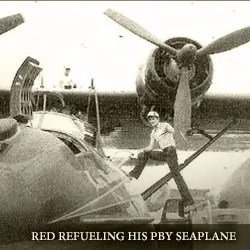
Stevenson himself, it’s worth noting, never denied those claims.
Stevenson’s political ties to the Iran-Contra affair ran through his business partner, U.S. Senator Jim Inhofe—a future ranking member and chair of the Senate Armed Services Committee connected to both Bush administrations—who teamed up with Stevenson in a deal to buy a 54-plane lot of Grumman aircraft in Savannah, Georgia. While Stevenson occasionally joked about his own links to Oliver North’s Iran-Contra network, that connection was mirrored politically when then-Representative Inhofe brought retired Marine Lt. Col. Oliver North to Oklahoma to fundraise for his 1988 re-election campaign.
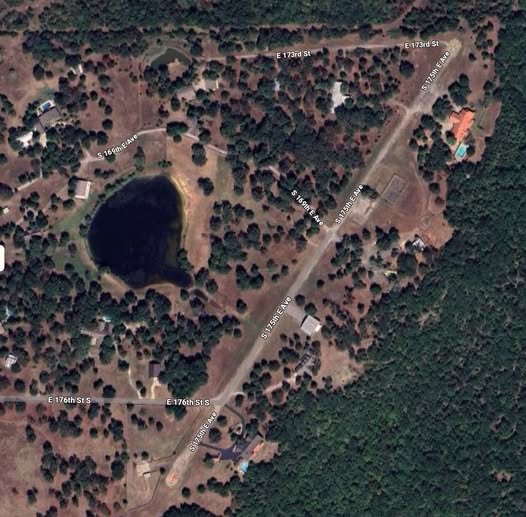
Although the legitimacy of Stevenson’s Contra claims is still debated across aviation forums—with sources split between former neighbours (both endorsing and disputing the stories) and local aviation buffs—the rumours stemmed from frequent reports of heavy military-surplus aircraft landing and taking off from Red’s private strip at odd hours. What is beyond dispute is that Red Stevenson and his company, Red “S” Aircraft Sales, dealt in aircraft with deep CIA histories. Records show he bought and sold specific T-28 Trojans previously operated by Intermountain Aviation—a known CIA proprietary front—to train agency pilots in Marana, Arizona, and for covert deployments overseas.
Red’s own ambitious “fly-in residential subdivision” mirrored the coastal airpark model pioneered on Australia’s Gold Coast in the 1970s and 1980s: developments where former American military pilots who had flown in Laos and Vietnam could buy a home, land on a community airstrip, and taxi directly into a private hangar. That setup echoed entertainer Pat Boone’s sprawling Ocean Shores real estate project north of Byron Bay in New South Wales—a coastal corridor later linked in investigative lore to the Nugan Hand Bank and alleged “black flight” shipments of narcotics and weapons across the Pacific Rim.
Adding to his Iran-Contra mystique, Red claimed a North American T-28 Trojan in his inventory had been given to him directly by Oliver North as a token of appreciation for logistical help on an undisclosed mission. In his self-published 1989 book, Red Says Up, Up and Away, Stevenson also claimed he had flown Cold War missions in the 1960s and 1970s. He even maintained that his private airfield in Leonard, Oklahoma, was built with covert government backing to serve as a secure, off-the-grid staging base for agency aircraft and personnel moving across the United States. Red’s casual attitude toward secrecy is reminiscent of John Malkovich’s role in Wild Horse Nine as an ageing, unfiltered CIA operative—though in Red’s case, the driver appeared to be sheer swagger rather than a fading filter.
His runway certainly possessed unusual features built to facilitate clandestine missions. Records also show his dealership was used to launder aircraft tail numbers, cycling registrations through his facility to obscure military or covert origins. Specific aircraft he sold had originally been delivered to the U.S. military before being routed to South America and assigned to the American Embassy in Lima, Peru—a major regional hub for Cold War intelligence staging, especially during the 1973 CIA-backed coup in Chile that inspired the movie Wild Horse Nine. That intervention was echoed just two years later in Australia, triggered when Prime Minister Gough Whitlam pulled Australian spies out of the Chile operation and threatened to expose the CIA’s secret control of the Pine Gap spy base. Those moves alarmed Washington and allegedly triggered Whitlam’s controversial 1975 dismissal just weeks before the Pine Gap lease expired.
Underscoring those U.S.–Australian intelligence links, other planes Red regularly bought came from an Australian dealer whose aircraft ended up shot down over Angola’s active war zone. The timing overlapped with the exact period retail billionaire Leslie Wexner had Jeffrey Epstein acquire planes formerly operated by Southern Air Transport—a CIA proprietary airline that flew weapons for Iran-Contra alongside hundreds of covert missions inside Angola from 1984 to 1986 (Epstein himself boasted that his original fortune was made in the African arms-for-blood-diamonds trade). Another quirk was the airstrip’s proximity to the Leonard Geophysical Observatory—one of the most sensitive seismic monitoring stations in the world, built on an isolated hill to track earthquakes and underground nuclear tests, and wired with specialized communications links to transmit continuous real-time data.
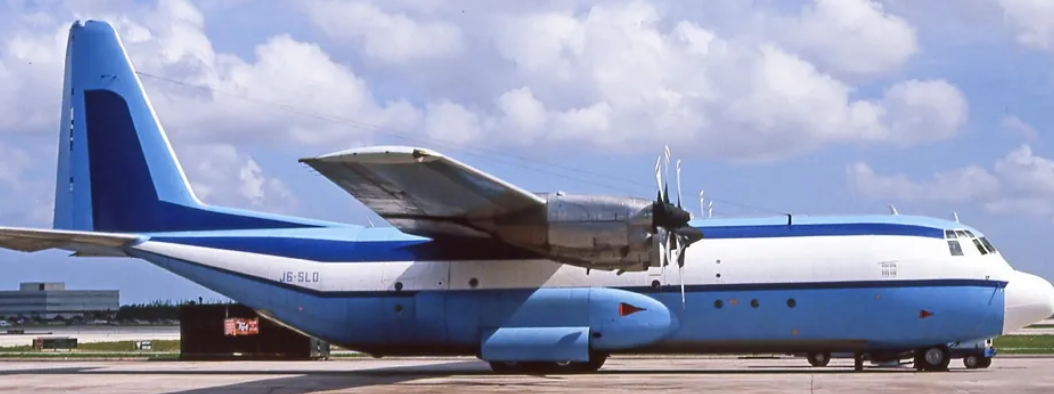
When a dealer cycles through hundreds of warbirds—many of them combat veterans—moves unmarked aircraft through an Oklahoma strip annually, and buys ex-military C-47s with documented CIA histories, claims that he assisted agency operations or Oliver North’s network shift from backyard rumour to plausible reality. Red was a gung-ho Cold Warrior with the contacts, inventory, and exact type of aircraft needed to move cargo without a paper trail.
International aviation logs, Air-Britain production lists, and Geoff Goodall’s aviation histories confirm that Stevenson’s operations intersected directly with Australia and New Zealand through airframes carrying heavy military, political, and covert Southeast Asian legacies. The very military trainer that fueled Stevenson’s stories of Southeast Asian and Central American operations—the North American T-28 Trojan—was later exported to New Zealand as ZK-TGN (formerly N1283G). While this particular airframe served conventionally as a U.S. Navy trainer, the T-28 variant was widely flown out of Udorn Royal Thai Air Force Base to train Laotian and Thai pilots for clandestine Air America missions supported by their Austrlaia and New Zealand . Struck from the U.S. register, ZK-TGN was imported to New Zealand in 2015 by Canterbury warbird owner and Warbirds Over Wānaka display pilot Brian Hall (who also owns a BAC Strikemaster jet, ZK-VPR). In early 2021, ZK-TGN relocated permanently to the South Island, hangared at the Ashburton Aviation Museum—less than an hour’s drive from Timaru’s Richard Pearse Airport and located next to the Starlink ground teleport in Hinds, Canterbury.
As noted, Stevenson damaged N153BD in a takeoff mishap before selling it to John Duncan, while NTSB records show George Marshall piloted N177RB when it suffered a hard landing and crashed short of the runway due to flap problems in Merced, California, on September 14, 1979. Meanwhile, N153BD—rebuilt by former Bede factory foreman Bill Zivko, featured in Sport Aviation (April 1982), and flown at Oshkosh in 1981—operated from 1979 to 1987 on the “Microjet Airshow” circuit, for Republic Airlines, and finally as the first “Bud Light jet” under owner-pilot John Duncan. That aircraft, alongside Duncan and Ed Johnson, served as the secondary jet team for the James Bond film Octopussy alongside Corkey Fornof and Bobby Bishop, performing high-speed aerobatics at West Coast and Nevada events—the exact type of microjet Horsch posed beside in a matching flight suit before blowing the photo up into posters for friends.
While N153BD remained in the United States, a fellow airshow BD-5J—N53EJ—was imported to New Zealand in 1992 (flying on the local register as ZK-JED) and operated by Dave Harris under Micro Aviation Services (MAS) (1985), which listed directors Allan Calder Bremner and Ian Robert Johnson. Johnson was notably linked to Telesystems Equipment Limited (1988) and Trans World Airlines Inc. (1979), alongside local computer software entities such as Simply Smart Bookkeeping Limited in Christchurch. After eventually returning overseas under its N53EJ registration, that specific microjet was tragically destroyed in a fatal crash in Austria on 1 May 2013.
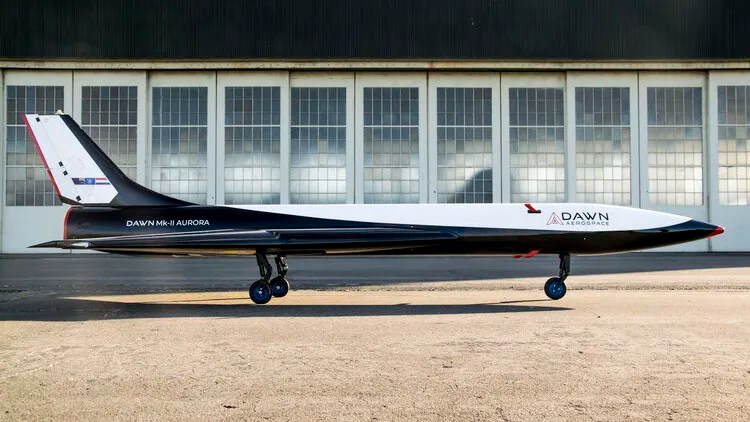
By a strange twist, yet another BD-5J appeared on the lineup at Warbirds Over Wānaka 2026. That microjet, ZK-XBD (not to be confused with N177RB or N153BD), belongs to Canterbury pilot Andrew Vincent (of Rolleston / West Melton), a former RNZAF test pilot who keeps it hangared at Timaru’s Richard Pearse Airport. Coincidentally, that same South Canterbury–North Otago aviation corridor has been used by Dawn Aerospace to flight-test its autonomous, rocket-powered Aurora spaceplane—a dual-use uncrewed platform operating in a similar technological niche to Australia’s militarised MQ-28 Ghost Bat—following Dawn Aerospace’s 2020 memorandum of understanding with the Waitaki District Council. ZK-XBD was originally owned by Aviation Financial Services Ltd.
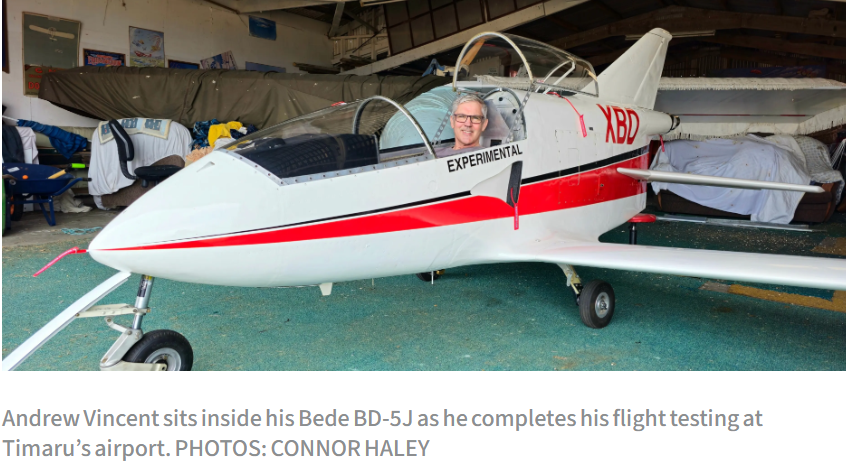
AFS provides specialised business loans and operating leases to help private pilots, commercial operators, and flight schools buy or lease new or used fixed-wing aircraft and helicopters. It also arranges asset funding for high-end agricultural, surveying, and industrial drones. Its industrial address at Tauranga Airport is heavily tied to the Solo Wings group of companies—a prominent New Zealand aviation maintenance, engineering, and sport-aircraft operation that works alongside the New Zealand Defence Force and Airways New Zealand at industry expos to build career pathways for young New Zealanders into civilian flight and military roles, backed by former RNZAF personnel. The same team developed an immersive virtual-reality combat and procedural flight simulator setup known as The Aviator Experience, housed at Hangar 13 (Dakota Way) at the Solo Wings Aviation Centre. Company records for AFS list directors including Bernard Weinstein, Bernard Charles Robertson, Neil Stephen Buchanan, and Neil Upton of Northrop Grumman Park Air Systems—a subsidiary of defence giant Northrop Grumman, whose corporate ancestor, Grumman, once operated the Savannah light-aircraft division from which Harold Dean “Red” Stevenson and late U.S. Senator Jim Inhofe famously bought planes.
| Bernard Charles Robertson | Aviation Radio Limited | Former Corporate Director (1997–2020) of this prominent Rongotai, Wellington-based avionics installation and repair company. He also holds private ownership of an amateur-built Jodel D.11 aircraft (ZK-DYB). |
| Neil Stephen Buchanan | Whitby Air Limited | Sole Director and Shareholder of this Porirua-based private corporate entity, which he has operated continuously since its incorporation in May 1996. |
| Bernard Weinstein | Professional Engineering Services | Operated a long-standing independent professional engineering consultancy out of his office on Majoribanks Street, Wellington. He famously used his private aircraft commercially to fly directly to engineering clients across New Zealand. |
| Neil Upton | Northrop Grumman Park Air Systems Australia – Park Air is the world’s leading provider of VHF and UHF ground-to-air communication solutions, both for civil and defence applications. | Served internationally as a Technical Director for this global communication company, specializing in civil aviation ground-to-air radio infrastructure (separately from his hobbyist leadership at the Kapiti Aeromodellers Club). |
Another early New Zealand BD-5 airframe, ZK-ZIP (originally allotted ZK-DYM), was built in Auckland by David Frederick Charles Rose (associated with Outlook Design Limited) and made aviation history at Ardmore in 1982 as the first Bede BD-5 to fly in the Southern Hemisphere. Rose was a former RNZAF Avionics Flight Sergeant who served across several operational units—explicitly No. 3, No. 5, No. 40, and No. 41 Squadrons—before concluding his two decades of active service at RNZAF Base Whenuapai in 1993. Following his retirement from the Air Force, his specialised military communications and electronics training led directly into a long commercial career in marine and aviation electronics.
Other New Zealand BD-5 airframes on the civil register trace an equally intriguing institutional footprint.
ZK-DVE (c/n 3886) was registered in 1974 to Hamilton-based New Zealand Aerospace Industries (NZAI)—the predecessor to Pacific Aerospace, the manufacturer later implicated in illegal exports to North Korea—and was closely associated with Ardmore Aerodrome, an airfield constructed during World War II for U.S. forces that maintains its military ties today.
Two further 1974 allocations—ZK-DYO (c/n 3913) to Auckland builder J.L. Williams and ZK-DYP (c/n 3882) to G. Jones of Auckland—both sat squarely inside the Ardmore Aero Club orbit.
Meanwhile, ZK-RMT (c/n 3902) was registered in 1997 as a Bede BD-5B before being exported from New Zealand in 2002, with the ZK-RMT callsign later reissued to an aircraft based at Drury Airfield (Piwakawaka Landings) and flown by Auckland Gliding Club member Russell Thorne—a former NZDF veteran who served in Iraq and Afghanistan between 2010 and 2019 before joining Taranaki Civil Defence Emergency Management.
Another New Zealand airframe, ZK-RWF (c/n AACA/629), was registered in July 1987 to Wellington-based Robert W. Foley—a Procurement Manager at Wellington’s Capital & Coast Health, a New Zealand Cadet Force Squadron Leader, and a former Vice President and President of the International Air Cadet Exchange Association. Foley also had business links to Whanganui property developer and National Party MP Carl Michael Bates, who came under scrutiny in 2025 over 25 undeclared company-owned properties, arguing official advice exempted trust-held assets from disclosure. On 25 September 2025, the Registrar of Pecuniary Interests opened an investigation into Bates’s declaration, though the inquiry later cleared him of breaching Parliament’s rules while flagging trust-asset loopholes for review.
Meanwhile, ZK-TCH (c/n AACA/685)—reserved in May 1984 for Auckland builder Peter Sheehan of the Ardmore Aero Club and later displayed in the restoration hangar at Ardmore’s Warbirds on Parade airshow—is also linked on enthusiast aircraft registries as having passed to Robert Foley. Nearby, ZK-DYL (c/n 3902) was tied to Bede Enterprises of Porirua—operated by Barry Ralston, an international trade facilitator out of Fremantle, Australia—just down the road from Trentham Military Camp in the Hutt Valley.
Even more notable is ZK-ZBD (c/n 3898), a BD-5B built under the I.S.J. Griffin Family Trust by Dr. Ian Griffin—who holds a PhD in astronomy from University College London and serves as Director of Dunedin’s Tūhura Otago Museum. Griffin routinely conducts field research at Mt John Observatory in the Mackenzie Basin—New Zealand’s premier astronomical research station, which carried long-standing ties to U.S. defence satellite-tracking and Star Wars-era space research via the University of Pennsylvania, and drew the attention of both Horsch and his New Zealand business partner John Gordon Rutherford. Griffin works extensively on space-weather events carrying critical security implications for both civilian power grids and military satellite communications.
In public media, Griffin is typically the scientific voice called upon to clarify that mysterious night-sky spirals are sunlight reflecting off vented fuel from foreign rocket stages rather than an active military threat, often commenting alongside Official Information Act responses from the NZDF. Yet he has also spoken candidly about the geopolitical shift in New Zealand’s role in space defence—famously contrasting how New Zealand once agonised over letting American nuclear warships into its ports, while today companies like Rocket Lab routinely launch payloads for the United States Space Force straight from the Māhia Peninsula.
At Mt John, Griffin operates a specialised night-sky camera system called “Auroreye,” recording auroral ripples and “picket fence” formations with high-precision timestamps. That data tasmitted directly to international collaboratorss—aligning northern-hemisphere measurements and satellite telemetry with the Solar Tsunamis Endeavour Programme. Heavily financed by the New Zealand Government through a $15 million Ministry of Business, Innovation and Employment (MBIE) Endeavour Fund grant, the programme models and mitigates extreme space-weather hazards threatening New Zealand’s energy and communications grids—alongside parallel data from the U.S. National Science Foundation (NSF), whose Antarctic logistics operate out of Christchurch’s Operation Deep Freeze. It is the exact dual-use military-scientific pipeline exposed in the 1970s by peace researcher Owen Wilkes when he uncovered Mt John’s ties to U.S. missile-defence tracking—links that persisted well into the 1980s, with military funding camouflaged by a grant to the University of Canterbury’s partner, the University of Pennsylvania.
Solar Tsunamis’ principal investigators—led by University of Otago physicist Professor Craig Rodger—maintain long-standing collaborative ties across Antarctic and high-latitude space-physics networks. On the American side, NSF and U.S. defence funding backs the deep-space radars, upper-atmospheric monitors, and Antarctic magnetometers feeding global baseline datasets alongside NOAA’s GOES space-weather satellites and University of Pennsylvania-linked space-physics programmes. The programme’s newly funded next-generation phase expands beyond power grids into ionospheric disturbances—and because space weather can blind or skew GPS/GNSS Position, Navigation, and Timing (PNT) accuracy, the research sits squarely inside critical defence and aerospace parameters. Its partner network spans the University of Otago, University of Canterbury, Victoria University of Wellington, GNS Science, the British Geological Survey, British Antarctic Survey, Tūhura Otago Museum, MBIE, Transpower, Firstgas, ETH Zurich, NOAA’s Space Weather Prediction Center, Space Weather Canada, and the University of Texas at Arlington.
Tracing the BD-5s that frequently performed at Nellis Air Force Base in Nevada—where Horsch was photographed beside the Octopussy microjet, right next door to Area 51 (Groom Lake), the classified test site guarded by Wackenhut Security roughly 200 miles north-northwest of the Cabazon Reservation—prompted an obvious question: what role had the “Bond” plane itself played in Wackenhut’s weapons demonstrations? As aviation records confirm, defence innovators at the time viewed the tiny microjet as an ideal experimental surrogate for high-speed, low-cost cruise missiles, target drones, and remotely piloted vehicles (RPVs, also known as UAVs). Across the internet, claims abound that a variety of exotic weapons were tested at Wackenhut’s Cabazon site. Yet the moment you try to verify those claims without leaning on Danny Casolaro’s account (which ultimately meant relying on Michael Riconosciuto), the trail dissolves into a mix of Casolaro’s notes from Riconosciuto, Riconosciuto’s ever-changing versions after Casolaro’s death, unsubstantiated internet rumours, or AI “hallucinations”—where language models steadfastly tried to sell me the idea that remote drones had been piloted at Wackenhut, only to fail to produce a shred of primary documentation whenever pressed. In the end, the September 1981 weapons demonstration documented by Jonathan Littman remains the only test event that can be 100% verified.
Yet those AI hallucinations still raised an intriguing point about the BD-5’s real role in spy games.

Namely, how in the late 1970s and 1980s, the U.S. military wanted to test automated flight-control systems, remote video-piloting, and early GPS guidance for future drone operations. Computers back then were massive and unreliable: if an unmanned prototype crashed, millions of dollars in hardware were lost, leaving engineers with no data on why it failed. Starting with those 1970s military evaluations—and later formalised into the DoD-certified SMART-1 manned cruise-missile surrogate—the BD-5J allowed a human safety pilot to fly missile profiles and test guidance systems without risking an unrecoverable crash.
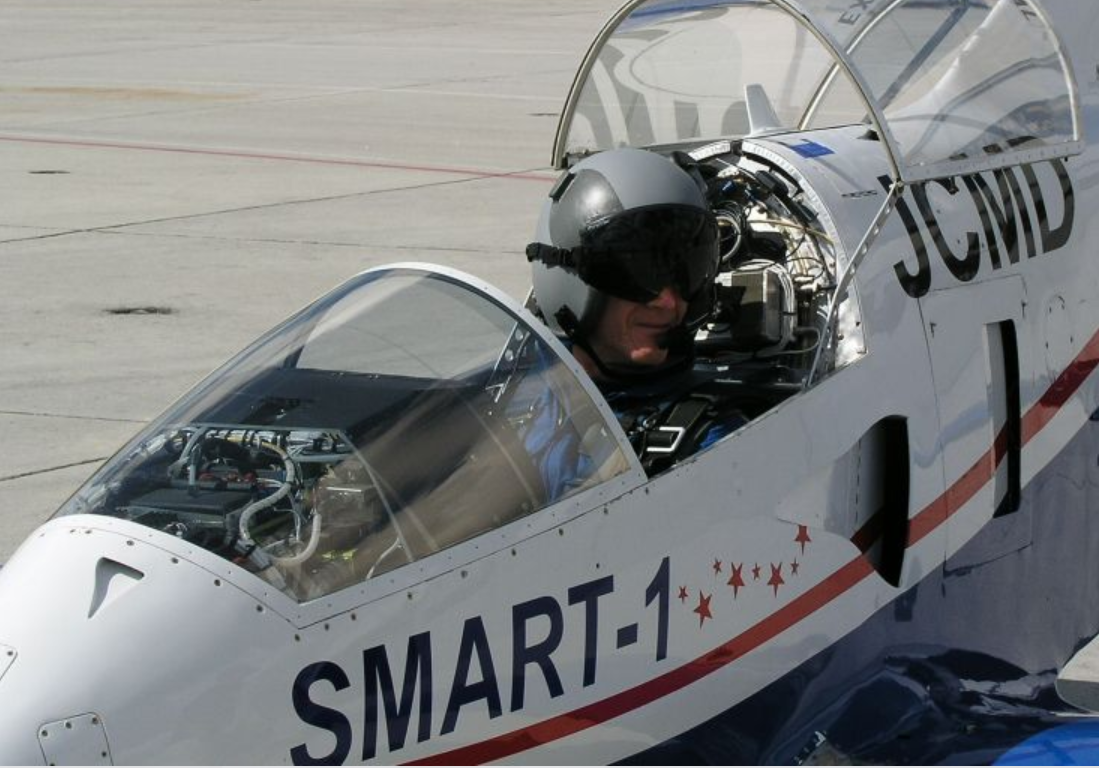
In that sense, the microjet served as a direct technological precursor to modern uncrewed aerospace platforms: from Dawn Aerospace’s autonomous Aurora spaceplane flights out of the Waitaki hub near Mt John, right through to the armed MQ-28 Ghost Bat combat drone trials conducted over Australia. Even two decades before Dawn Aerospace arrived in South Canterbury, a 2000 article titled “Busted” by New Zealand investigative journalist Ian Wishart documented declassified files he unearthed via FOIA detailing early ambitions to develop unmanned aerospace platforms in New Zealand
The aerospace, C3I, and electronic warfare groups Wishart uncovered via U.S. FOIA records are panels of The Technical Cooperation Program (TTCP)—the Five Eyes defence science and technology collaboration linking Australia, Canada, New Zealand, the United Kingdom, and the United States (with New Zealand represented through the NZDF Defence Technology Agency / Defence Science & Technology.
In his Investigate report, Wishart revealed that under the TTCP New Zealand defence officials were actively embedded inside Five Eyes defence-science panels—specifically the Aerospace Systems Group (AER), where a New Zealand representative worked alongside allied counterparts studying military air platforms, unmanned aerial vehicles (UAVs), space-based assets, and low-observable (stealth) orbital combat aircraft concepts undergoing prototype wing testing in the United States and Britain. Wishart further noted New Zealand’s participation in the allied Command, Control, Communications and Information Systems (C3I) group—focused on space and UAV communications—as well as the Electronic Warfare Systems (EWS) group.
Today, valued at NZ$335 million, Dawn Aerospace is a dual-headquartered Dutch–New Zealand company bridging the gap between conventional aviation and vertical rocketry. Its niche spans turnkey, non-toxic satellite propulsion systems and rapidly reusable, uncrewed spaceplanes designed to reach space horizontally from standard runways. The Mk-II Aurora demonstrator—and its upcoming heavy-duty successor, the Mk-III—is essentially a rocket-powered evolution of the BD-5 concept: a restartable rocket engine stuffed inside a sleek, uncrewed airframe. It does not need a multi-million-dollar launchpad, just a standard strip of tarmac. You can house it in a regular hangar, roll it onto almost any airport runway on Earth, blast it to the edge of space, and have it back on the ground and refuelled within four hours. For the military, that kind of operational flexibility is a massive multi-role win.
Running live missile tests to train naval crews or calibrate radar networks is insanely expensive because the target gets destroyed every single time. The Aurora can mimic those exact high-speed, high-altitude threat profiles over and over again for a fraction of the price, and then fly home intact—a capability Dawn Aerospace demonstrated in March 2026 when it launched the Aurora from the Tāwhaki aerospace site near Birdlings Flat so the Royal New Zealand Navy frigate HMNZS Te Kaha and NZDF Defence Science & Technology could track it live on naval radar. If an enemy jams or shoots down a vital military satellite, you are not waiting months to prep a massive vertical rocket. You load a new sensor payload into the Aurora, fly it up to provide immediate high-altitude reconnaissance coverage and plug the gap, and fly it again the same afternoon.
The BD-5J from Octopussy represents the exact same strategic concept as Dawn Aerospace, just forty years older. Microjets were brilliant for tactical military use because they were tiny, cheap, and could hide anywhere—even inside a horse trailer, as the Bond movie famously showed. Dawn Aerospace takes that exact same philosophy and upgrades it for 21st-century warfare: instead of a tiny, piloted 1970s microjet that topped out around 300 mph, they built an autonomous, rocket-powered spaceplane capable of blasting past Mach 1—and scaling past Mach 3.5 with the Mk-III. While the Mk-II demonstrator is compact enough to carry miniaturized intelligence gear, the full-scale Mk-III adds modular payload bays built to haul heavier military sensors and reconnaissance hardware straight to the edge of space. It is the ultimate evolution of the horse-trailer gimmick—turning a neat Cold War tactical trick into a high-speed, uncrewed space asset that can deploy anywhere on Earth without warning. And if you are after clandestine—meaning secret, stealthy, “black ops” style missions focused on gathering or intercepting intelligence—the Aurora is a natural fit, turning any ordinary strip of local tarmac into a covert, rapidly deployable aerospace base. That capability matches descriptions from locals near the Tekapo Military Training Area by Mt John—a facility also used to train New Zealand, U.S., and U.K. special forces in mountain warfare.
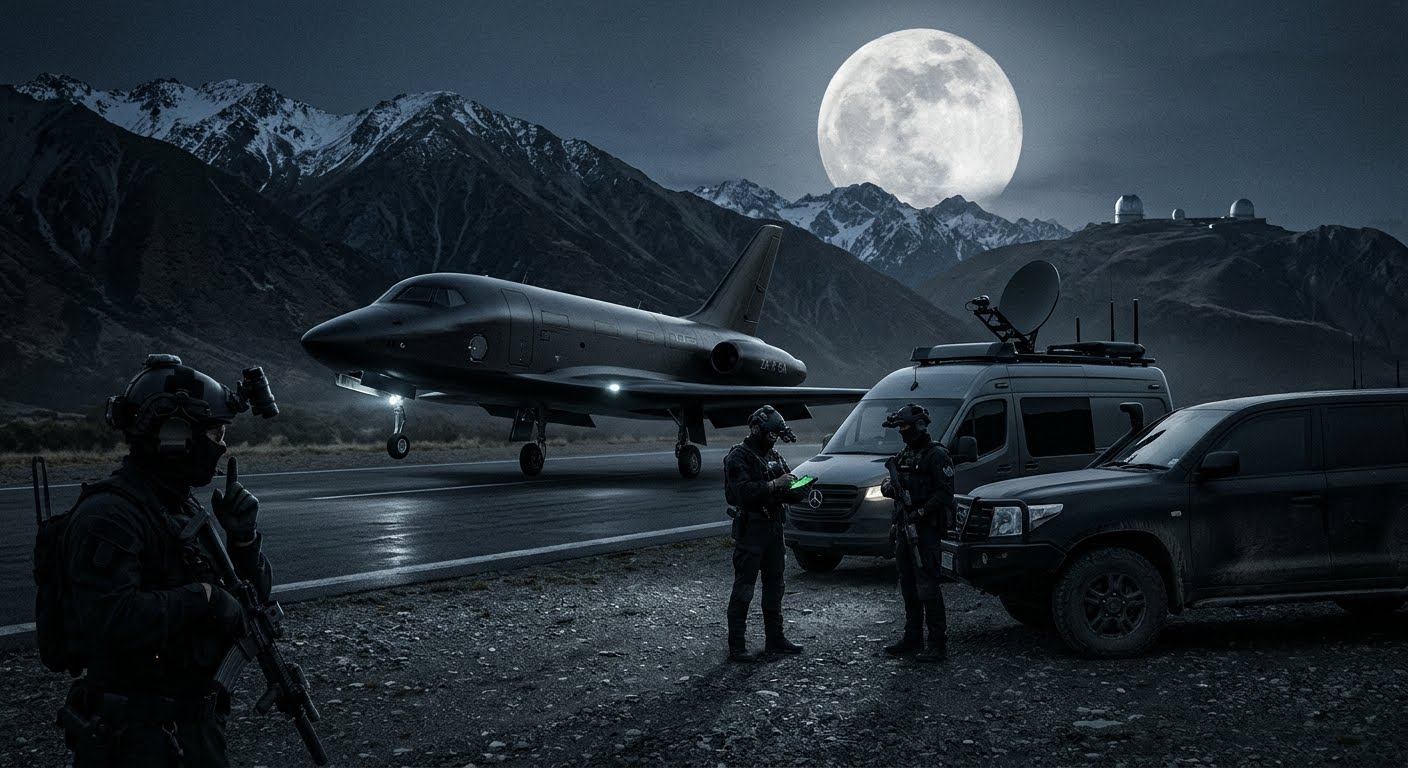
While it evolutionary advanced cousin the Australian Ghost Bat makes ther sci-fi possibility of a squadron of full autonomous armed UAV flying into battle with a single mobile air command.
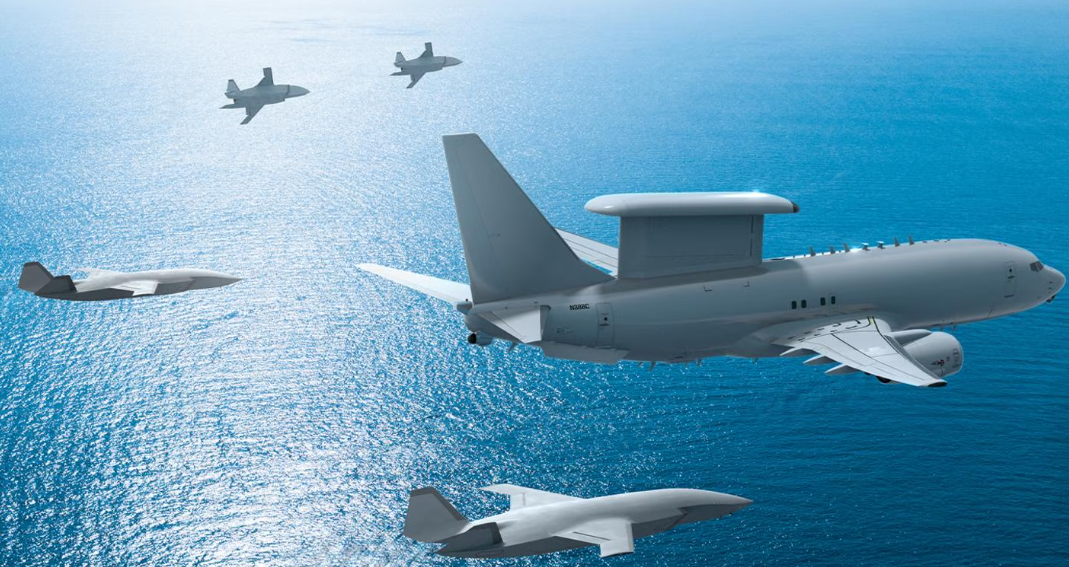
Directors of Dawn Aerospace include New Zealand aerospace engineers and entrepreneurs Stefan Powell (CEO) and James Robert Powell (co-founder and Spaceplane Chief Engineer). Its Dutch corporate structure includes Tobias Knop Beheer B.V. and Jeroen Wink Beheer B.V. (both Delft University of Technology alumni), alongside InnovationQuarter B.V.—the regional economic development agency for South Holland (Zuid-Holland)—and Dutch private holding companies G.L.E. Monna Beheer B.V., C. in ‘t Veld Beheer B.V., and S. Engelen Beheer B.V. In New Zealand media, Dawn Aerospace is routinely presented to the public as a clean-cut, private New Zealand–Dutch civilian venture, yet the reality behind its cap table is far more complex.
For starters, outside New Zealand the firm markets itself as having “over 130 staff across offices in the Netherlands, France, New Zealand, and the United States” (a figure that has since grown past 150 following its German expansion). Its American investors include:
- Alex Roy: Automotive executive, venture capitalist, Autonocast host, and General Partner at New Industry VC—famed as the “godfather of the Modern Cannonball Run” after setting the 2006 transcontinental U.S. driving record (31 hours and 4 minutes). Roy previously served as Director of Special Operations at self-driving firm Argo AI in Pittsburgh, the exact autonomous-tech ecosystem anchored by Carnegie Mellon University where the U.S. Army established its Artificial Intelligence Innovation Center (AI2C) in 2018.
- Ed and Sarah Baker: Harvard physics-and-chemistry and Stanford MBA alumni; Ed Baker served as Head of International Growth at Facebook and Uber, and together they have angel-invested in startups including Lime, Zwift, Q-State Biosciences, and Change.org.
- Tim Ferriss: Early-stage tech investor (Uber, Facebook, Shopify, Twitter, Duolingo), host of the billion-download Tim Ferriss Show, and founder of the psychedelic-research-focused Saisei Foundation—who has also been invited to lecture at institutions including the CIA.
- U.S. Funds & Entities: Additional American shareholders include Wyoming-registered Toy Stealer Productions LLC, Oregon’s Seven Peaks Ventures, and Silicon Valley’s Shasta Ventures (minutes from Stanford University).
Other backers hail from Germany, Tokyo, and Switzerland, while on the New Zealand side, investigations hit a wall of complicated shell companies that makes tracing every local partner and cash source nearly impossible. Dawn Aerospace’s CEO has stated the spaceplane is involved in “satellite, atmospheric, and biological research.” Even setting aside what “biological” might imply—an echo that inevitably triggers flashbacks to Casolaro’s claims of Wackenhut biological research—hard public milestones show how rapidly the Christchurch-born company has pivoted toward defence. In 2024, New Zealand media reported that Dawn Aerospace had opened initial talks with the U.S. military and NASA over uses for its rocket-powered spaceplane.
By 18 November 2025, Dawn Aerospace was selected to supply its flagship SatDrive propulsion system for the Royal Netherlands Air and Space Force’s PAMI-1 sovereign intelligence mission and established Dawn Aerospace Deutschland GmbH in Germany to integrate directly into Europe’s expanding defence and national-security space sector. On 11 March 2026, the Dawn Aerospace Radar Tracking Experiment (DARTE) saw Dawn launch the suborbital Aurora from the Tāwhaki National Aerospace Centre south of Christchurch—a Crown–Ngāi Tahu joint venture whose early launch-infrastructure partners included Rocket Lab (a firm historically backed by CIA venture arm In-Q-Tel alongside U.S. Navy and Lockheed Martin contracts)—while the Royal New Zealand Navy frigate HMNZS Te Kaha tracked the spaceplane live on its naval surveillance radar, as previously mentioned. As the NZDF noted, the trial was designed to build sovereign aerospace capabilities scalable into allied Five Eyes and NATO research programmes. On 13 October 2026, that trajectory took another major leap when the Oklahoma Space Industry Development Authority (OSIDA), the Oklahoma Department of Aerospace and Aeronautics (ODAA), and state leaders joined Dawn Aerospace to break ground on a new mission control facility and spaceplane hangar at the Oklahoma Air & Space Port—now branded Infinity One Oklahoma Spaceport—in Burns Flat (the former Clinton–Sherman Air Force Base), a site whose original political backers included late U.S. Senate Armed Services Committee chair Jim Inhofe, a longtime champion of Oklahoma’s military installations and aerospace-defence initiatives.
The Horsch connection to the so-called 007 experimental BD-5 aeroplane is important not just because of its links to a fictional spy, or even the weaponised future of the BD-5 and its own ties to Timaru and U.S.-funded New Zealand defence research. Nor is it merely because it once again verified key aspects of Horsch’s own story of flying around the United States visiting airshows—and distributing drugs. It is important because of what happened next.
Because it stood out so starkly, the 007 Horsch plane was quickly spotted by other researchers early on. True-crime podcaster Robbie Wetherington specifically noted it—alongside the telling detail that Horsch had printed up posters of the photo to show off to his friends. Yet with equal speed, the images of Horsch beside the BD-5 appeared to be scrubbed from the open internet just weeks after the story first gained attention. Going back to cross-reference the shots against images of the Octopussy “horse-trailer” plane all I could find (until I went deep digging into aerchives) were copies that had survived solely because overlaid text obscured Horsch’s face itself.
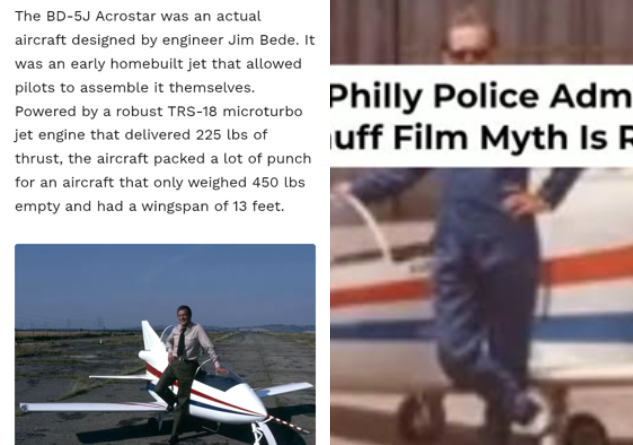

Likewise reports also confirm back in the USA Horsch, post his visit to New Zealand, had owned an aircraft.
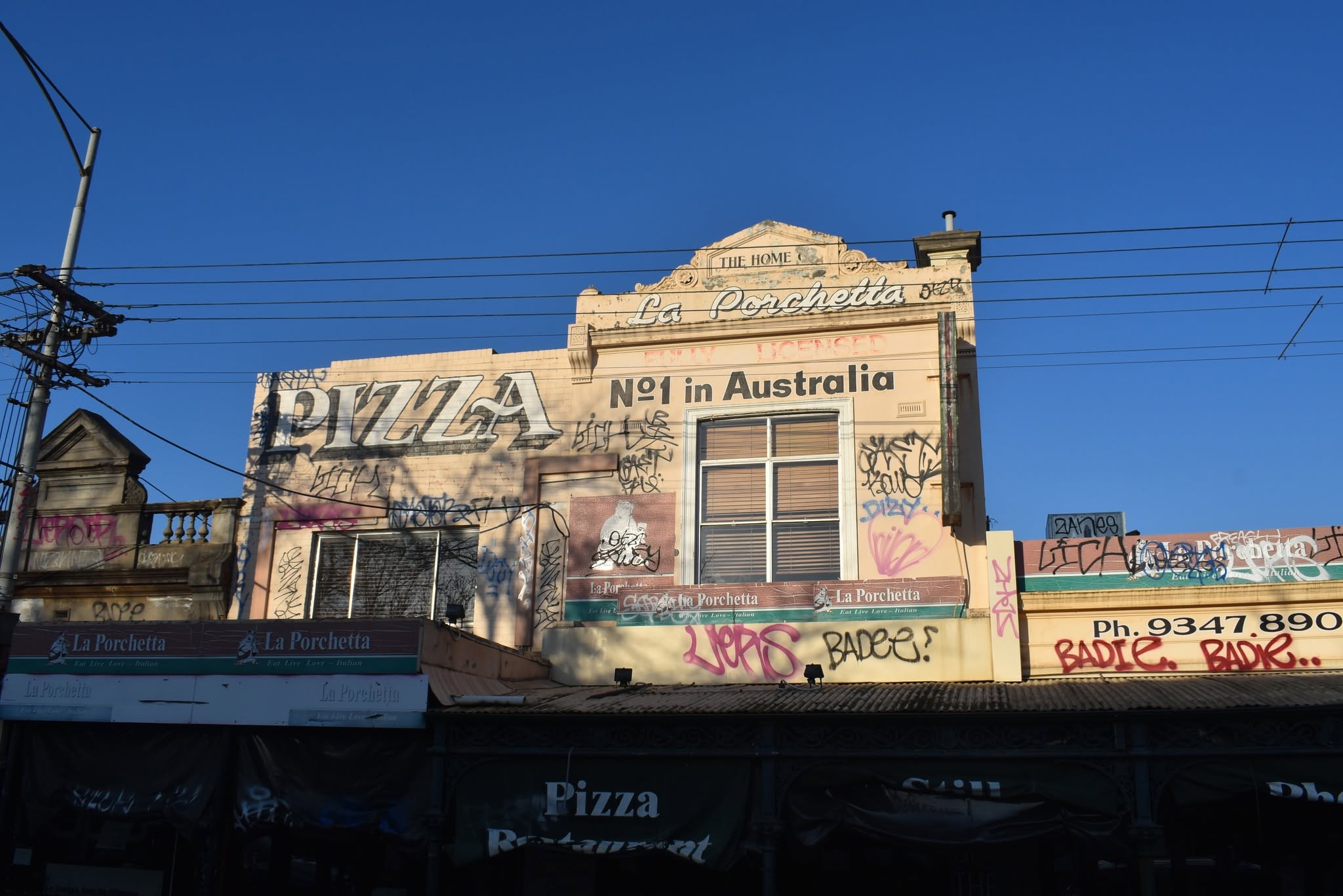
A plane he parked next to his pizzeria according to Jeremy Perry who said the Horsch family owned a pizza shop just outside town, where Eugene Horsch’s father Raymond “R.C.” Horsch also kept a plane near by which he use take them for rides in. Placing it roughly 5 miles (8 km) straight-line—or about 8 miles (13 km) by road—from its nearest general aviation airport, Wings Field (KLOM) in Blue Bell. The BD5 is a single seat design aircraft meaning the plane he used to take Jeremy Perry and Eugene Horsch for rides would have been a different, multi-seat aircraft.
While first-person accounts survive in writing, no images of the aircraft Raymond “R.C.” Horsch actually owned have surfaced, todate, nor has its call sign, make or a general description been mentioned—details that could help identify his U.S. associates. Furthermore, while most commentators focus on the sensational allegations surrounding the Olney “House of Horrors,” few have examined Horsch’s broader life and business dealings outside the property.
For instance, public details surrounding his rumored pizza parlor remain scarce. What has emerged in business records is a separate barbecue venture: Butterworth’s Hickory Pit, registered in September 1991 and opened inside the North Wales Train Station in North Wales, Pennsylvania. The business was named after—and listed as co-owned with—John R. Butterworth, a longtime associate who served as cinematographer and co-director on Horsch’s 1973 adult film, The Erotic Memoirs of a Male Chauvinist Pig. The restaurant was short-lived; Horsch filed for Chapter 13 bankruptcy protection for the business in 1993, and it subsequently closed. Although Butterworth reportedly worked as a local news cameraman for Philadelphia’s KYW-TV, it remains unclear how deeply he was involved in day-to-day operations, or whether Horsch simply used—or forged—his associate’s name on paper.
The suppression of details, in this author’s opinion, is driven by media rivalry in an industry where information control ensures ratings success. Yet, as the fictional character Jack Reacher famously puts it, “In an investigation, details matter.” In any probe, small facts provide critical context. When I investigated the Italian Mob in Melbourne in 2024, for example, I quickly realised that organised crime syndicates do not use pizzerias merely to play into ethnic clichés. Rather, pizzerias are cash-heavy businesses whose takeaway model allows syndicates to launder money—both from customers and through complicit suppliers—while steady foot traffic lets associates come and go without attracting attention
In reality, Horsch’s value to authorities had nothing to do with glamorous espionage and everything to do with survival.
He possessed genuine technical skills in electronics and chemistry, alongside deep ties to Philadelphia’s adult film scene, biker gangs, and mob circles—the very unions and syndicates Wackenhut and the FBI had surveilled when Horsch claimed to have ‘worked’ for the legendary private security out fit.
Those underworld connections made him useful to law enforcement, and he leveraged them relentlessly. As unsealed federal court records confirm, whenever Horsch got busted, he established a clear pattern: rolling over on his criminal associates—feeding prosecutors intelligence on drug trafficking, fraud, and child exploitation—to cut his sentences and keep himself out of jail (Hmm, what NY villain does that remind us of?). Horsch said his career as a “James Bond” lasted until 1965, just after he got doen for dodging the draft and before the 1968 federal Wiretap Act banned private wiretapping. Horsch claiming his career change came because he didn’t want to break the law—considering his history—we can take that statment as an outright falsehood. Horsch also claimed CIA officer E. Howard Hunt was a regular client, though CIA memos show Hunt only sought a one-off security sweep recommendation for Wackenhut and actually turned down direct employment overtures. But as always with Horsch nothing ever simple.
In December 1974, the Secret Service arrested Horsch in Pennsylvania with $180,000 in fake $10 bills (about $1.1 million today) and fake IDs. He received a standard two-year prison sentence. The sentencing fits with sentencing of the era but other charges seems to have been dropped.
Horsch states he worked freelance for Wackenhut—is it possible he continued to do contract work afterwards? Police investigators note Horsch’s skill for guarding his clients, so any information he released as part of plea deals, while accurate, was out of date, relating to past crimes rather than current activities.
Could Horsch be doing the same in his 2014 interview?
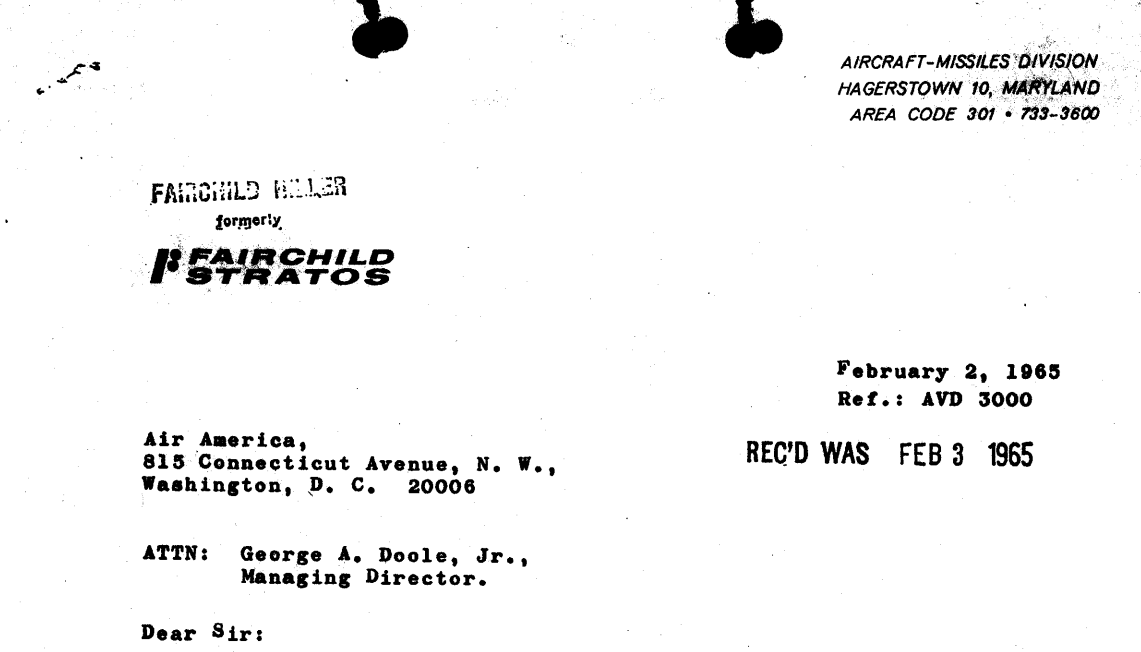
Another point which confirms the claim is at least partly true (as Horsch excelled at blending the two together) is that at 16:15 in his famous 2014 TV interview, Horsch talks of stealing a “Hiller aircraft in Maryland” for Wackenhut (a CIA front) and stealing 30 filing cabinets. The aircraft was wheeled from one side of the airport to the other.
Declassified documents dated 1965 show that the Fairchild Hiller Aircraft-Missiles Division in Hagerstown, Maryland directly filled orders for Air America, a covert passenger and cargo airline secretly owned and operated by the CIA. The planes were to be used in Thailand, Laos, and South Vietnam during the Vietnam War. Those documents were only declassified in the 2000s—what are the chances Horsch would have known such details? [1]
And do you remember those CIA planes shot down in Angola I mentioned earlier? On October 11, 2016, Tepper Aviation, the firm flying the shot-down planes, filed papers changing its name to Gulf Air Group, effective in 2017. In 2019, Gulf Air Group opened the Covington Maintenance Center at Southern Alabama Regional Airport in Andalusia, Alabama. In September 2024, Pallas Aviation, previously incorporated in Texas, filed for incorporation in Florida. The principal address was given as 5486 Fairchild Road, Hangar #7, Crestview, FL, located directly inside the former Fairchild Hiller aircraft manufacturing complex—which is incidentally also the address of Gulf Air Group, a successor to a CIA front whose ownership dates back to 1987. Before that, dating back to the Vietnam War (1957–1975), the Crestview overhaul facility serviced aircraft transferred directly to CIA proprietary airlines like Air America (such as C-123B transports overhauled at Crestview in 1965 before deployment to Laos). Because the campus operated under strict industrial security clearances adjacent to Eglin Air Force Base, sub-assignments of specific hangars to defense agencies or intelligence-linked contractors were not recorded as standard public commercial leases—meaning in all probability, Hangar #7 was controlled by intelligence-linked operators, making Horsch’s story plausible.
Horsch also states, in this segment of the 2014 TV interview, that on Wackenhutt behalf he had bugged the girlfriend of James C. Crumlish Jr., a prominent American politician and judge from Philadelphia who served as the Democratic District Attorney of Philadelphia until he was beaten by his assistant, Arlen Specter—who came to prominence as an assistant counsel to the Warren Commission investigating the 1963 assassination of President John F. Kennedy where he became famous for developing the “single-bullet theory” regarding the assassination of President John F. Kennedy. CIA operative and Watergate burglar E. Howard Hunt became a central figure in JFK assassination conspiracy theories, particularly after Nixon was recorded on the Watergate “Smoking Gun” tape warning that investigating Hunt could “open the whole Bay of Pigs thing”. When Crumlish Jr. ran for a full term as District Attorney in late 1961, his campaign was shadowed by a sweeping city government graft and bribery scandal involving the local Democratic Party political machine. While Crumlish Jr. was not directly indicted himself, he was viewed by critics as a political unknown appointed specifically through his close relationship with the powerful Philadelphia Democratic Party Chairman, Bill Green Jr. The spying was done on behalf of Wackenhut and is currently the subject of a FOIA request by MuckRock, with delays cited due to a need to consult with other agencies, collect material held by other federal agencies, or because of voluminous material kept on the subject—all of which are eyebrow-raisers in their own right.
These also the issue considering the timeline was Horsch relation to the Wackenhut reservations tied to his drug manufacturing? From a strictly legal and historical standpoint, there is zero objective proof that The Wackenhut Corporation, as an entity, was involved in large-scale methamphetamine production. The exceptiom is Michael Riconosciuto who of course claims he was framed. Federal courts and Special Counsel Nicholas J. Bua thoroughly reviewed his case and concluded that Riconosciuto was a highly intelligent, freelance illicit chemist operating a standard, localized criminal enterprise.
Regardless those connection certainly did exist. Again to what extent Horsch embellished his role or is is simply repeated by reporters bloggers and authors opting for the east route (as verses actually checking the claims) is debatable. The time line of the firm he worked for, where he may have come in contact with either entitty, was the 1960’s. Much of what Horsch reported concerning Wackenhutt was in 2014 post the death of Danny Casolaro the man who made Wackenhut underbelly higly famous in the 1990s following his own controversial investigation and alleged sucicide. Horsch was a prolific reader and it not hard to imagine him seeing the name and weaving the details into an interview as he blended oter people adventures into his own legend as he out foxed ‘the man’ like his dear old dad might have done.
And yet, once I began researching this story, I discovered that Wackenhut had an extraordinary presence in both Australia and New Zealand. I also found that Horsch was not the only Wackenhut- and CIA-linked fugitive hiding out in New Zealand—nor was his the only Wackenhut-connected drug network with major ties to cannabis farms operated on private properties in the Timaru and Mackenzie Basin region, not far from the Mt John Observatory that so fascinated Horsch and his New Zealand business partner, John Gordon Rutherford. It was an influence that quietly left a major mark on professional criminal enterprises across both Oceania nations—reshaping the syndicates controlling narcotics trafficking in the region while feeding the wider economic pressures that have plagued New Zealand since the 1980s.
Ever since Muldoon accepted the globalisation model he hoped would fund Think Big and kickstart New Zealand’s economy industrially—a model that instead created a mountain of debt, and after more than 35 years of “free-market” orthodoxy has done the opposite of improving everyday citizens’ way of life—the gap between the haves and the have-nots has only widened. It created a power imbalance that allows the ultra-rich to prey on the vulnerable while stripping away their basic access to healthcare and social justice.
His partner, John Gordon Rutherford, was a Christchurch businessman of the 1980s cut from the same cloth as my old man, where winning was all that counted no matter what the race was: “Had a fuck yet, son? Made a buck yet, son?” He was a man who, much like my old man—dubbed “Conman the Barbarian” by my classmates, obviously repeating what their own parents had said around the dinner table—possessed a flair for cutting corners, attracting dubious investors, and drawing negative press attention over his general approach to business as he dabbled in real estate, computer technology, biofuel, and aviation in New Zealand and abroad.
Many of Rutherford’s ventures appear in themselves to have been little more than fronts for money laundering and white-collar scams, and several would turn out to have direct ties to the U.S. intelligence community.
To this day, Rutherford’s abandoned mansion in Redcliffs, Christchurch, attracts explorers drawn to its layout, complete with panoramic views and secret rooms.
Many of John Gordon Rutherford’s ventures appear in themselves to have been little more than fronts for money laundering and white-collar scams, and several would turn out to have direct ties to the U.S. intelligence community.
To this day, Rutherford’s abandoned mansion in Redcliffs, Christchurch, attracts explorers drawn to its layout, complete with panoramic views and secret rooms.
Meanwhile, the amphibious floatplane Horsch can be proven to have owned, while in New Zealand, still flies today out of Te Anau under Wings & Water, owned by Warbirds Over Wānaka display pilot Ivan Krippner (alongside his wife Kylie) and a member of the New Zealand Aerobatic Club—was initially brought to New Zealand in 1974 by Float Air Picton, a company founded by Russell and Flora Smith, who sold their dairy farm and applied for air-charter and air-taxi rights in early 1974. Krippner regularly appears at Warbirds Over Wānaka—the very same display lineup that featured the Timaru-hangared Bede BD-5J (ZK-XBD), owned by former RNZAF test pilot Andrew Vincent. Today, Krippner’s scenic flights carry passengers directly over major Lord of the Rings filming sites in Fiordland National Park, such as the Waiau River (which stood in for the River Anduin) and the surrounding mountain ranges, operating within the same tightly knit Southern Lakes and Fiordland aviation circuit as the late Robert Johnstone Rutherford—a renowned bush pilot who had flown in the New Zealand Deer Wars, worked for a Queenstown parachute company, and founded the scenic flight operator Glenorchy Air (later flying cast, crew and cargo during filming for The Lord of the Rings trilogy)—a prime example of just how interconnected New Zealand’s aviation scene truly is.

