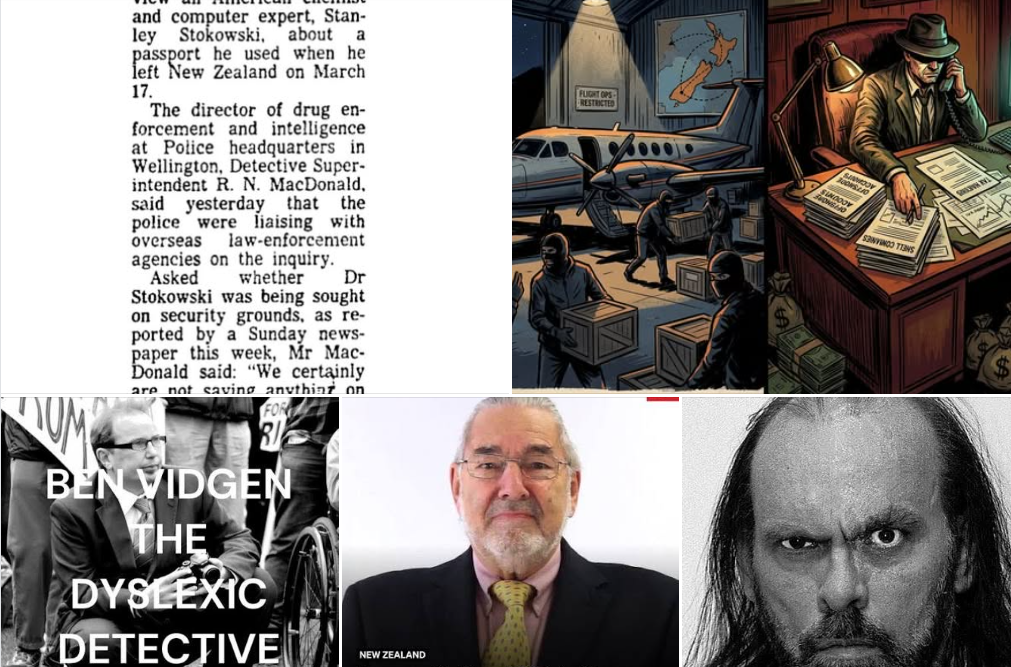
“It’s as easy to learn as your ABC’s. / It’s murder by numbers, one, two, three.” Murder by Numbers Synchoicity The Police.
Part One – Ben. C. Vidgen.
“It’s as easy to learn as your ABC’s. / It’s murder by numbers, one, two, three.” Murder by Numbers Synchronicity The Police.
Introduction Page – IN MY FATHER’S DEN
My dad died last year, and I’m thinking a lot about him tonight—about who and what made him, and what made Raymond C. Horsch, aka Stanley Eugene Horsch. Horsch was a man who liked to make and sell drugs, using his spare time to prey on drug addicts turned prostitutes. He sexually exploited them and filmed their exploitation before eventually graduating to the act of filming their murders. He even displayed these acts, along with filmed autopsies and cremations, at prominent art galleries in New York. Horsch’s snuff films were presented as art. I have covered violence all my life. I understand wars, politics, and power. But this is too close up. So many people seem eager to hear the gory details, indulging in a shared voyeurism with Horsch. They refuse to admit it titillates them. In doing so, they empower Horsch at the expense of his victims.
My father and I had a complex relationship. When he passed away in 2023, I found myself torn between the loss of a person I loved and the reality of a man whose own past had often made it impossible to get close to him, let alone understand his complex nature. As a form of ‘therapy’, I made sure to include him in my current book project, which explores gold, wars, and my family’s own links to these events—a journey spanning two hundred years. It has taken me from the New Zealand goldfields to arms factories in Australia and the bloody machismo of Mexico. It also took me across the United States, where the handgun is the one actor you are almost guaranteed to see on every movie screen or leading news broadcast.
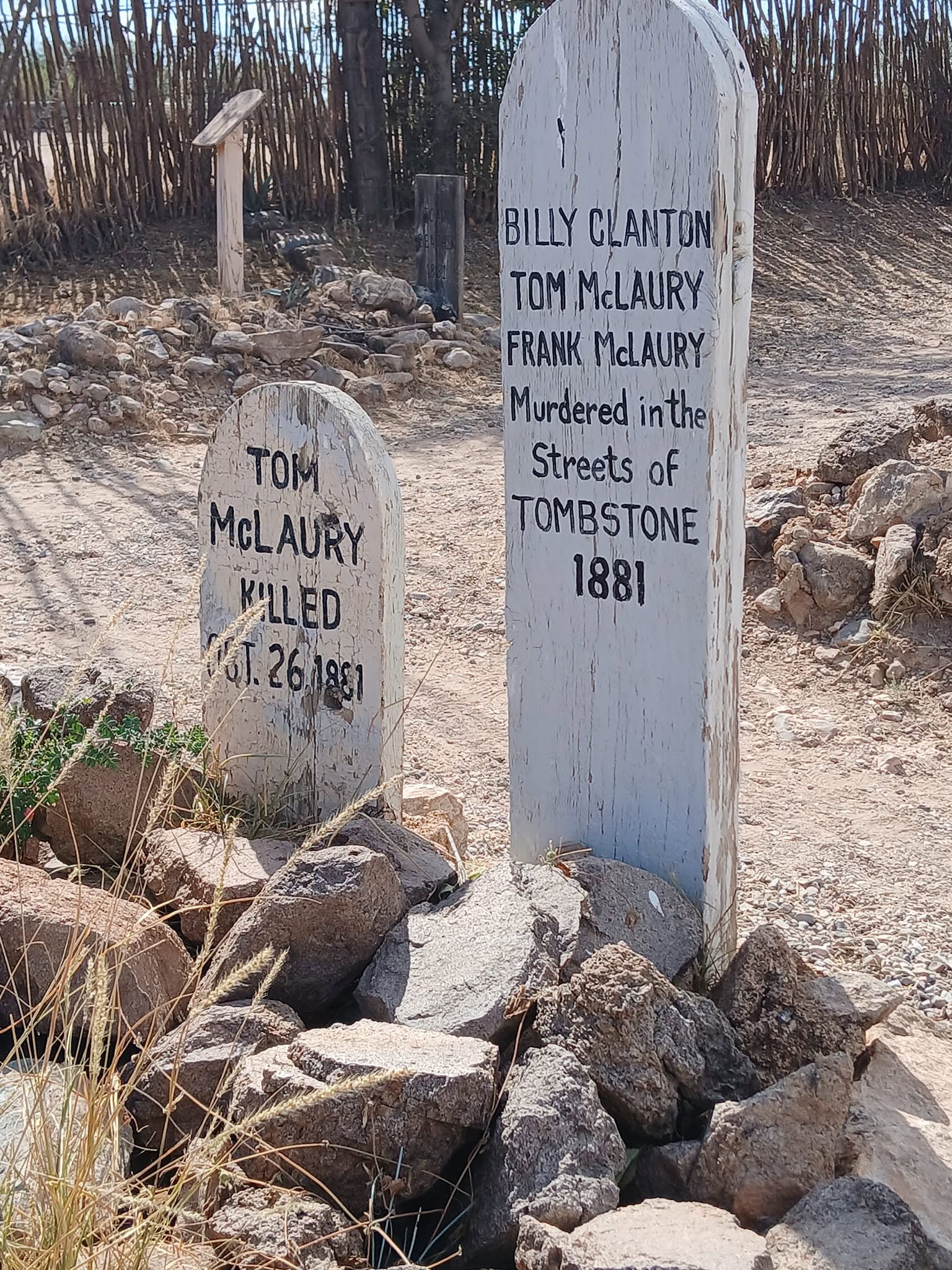
So, of course, I went to Tombstone, home of the cowboy myth that inspired the movies my dad loved so much. Its cemetery reminds you that, in real life, the actors in these larger-than-life dramas did not just get up and walk away once the cameras stopped rolling. Likewise, hearing the 21-gun salute for a fallen veteran at Arlington National Cemetery or visiting the site of 9/11 brings home the quiet tragedy of sudden, violent death.
I witnessed Trump’s election in DC, and I walked past Jeffrey Epstein’s brownstone in the heart of a city built by banks that grew rich on slaves and opium. This is all fodder for a story that, on its surface, is about guns, gold, and the bloody gods of the 1800s gold rushes and their role in the wars of today. Yet, at a deeper level, my book is about the anger and lust of men, and the passing down of violence from father to son. It is the story of generational trauma. A world that was once about need and nurture has turned into a world of want and envy. A world of shared crops and nomadic living became a land of swords, crowns, and coins—a man’s world of power and control. In many ways, our society has come to worship violence. Our entertainment is soaked in it, and it shapes our news.
My dad’s dad committed suicide. Why? We never really talked much about that. The best I could work out is that before the war, Owen was well on his way to becoming a major football hero. Football is our modern form of warrior worship, channeling historic, ritualistic reverence and physical sacrifice into a structured sporting arena. He had asthma, but it was never an issue—well, not until war broke out in 1939.
Then, he was deemed unfit for service. He went from hero to zero in society’s eyes, during an era when you weren’t a real man unless you rushed out to sign up and serve your country. Ashamed that he was now deemed less than a man, Owen stopped taking his medicine, essentially killing himself and leaving his wife a widow with two children to care for. All because, in his eyes, he was no longer viewed as a real man.
The societal view of hero worship is always shaped by the attitudes of the day. I think of my dad growing up in an era of war—of sanctioned, state-sponsored mass murder. I think of the absence of his father, his own sense of betrayal, and the toxic role models the Boomer generation was given for what manhood truly meant according to cultural norms.
I think about my dad a lot when I think about Raymond Horsch. I think about what shaped Horsch, what we expect a man to be, and how violence became not just normalised in our society but glamourised. For all our professed horror over men like Horsch or mass shooters, our screens, feeds, and media constantly strive to make the man with the gun the hero. Even when framed as an anti-hero, he takes centre stage, while the victims are treated as an afterthought—if they are thought of at all.
My question to you, the reader, is simple: what was Horsch’s father like? Why are we all so consumed by what may or may not have happened inside his “House of Horrors” that we fail to ask who made Horsch the man he became? What do those external forces really say about the world we live in? Was Horsch truly the master puppet master the headlines want us to believe, or was he himself simply a cog in a much darker, grander narrative of betrayal and systemic cultural manipulation? If so, what was the ultimate purpose and end goal? Along the way, we are going to look closely at these issues. The underlying point I want you to consider is not whether Horsch was Colonel Mustard murdering the victim in the parlour with a candlestick. Rather, I want you to examine the crime scene itself more than the actual crime.
Some of the points I raise, I can prove beyond a doubt. Others, the status quo will push back against and dismiss as a conspiracy—as the establishment is wont to do. Yet in each case, these connections deserve plausible consideration on the blunt basis that there is no shortage of evidence proving such criminal enterprises exist in our society. What does it say about our world when investigating these issues proves problematic, and when there is a profound reluctance to face the very demons that fuel state-sanctioned violence?
This is the kind of violence that earns medals and transforms killers into heroes—the very icons young boys grow up to worship, led to believe that this is what makes a real man.
When I first read about the Horsch “House of Horrors,” what struck me most was how clearly damaged Eugene Horsch was. The 44-year-old son of the late Raymond “R.C.” Horsch, Eugene was the catalyst for the entire investigation into the household. On June 19, 2026, a park ranger stopped him in Philadelphia. Eugene was found with illegal firearms, drugs, and fraudulent DEA and FBI credentials, accompanied by a distressed woman carrying a fake ID that belonged to a missing person.
This discovery prompted authorities to execute a search warrant on the Chew Avenue home Eugene had shared with his late father. The search unearthed a trove of mysterious chemicals, fake IDs, drugs, a marijuana grow operation, and heavy internal blood stains. Investigators also found a hidden safe containing more than one million digital files, including over 600,000 images, 70,000 videos, and 10,000 pages of written logs and documents. By extracting facial data and cross-referencing files, investigators have identified 58 distinct individuals within the media.
The digital files contain explicit imagery of five women who appear unconscious, severely injured, or dead. To date, this material has directly linked the property to seven missing women, five of whom have been publicly identified:
Nicole Fusaro: Missing since 2018; seen being strangled on camera.
Maribel Fresses / Sanchez: Missing since 2018; depicted lifeless in photos and videos.
Gabrielle Amarando / Miranda: Missing since 2012; depicted lifeless in photos and videos.
Blair Tonzelli: Missing since 2023; her physical ID was being used by the woman found in Eugene Horsch’s car.
Amy McHale: Missing since 2016; the former wife of R.C. Horsch.
Two additional women—one identified but not publicly named, and an unidentified Jane Doe—are also visible in the files.
Before I even began to consider Raymond, I wondered what sort of man his son Eugene had become, and what the elder Horsch must have been like. I suspected the father would turn out to be violent and controlling, and I was betting he was a combat veteran. The fathers of serial killers are often combat veterans. When they are not, they frequently emerge as police officers, guards, or teachers with reputations as extreme disciplinarians. This concept was largely popularized by true-crime historian and author Peter Vronsky in his book Sons of Cain: A History of Serial Killers from the Stone Age to the Present. Though it is not backed by definitive statistical studies, criminologists and biographers have noted that while a father’s military service does not inherently cause someone to become a killer, severe, untreated PTSD can create volatile, abusive, or emotionally vacant environments during a child’s formative years.
My feeling, listening to interviews with childhood friends and Eugene himself, was that at the heart of all this smouldering, psychotic anger lay a rather sad and dreadfully dull story.
Childhood friends and school peers recall Eugene as a “sweet” but deeply embarrassed boy who was forced to work on constant “projects” by his father—a man whom local neighborhood kids literally nicknamed “Satan.” Eugene grew up entirely in the shadow of a career criminal, fugitive, and erotic filmmaker who openly fetishized violence. Eugene would later be characterized by his own struggles with violence and drug abuse, contrasting with Raymond, who claimed he swore off drugs because he hated the lack of control.
It was, ultimately, a sad and dull tragedy.
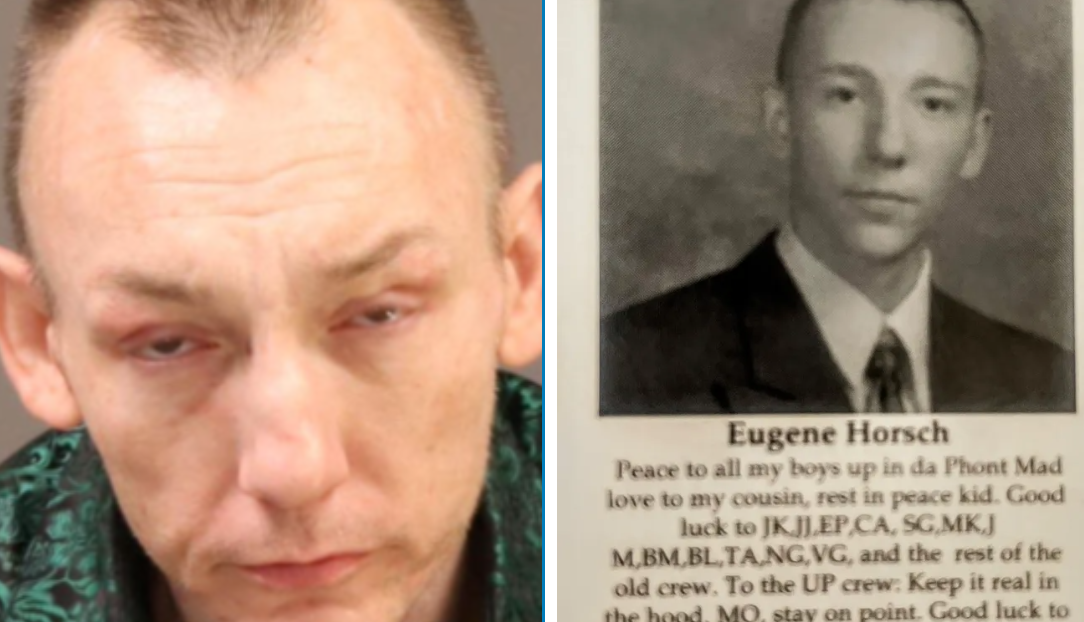
Caption: “Thank You Dad for all you have done for me” Eugene Horsch.
Sad because of the tragic consequences for his victims, and dull because the catalyst was so ordinary and commonplace.
It is the tale of a little boy who never grew out of his childhood state, who, having been broken, just wanted to grow up to be a “real” and whole man. A “man” as the child had come to fantasise the term, based on the experience of his own father’s behaviour—or, equally, an absence of the correct influences at the right time.
Horsch basically had very bad role models around him to show him what being a “real man” was. And I am not just talking about his dad. I am talking about all the dads brought up to believe in the lie of war heroes and medals, the super-soldier. The patriot who can do no wrong when the honour of the nation is at stake.
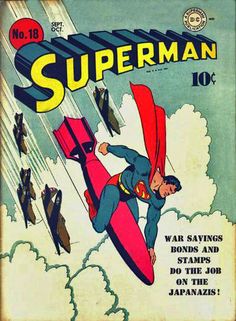
The white-hatted cowboy out of the Westerns my dad and his friends loved so much as children. Every “Injun” or black-hat villain dispatched with a sharp crack and a puff of smoke by Hollywood’s best-known star, the Colt .45, led my dad and his friends to cheer and whoop, rolling Jaffas down the cinema floors. Forced to flee south due to the bombing of the Far North by Japanese bombers, Dad turned to Hollywood, telling the other kids in his class not to worry because he had seen Superman fly over his home. It was a story the other kids in his class believed until older children pointed out that Superman was not real. Yet beneath the silly lie was the profound influence of American pop culture, and the idea that good and evil were easily compartmentalised notions,
The 1940s Hollywood archetype of Superman as an unstoppable, emotionally stoic force of industrial-era power defined the “real man” as one who suppressed his individuality to protect traditional gender roles and American institutions. This idealized vision of American exceptionalism heavily saturated post-war Australian and New Zealand popular culture, ultimately shaping local perceptions of what the United States stood for. Consequently, these cultural narratives influenced ANZAC foreign policy. For many of my father’s generation, America was the ultimate “white hat”—an infallible hero fighting a black-and-white battle against faceless enemies who “had it coming,” where heroism was directly measured by the destruction of the faceless adversary.
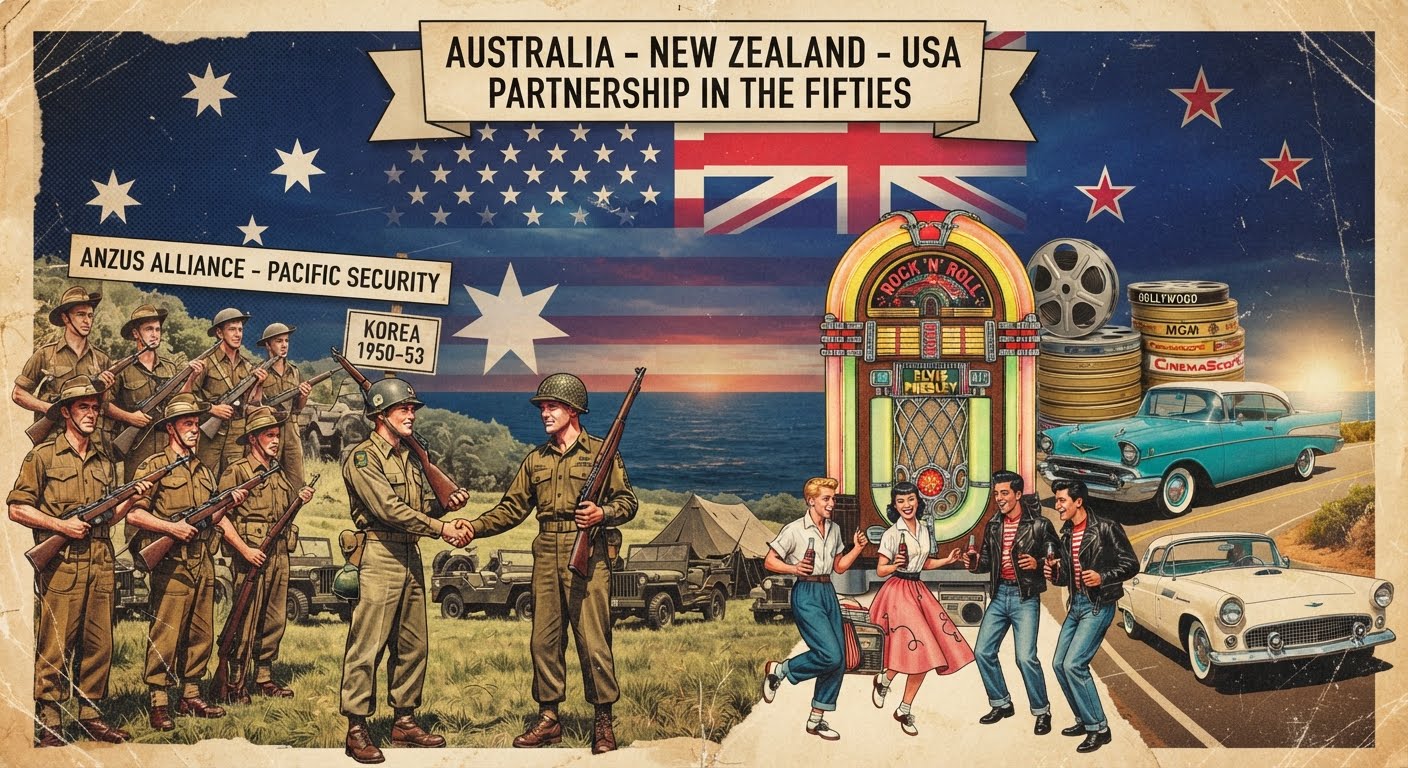
FEAR & SELF-LOATHING – It’s As Easy As Your ABCs
“Murder is not about lust and it’s not about violence. It’s about possession.” Ted Bundy Serial Killer.
And this brings me to another point Horsch got me thinking about. How do the media and post-war pop culture of our age treat the idea of the “natural-born killer”? From day one, three things have pissed me off about the Horsch story:
What is with the obsession with numbers? Mass media and the public salivate over serial killer body counts, almost as if they are willing the tally to rise. When a US production company contacted me about a potential documentary on Horsch, it was taken for granted that the project’s green light depended entirely on how many bodies were chalked up, rather than any genuine insight the story could offer. Ratings are directly tied to the body count.
After three months of investigating Horsch, I can promise you there are endless aspects of this story that should spark genuine curiosity and wonder. Yet, the harsh reality of television production means his background and his time in New Zealand will only get the attention they deserve if the body count is high enough. Only then will executive boards—basing their choices strictly on ratings potential—grant the budget needed to explore the deeper issues.
People are grossed out by Horsch and snuff porn. But the reality is that mass media is just another kind of porn. It’s Fear Porn. People are titillated by violence as much as they are by sex. For all our fake moral outrage, serial killers turn us on. Or, more correctly, we have been programmed by our culture to associate sex with violence.
3. A million images were found at Horsch’s home. “The kids called him the porno man.
And yet, there is an underlying sense that if no actual bodies are found, we will simply forget about those millions of videos. We lose interest in what the rest of the footage has to reveal if it doesn’t feature a corpse. As a result, we fail to ask the truly pertinent questions: Who made these films? Who financed them? What does that say about our the decentisation of society?
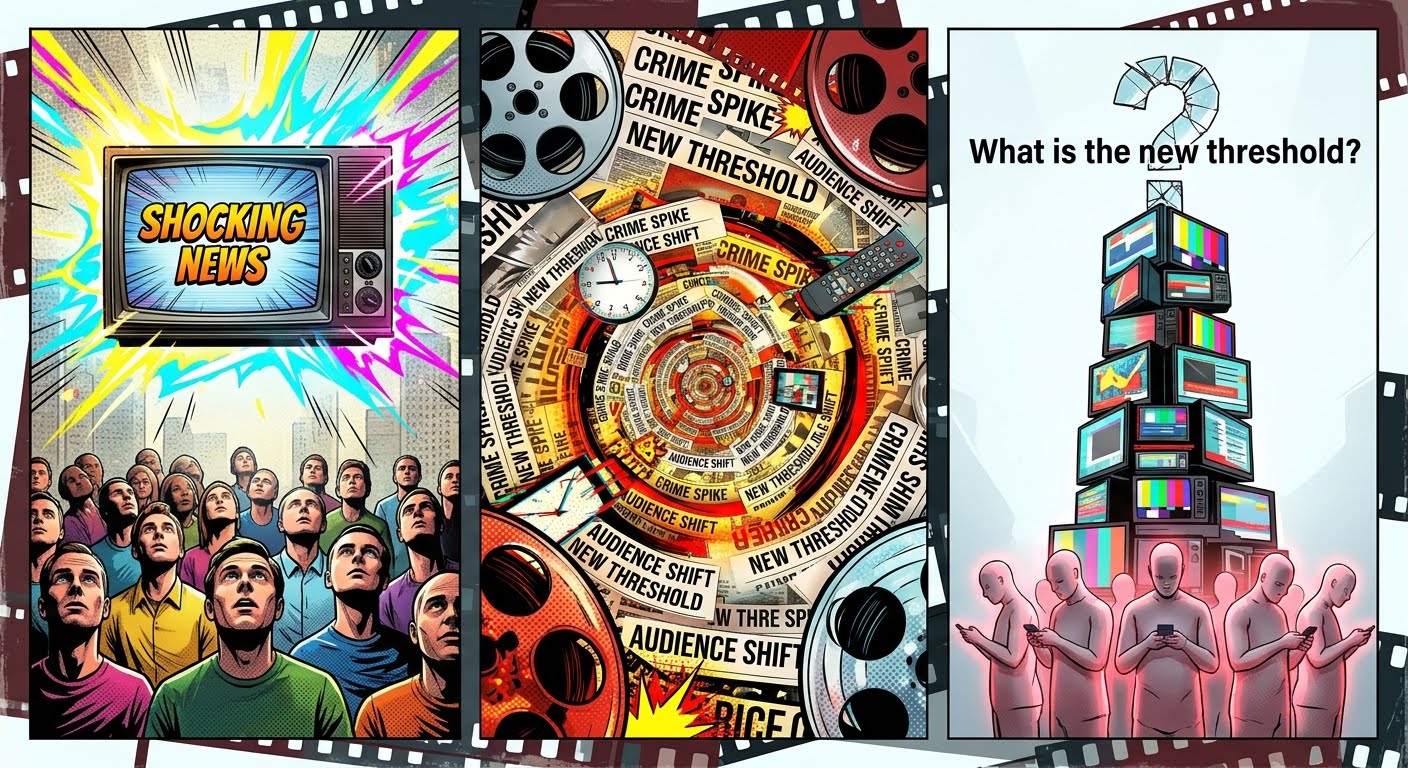
Who, exactly, is producing the “normal” pornography that serves as a gateway to the nastier material now routinely filling our court pages? Content that once would have caused widespread outrage is now accepted as standard. How did we slide from the Playboy magazine’s our fathers left lying around—and the evolution of the non-nude Betty Boop on our paper funny pages—to the material our teenagers are growing up watching today?
Modern content is vastly more graphic than the “girl next door” images of past generations. Yet how many honest conversations do we ever actually have about this devolution of sexuality.
Like many Gen X kids it was my own dad who exposed me to Playboys and Penthouse mags as a kid in the 1980s. His version of the birds and bee lecture without having to give up anything of himself emotionally. And today I have mixed feeling on this approach still. I have always struggle with the idea we can watch as many explosions on TV as we like. And there no sense of prudishness or this is something you should be watching in private. Horsch the ‘artist’ it could be argued was also wrestling with this question – taking it to it extremes.
On the other hand, I kind of wish my father hadn’t. (to be clear I did smoke and I do inhale). The nature of porn is the more you seen the more you need satisfying.
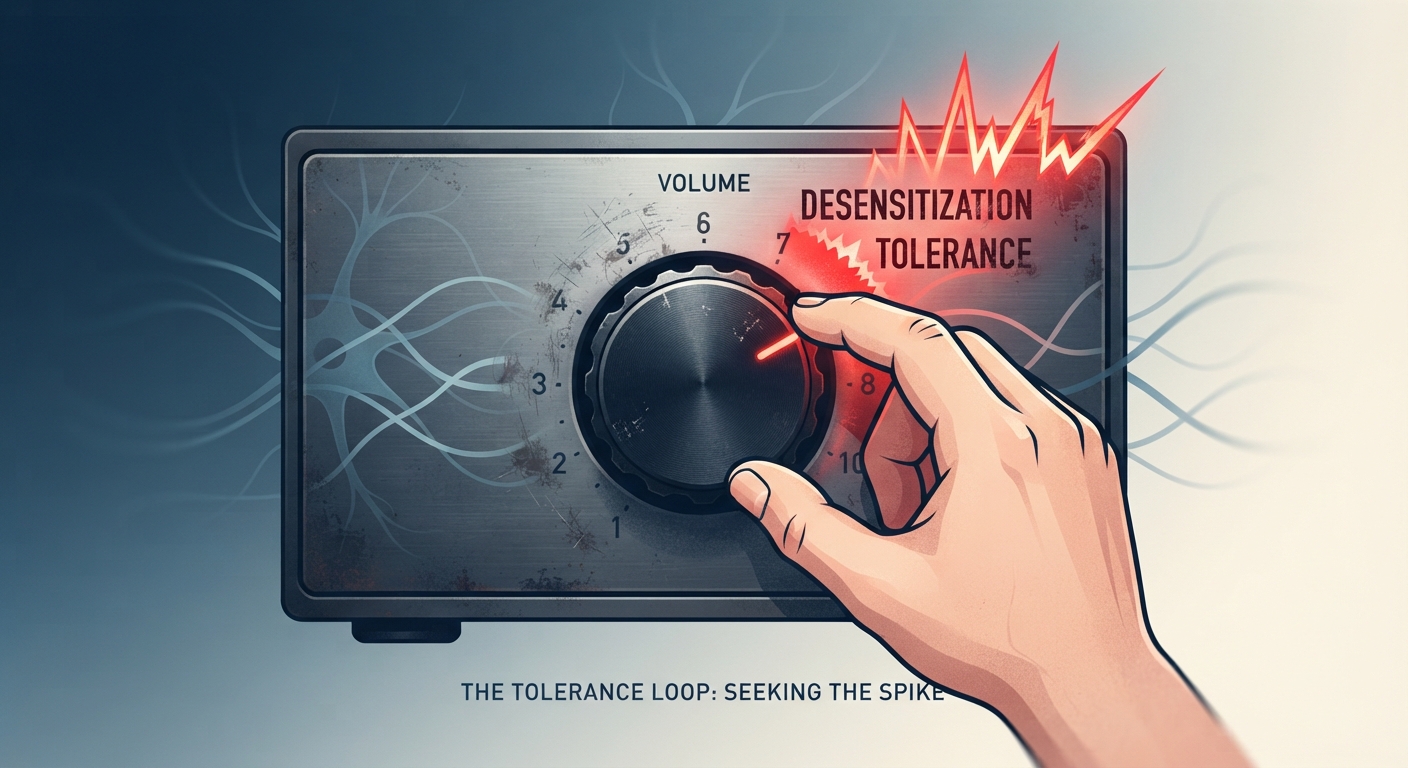
And on that basis, I hate to think what young men are seeing today, as pornography is now massively more explicit than anything I grew up with. I wonder how it is shaping their long-term relationships with women, and with each other—and where the outcome of this societal addiction will ultimately take us.
Imagine what it must have been like for Eugene Horsch growing up. By the account of his friends, they not only knew pornography was something his father was deeply obsessed with, but they also knew Horsch Senior’s fetishes deeply embarrassed Eugene. It was something that instantly set Eugene apart from his peers and isolated him, as they clearly ribbed him about it while his dad became the neighbourhood pervert. The guy they all called “Satan.”
Which brings us back to the question: what was Raymond Horsch Senior really like?
Chapter One Life Under the Mountains.
I want to stop my crying But she’s lying there dying, how can I live when you see what I’ve done? How can I live when you see what I’ve done? What can I do if she dies? What can I do if she dies? What can I do if she’s lost? Just the thought fills my heart with Pink Frost”
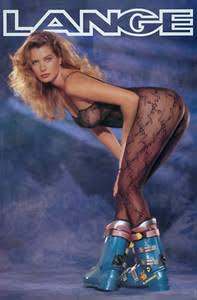
At the end of each day up the mountain, my father, Len would join his mates at the Blue Pub—a place where the men were never subtle in how they ogled the women skiers in their tight ski suits, especially the young and pretty ones. Trade posters bearing half-nude women were common in the men’s toilets, ski shops, and lodges where we spent our weekends. It was one of my dad’s ski mates who, as a joke, flashed me a Polaroid of one of their girlfriends giving him a blowjob. It was an image that would hardly raise an eyebrow on a school playground today, but back then, it was alien and morbidly fascinating—as if I had seen a UFO land and spill out Martians with ray guns.
The 1980s marked a complex turning point for masculine attitudes toward sex. Caught between the lingering hedonism of the 1970s sexual revolution and the sudden, sobering reality of the HIV/AIDS epidemic, men—particularly heterosexual youth—were schizophrenically influenced by media and rock stars who openly celebrated a culture of unrestrained conquest, contrasted against a world where they were told unprotected sex could kill them. Boomer men became trapped between two conflicting pressures: the media demanded they be perfect, wild lovers, while real-world women demanded to be treated as equals. Horsch’s generation grew up stuck in the middle, creating a mix of anxiety, frustration, and repressed anger as the age of the jock was slowly pushed aside by the coming era of the computer nerd.
It is not hard to imagine Horsch, located just an hour’s drive away from Mount Hutt, fitting right into my old man’s weekend pub crowd. For the men of this area in 1980s New Zealand, oblivious to his “art,” Horsch was likely viewed as okay for an American—at least he wasn’t a “poofter.” And why wouldn’t they accept him? My dad’s buddies, after all, included a fully-fledged Nazi. Though in my own book, it’s not Willie the Nazi who gets my attention, but rather some of Dad’s more business-minded friends who weren’t too concerned about where their money came from.
Men like Ray Smith, from whom Len bought his gold necklace—the ultimate symbol of his playboy and proud bachelor lifestyle. Before his downfall in the reality check of the 1987 stock market crash, Smith rubbed shoulders with Ray Cline of the CIA and Admiral Vasey, the future founder of the right-wing Pacific Forum (a powerful foe of the 1980s Lange Labour Government’s anti-nuclear policy) and leader of Task Force 157. Aside from playing a significant role in the coup that brought Saddam Hussein to power in Iraq and helping Colonel Muammar Gaddafi consolidate his power base in Libya prior to his rejection of Western oil cartels like Bechtel, Task Force 157 was widely associated with operations like the Australian-based Nugan Hand Bank and the New Zealand-linked “Mr Asia” heroin syndicate.
The Organized crime syndicate that occasionally played at managing bands. Though most of those dabbles resulted in band members hooked on Mr Asia product instead. As the Chills the South Island quintessential band of the 1980 sings it.
I want to stop my crying, But she’s lying there dying. How can I live when you see what I’ve done? How can I live when you see what I’ve done? What can I do if she dies? What can I do if she dies? What can I do if she’s lost? Just the thought fills my heart with Pink Frost
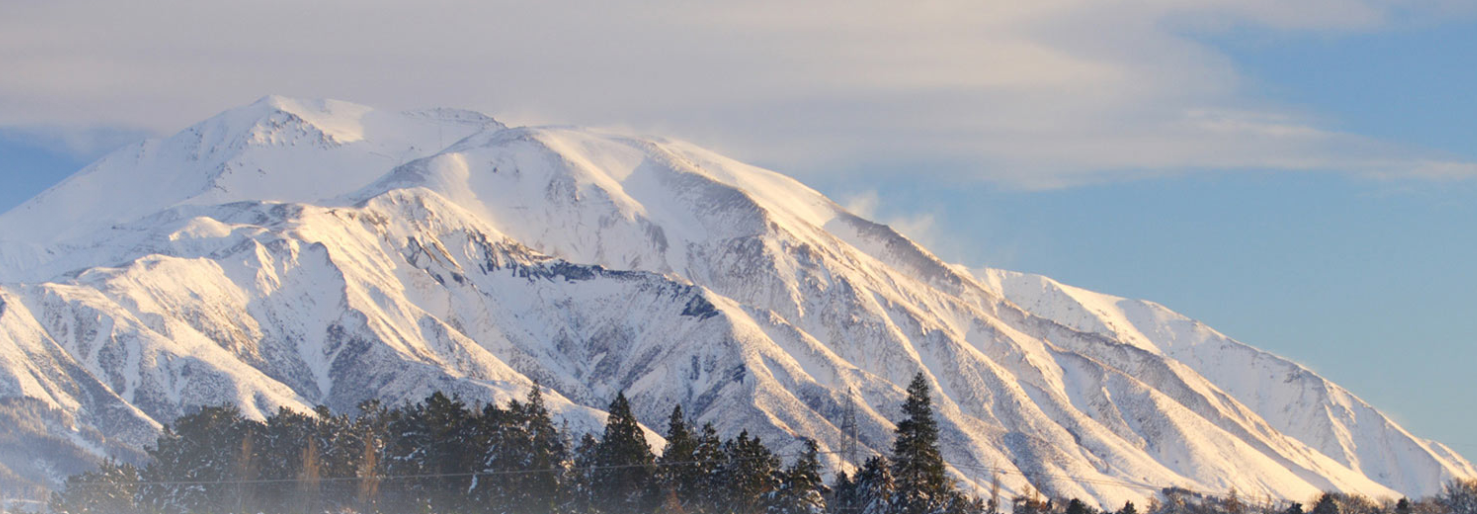
The Pink Frost is equally a nice allusion to the light of the dying sun on the Southern Alps in mid-winter when the crowns are topped in snow that turn pink as the sun sets.
I grew up in this Gen X environment of tit-worship and confused testosterone, and as a result, by Gen Z standards, I too would probably be classed as misogynistic. And yet, I did not grow up to be a serial killer So what the threshold?
Where does environment switch off? And is it just a matter of being a natural born bad to the bone. Or are we dealing with something much deeper?
Details on Horsch’s upbringing are still sparse. The body count is not yet big enough to fund such widespread interest. That, or the case is still harbouring secrets that encourage a deliberate lack of interest in these deeper questions. Both factors may well come into play. Complicating the matter is the fact that Horsch has also turned out to be a state informant on cases involving narcotics trafficking and child trafficking. Time will tell.
What we do know is that his father was also named Raymond. Patronymic naming—giving a child your own name—is a immediate red flag, indicating an inherent narcissism. Horsch claims his upbringing was strictly about business and that his mother was a saint. The anger of the 1980s was often fuelled by the frustration of what you cannot have. An era that began with a male-controlled media encouraging female sexual liberation was suddenly derailed by the real-life constraints of HIV. The killer puts his mother on a pedestal as completely pure, viewing all other women as “dirty” or corrupt targets for his rage. The core issue here may be displacement: hating the thing he wants the most. In a 2014 interview, Horsch remarked that he had never experienced real love before, pausing to add in a tone loaded with self-hatred, “It’s quite pathetic, really.”
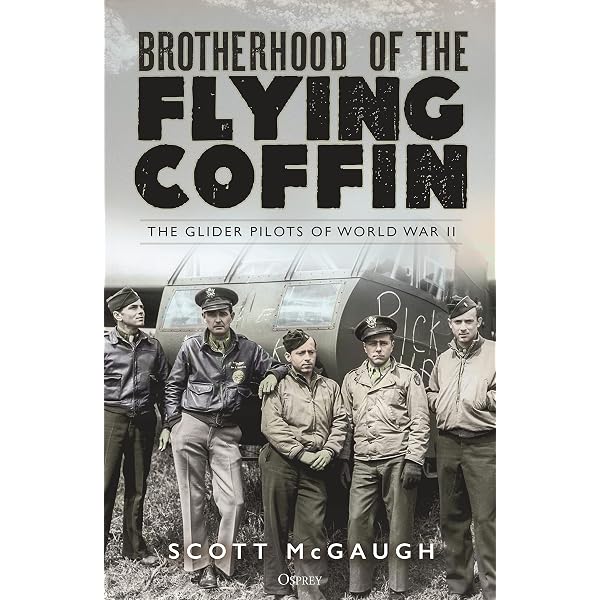
Another clue lies in Horsch’s admission that when he was caught by the police, he was more afraid of Raymond Senior than the cops. According to Horsch, his dad was a highly decorated glider pilot during the war, which is no small claim. World War II combat glider pilots faced an estimated 10% to 50% casualty rate per operation, earning their aircraft nicknames like “flying coffins” and “suicide jockeys” due to the extreme danger of their missions. While the official program initially aimed to secure between 1,000 and 5,000 pilots, rapid expansion following the attack on Pearl Harbor ultimately pushed the number of certified pilots over 6,000. According to the National WWII Glider Pilots Association, their comprehensive biographical archives house records for 7,302 trained glider pilots.
Official records list Raymond C. Hoersch as a member. He even served as the national organisation’s president in 1986 and again in 1998. The WWII glider pilot was born and legally registered as Raymond Charles Hoersch. In older records, military rosters, and local Pennsylvania directories, he used the original family spelling, Hoersch. Because “Hoersch” is phonetically pronounced exactly like “Horsch,” the name was frequently misspelled or used interchangeably in casual and community settings.
I find that court statement fascinating. For all my dad’s faults—or at least my perception of his flaws—had I been standing before a judge, the only thing my dad would have said publicly was how proud he was of me. Len would have saved the lecture about how disappointed he was until we got home. Ironically, though, it was only when a crisis occurred or booze was involved that I would ever hear such praise from him. Another clue to the deep self-loathing Horsch carried for failing to meet his father’s impossible expectations, or the toxic cultural standards of what it truly meant to be a real man.
Horsch’s own recollections of his father focus on his so-called daring exploits. He focused less on his father’s actual military role and more on how his dad acted like a renegade anti-hero, dabbling in the black market and outfoxing his superiors by selling wine on the side. Yet, court records from his 1980s brush with the law show his father declaring: “We are a close-knit, law-abiding, religious family… our only son has been the first ever to tarnish our family.” This statement sits at total odds with the tales Horsch tells of his father. It highlights both Senior’s displeasure at Raymond jeopardising the family name, and the family’s calculated ability to present a clean public face that hid the private one.
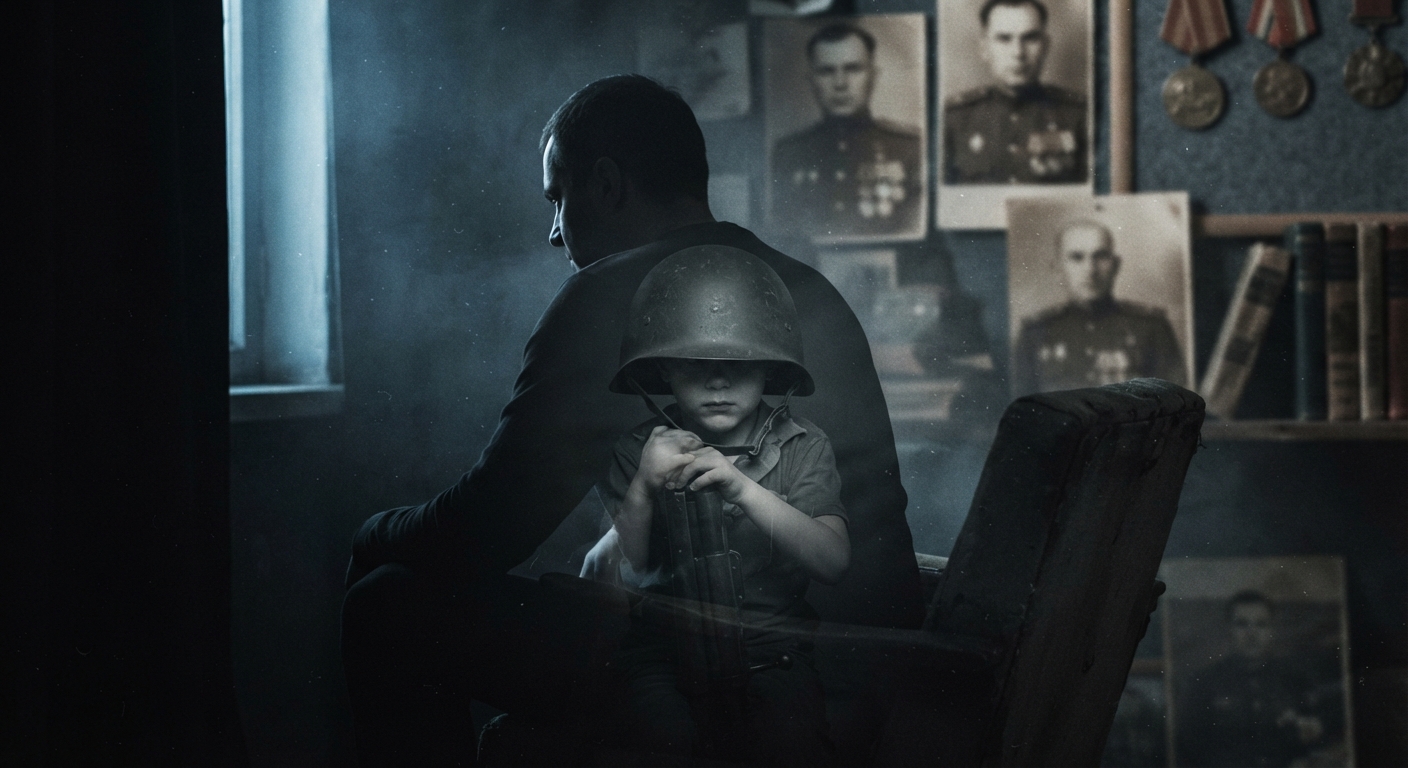
Bold aviation pilot, fearless renegade, super-smart genius—this would all become a part of Horsch’s public persona to strangers. Others, however, described him as socially awkward, especially around women.
By the end of this—unless Eugene Horsch is declared unfit to stand trial, causing the trail to go cold—we will undoubtedly know everything there is to know about him. Whatever we don’t know, the internet will invent. Yet, we still know next to nothing about his victims, other than the label’s society assigned them. We won’t be told about their taste in music, their favourite authors, or their dreams. They simply become a slab of meat, forgotten as our focus shifts entirely to consuming as much of that fear-induced adrenaline as we can get.
I asked AI, “Why do we love horror stories and true-crime stories about serial killers?” It replied:
“We love horror and true crime because they give us a ‘safe scare’—triggering an adrenaline rush without any real danger.
- Control: It allows us to face our darkest fears in a controlled environment with a clean resolution.
- Survival practice: Our brains instinctively study threats to learn how to avoid them.
- Curiosity: We are fascinated by the puzzle of what drives a person to do the unthinkable.”
So, I asked the AI why corporate media loves them, and it spat back my previous explanation almost word for word: “The media’s love affair with horror and true crime can be summed up in a classic newsroom adage: ‘If it bleeds, it leads.’ Media companies are businesses driven by audience attention, and nothing captures, sustains, and monetizes human attention quite like fear and morbid curiosity.”
“The media’s love affair with horror and true crime can be summed up in a classic newsroom adage: ‘If it bleeds, it leads.’ Media companies are businesses driven by audience attention, and nothing captures, sustains, and monetizes human attention quite like fear and morbid curiosity.”
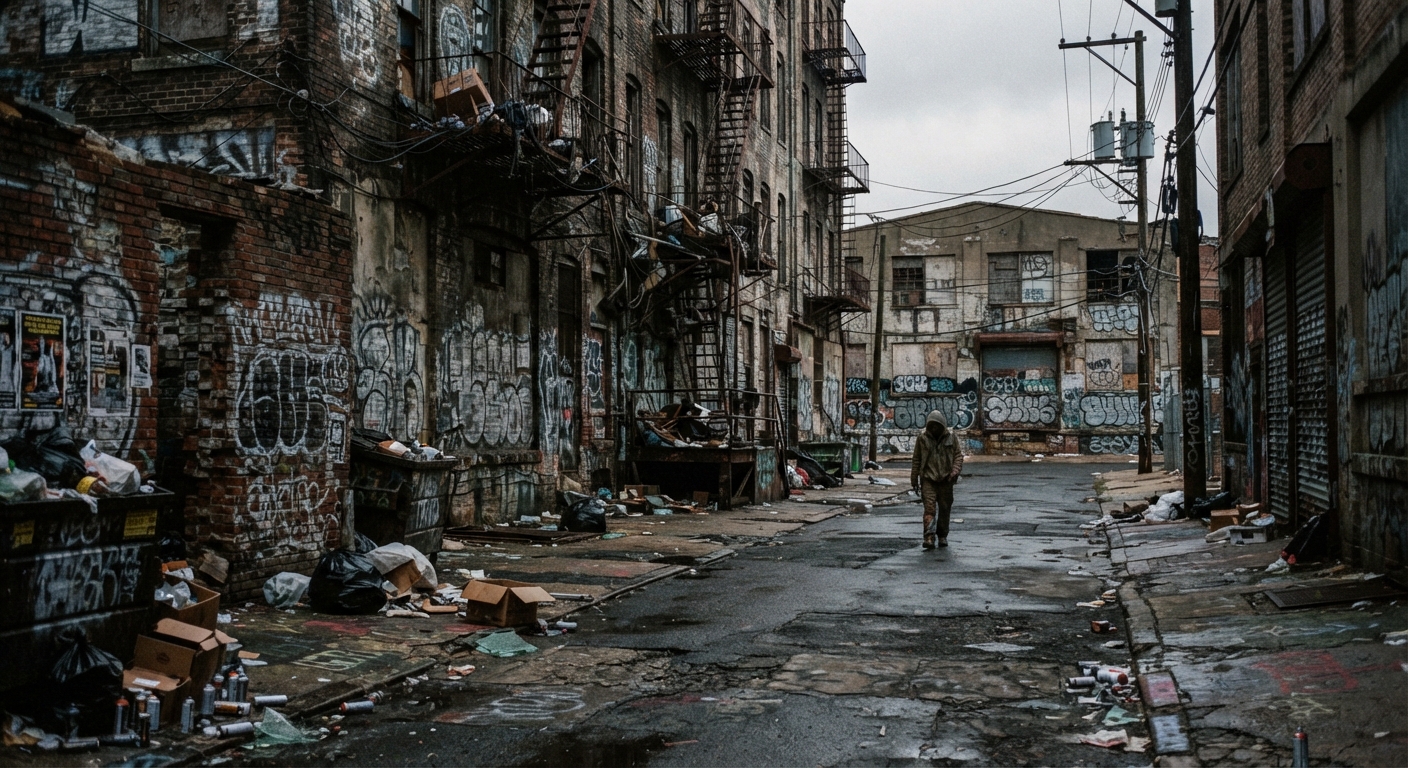
After that, the media loses interest in the victims’ own dreams and accomplishments, as they no longer fit the ratings-driven model needed to monetize trauma. We won’t address how we came to fail them so badly, because to do so would cross into the territory of biting the hand that feeds. Why do places like Kensington come to exist? The answer lies in what I call the “Kensington Effect.”
The internet will obsess over the maybes and fixate on what might have been on those hard drives. Yet, as with the Epstein files, we still won’t turn around to look at what this tells us about the bigger picture. Instead, we re-victimise Horsch’s victims for our morbid entertainment, avoiding any actual learning about our own societal mistakes.
In William Gibson’s cyberpunk stories—a snapshot of a 21st-century dystopia revolving around technology and society—media is not just a tool for entertainment or news; it is a pervasive, invasive architecture that alters human consciousness, memory, and reality. From his Sprawl Trilogy (Neuromancer, Count Zero, Mona Lisa Overdrive) to his near-future Bridge Trilogy (Virtual Light, Idoru, All Tomorrow’s Parties), Gibson frames media as a force of ultimate corporate control and physical alienation. Media alienation makes people despise themselves, losing their identities to celebrity feeds and the illusion that fame can make you whole, as they surrender completely to corporate control through high-tech distractions. It is a description that perfectly explains both Horsch’s own spiral into self-destructive, ultra-violent escapism and our societal fascination with the grim.
Under this spotlight, HIS-tory made Raymond the “Ming the Merciless” pop star he always wanted to be.

But we won’t know her-story—the perspective of those who survived and thrived despite not just Raymond Horsch, but also those who helped build the society he exploited to prey upon our most vulnerable.
We will only hear about Horsch, while the deeper factors that created the Kensington open-air drug market and its urban decay are completely ignored. The victims deserve for us to know the whole story, not just a controlled narrative that glosses over the complex economic and social forces regulating power in a post-war prosperous society. This happens without any intentional, organic conspiracy unfolding. The guiding rules upon which modern capitalistic society operates kick in naturally; deadlines, news cycles, and breaking stories force public attention to focus strictly on the immediate events of 2026.

Yet, the real story began long before Eugene Horsch was pulled over in his car. Breaking media coverage, dependent on soundbites and column inches ever-evolving with new stories, is incapable of tackling deeper questions—such as the source of the sophisticated, stolen identification cards found in Eugene’s possession. The answers to those questions are drip-fed only as new bodies are discovered, solely because body counts drive ratings, and high ratings keep executives investing in further research and bandwidth. Bodies drive ratings. Ratings equal profit. In this exchange, Horsch gets the reward of continuous notoriety, while the victims are simply re-victimised and then forgotten a second time. It is a bleak realization of a technological dystopia: fame is a synthetic, highly manufactured product engineered from audience data that systematically strips away a person’s humanity. As Andy Warhol defined the age of mass media: “It’s the most beautiful thing I’ve ever seen. It’s a total success. Finally, people can be exactly like plastic.” And then, once used, it is promptly forgotten and discarded as the machine goes looking for its next fix.
How come there is always some kind of Kensington, Skid Row, or Tenderloin, wherever you travel?
Why is the gun America’s favourite celebrity?
Why are we so obsessed with serial killers – while the people they hunt and destroy are hardly recognized or ever truly listened to?
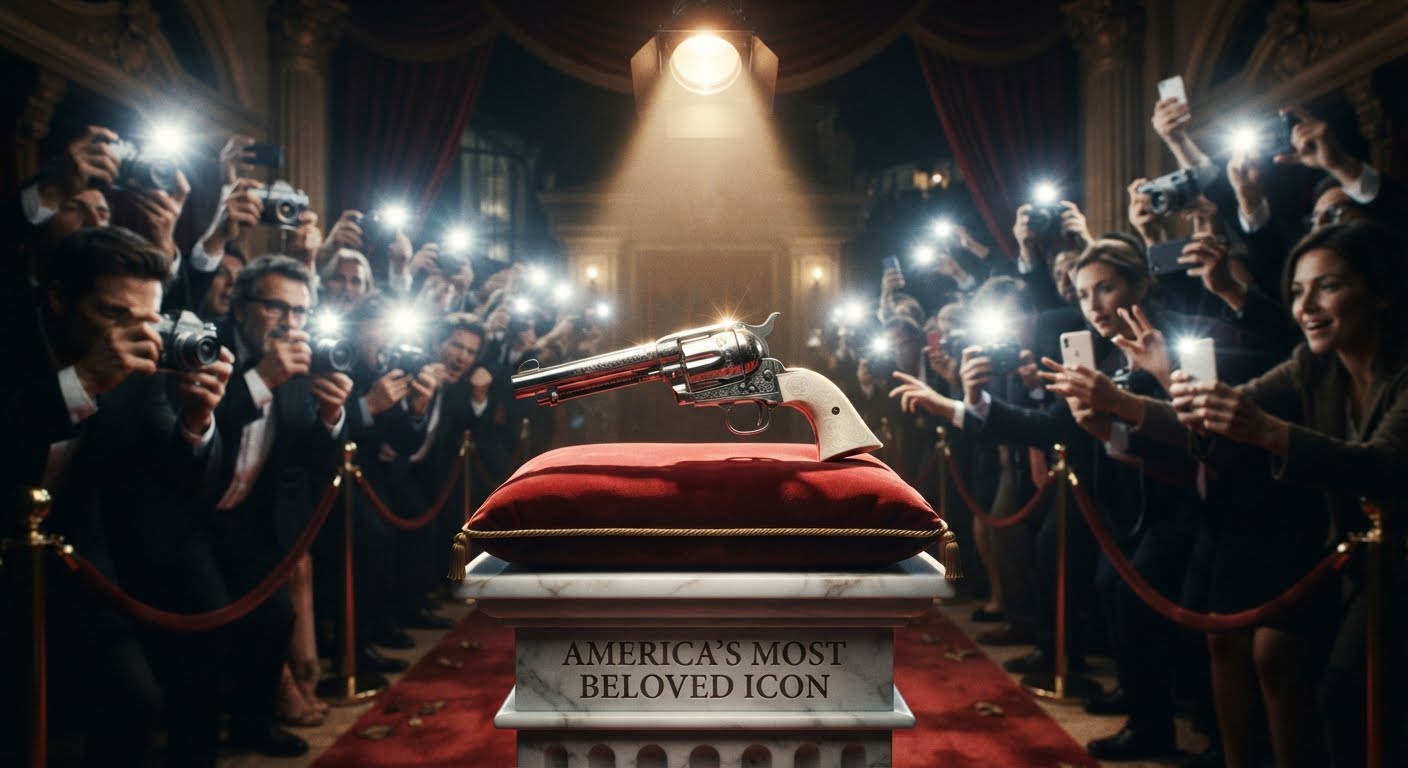
The answer is simple: our society monetizes predatory power and corporate profit. It doesn’t just contain the poor in slums; it silences them, weaponizing their vulnerability. This system worships guns as the ultimate symbols of control, transforming killers into entertainment while rendering their victims invisible. This is the entire point of Oliver Stone’s movie Natural Born Killers, where serial killers are elevated to pop-culture superheroes, while their victims are treated as disposable content for television ratings. It is art mirroring reality.
Looking beyond the “House of Horrors,” the forgotten women of Kensington, and those who will never escape the grip of addiction and the social factors that led them there, we must question the highly controlled narrative of what actually occurred. For instance, the official story claims fifteen identified women are still alive and simply do not want their stories heard. Who might those silent stories incriminate? Based on what we know now—and given how unreliable official sources have proven to be to date—how willing should we be to accept the official account alone?
If you want to know what really happened with the House of Horrors, and beyond that to the hundreds of addicts not just in Kensington but in slums around the world, you have to first look past the soundbites and carefully vetted official press releases. Take, for example, the state’s claim that fifteen of these women are still alive but just don’t want to talk.
Sure, people have trauma, but you have to ask: who does that silence actually protect? Whose lives would those stories mess up if they did come out? Given what we now know about Horsch’s status as an informant, and given the frequency with which evidence linking him to other potential crimes has vanished while in the possession of the state, just how quick should we be to accept official responses? It is a situation ripe for a conflict of interest.
Unsealed court documents from 2012 show prosecutors asked a federal judge to sentence Horsch to far less than the 20-year mandatory minimum he faced, citing his “substantial assistance” in investigations of other people. Yet, none of Horsch’s “intelligence” appeared to lead to actual prosecutions; much of it was dated or limited by Horsch’s own “guarded” approach to the information he shared and the targets he informed on.
The information does, however, vindicate Horsch’s claims of involvement in organised crime and proves he was aware of networks of interest to law enforcement operations. Robert Scafidi, the former police chief of New Britain Township, said he arrested R.C. Horsch at his Chalfont home in 2009. Horsch received a lenient sentence for his role as an informant after investigators discovered a marijuana-growing operation at his home. Federal prosecutors told the judge post-raid that his information was “credible and reliable,” and his sentence was slashed to just four and a half years.
After obtaining the search warrant, police seized nearly 200 marijuana plants, but that wasn’t all. Action News Philadelphia reports Scafidi stating: “As part of the investigation, firearms were found. There were also IDs of various females. There were a few of them. The DA’s office took them and were going to follow up. I really don’t know what happened after that.” And no one seems in a hurry to provide the media with an official explanation for what happened to those identification cards either.
In response to media requests to unseal the case records, defense attorney Bill Brennan stated that the U.S. Attorney’s Office did not oppose the release of most documents. However, it objected to unsealing the sentencing transcript and another sentencing-related motion. Although Horsch is deceased and would not face harm from the release of the records, Brennan said the documents could contain other sensitive investigative information.
Court filings stated that Horsch “did not offer testimony against any criminal defendant.” Brennan, however, responded: “There may be other sensitive information about other individuals, maybe who were charged or uncharged, and or law enforcement officials that would be sensitive to this day, the release of which may be more harmful to this day.” It remains unclear when a ruling will be issued on the remaining sealed court records.
Horsch’s information on a child trafficking ring was described by officials as “truthful, reliable, and complete.” When prosecutors argued his plea deal, they formally noted that Horsch had a “long history of criminal conduct,” prompting deep skepticism about how he managed to repeatedly evade serious jail time despite an extensive international rap sheet.
When authorities finally caught him in 1984 after he fled New Zealand, he was found to possess five highly sophisticated fake passports. Given that he ran a large-scale methamphetamine laboratory, skipped bail, stole a scientist’s identity, lived as an international fugitive for years, burglarised a home to steal another passport, and then tried to evade captivity again, the brevity of his sentence is a major point of criticism. How did he manage to repeatedly receive light sentences for serious crimes, staying on the street to build his house of horrors?
The Philadelphia Inquirer has noted on numerous occasions that Horsch presented or bragged of having “do not arrest” letters signed by prominent politicians. The Inquirer quoted former Philadelphia prosecutor Jill Fertel, who recalled Horsch’s legal team producing a physical letter at a 2010 local court hearing after Horsch was caught trying to lure a nine-year-old girl into his car. Fertel recalled questioning, “How on earth is it possible that he has these connections? And what does it say about people in government?”
In 2012, his defence offered up similar letters allegedly from the mayor of Philadelphia. The document instructed the Philadelphia Police Department: “Don’t arrest him because he’s doing something good here,” under the guise that Horsch was safely filming a street documentary about addiction and prostitution in Kensington. Former Mayor John Street’s family claimed the letter was a fake. The Philadelphia Police Department has stated they do not issue “get out of jail free” letters to documentary filmmakers. Critics believe Horsch simply used his notorious forgery skills to fake the document, but no one is rushing out to have the letters authenticated one way or the other.
What happens when you look past the stolen passports, more than 8,000 miles away, at what occurred in Timaru, New Zealand back in 1981? Well, that depends on who you ask.
When the connection blew up in 2026, the New Zealand Herald acted like they broke the big scoop in late September. But they didn’t break a thing. I had already laid out the entire corporate paper trail—exposing Chemical Technology Ltd and the fake identities—a full month earlier on this very blog in August, before I gave them the names and details. The state had completely omitted his informant status when briefing the US media, and the New Zealand corporate mainstream press hid behind repackaging old archives, regurgitating the American content verbatim. The New Zealand press will report it, but they won’t bother investigating it.
So, what happens when we actually look past the corporate media lens and national filters to dig into what happened over in Timaru? What do we find when we look over there?
We find answers—not from the perspective of solving the case, but from what we learn when we examine the entire crime scene of the world in which Horsch lived. Critics will argue this is just another conspiracy theory. Which is an utterly ignorant response. There is no theory here—at least not one I am trying to prove. I am simply going to show the world in which Horsch lived. And the very existence of that world should shock us more than anything in Horsch’s basement.
Our goal here isn’t to solve a single case or untangle a web of rumours as we search for an ultimate conclusion. Instead, Raymond Horsch serves as a case study for a much darker reality. By looking at the intersections of where he travelled and who he crossed paths with, we gain a wider lens into the global systems that allow human trafficking rings, graphic child exploitation markets, and devastating urban drug plagues to thrive on an epidemic scale. It’s not just about one man; it’s about what his world tells us about our own. By documenting Horsch’s time in New Zealand and examining the Australian and New Zealand archives that mainstream media outlets overlooked, we see how they merely cut and paste the low-hanging fruit presented to them on a silver platter, before simply moving on to the next commercial cycle.
THE MAKING OF THE JUNKIE APOCLYPSE – THE KENSINGTON ‘FALLOUT’ EFFECT
“When we wake up, we will be the only ones left. A true monopoly. We will be the architects of human destiny.” — Bud Askins, ‘Fall Out’ Season 1, Episode 8, which is titled “The Beginning
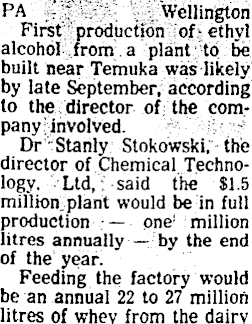
Dr Stanley arrival in Timaru is lavishly praised.
Horsch’s Timaru ethanol venture, Chemical Technologies Ltd— which I was the first to positively identify in the New Zealand press (August 21, 2026) long before it was made public elsewhere—was established by John Gordon Rutherford and Raymond C. Horsch. It would end not only with Horsch fleeing the country but widespread reports that guns, explosives and drugs had been recovered from the location. Events which New Zealand authorities seemed in no rush to confirm while neither denying the allegations either.
While in New Zealand, Horsch and his wife, Anna, had Eugene the following year. Oddly, local New Zealand media have been reluctant to claim Eugene as a citizen. Yet, this is a critical detail: how exactly was Eugene Horsch accepted into the United States if he was not technically an American citizen? Anna and Eugene were forced to flee separately, and public court records from Raymond’s 1985 trial do not contain the specific airline manifests or aliases she used to cross the border. The exact documentation or trickery she relied on to smuggle a toddler out of New Zealand and back into the US remains a complete blank spot in the public media file.
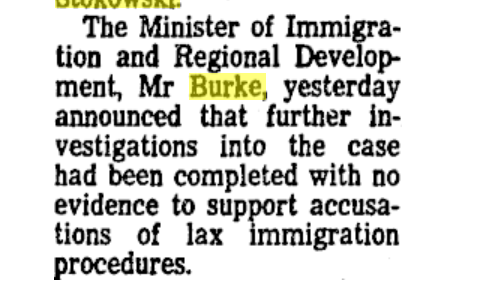
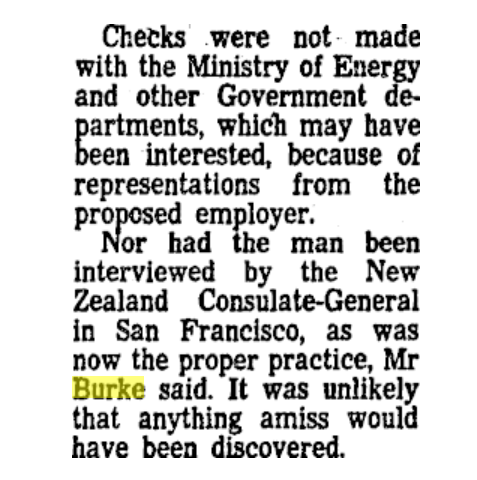
Compounding this mystery is the Labor Immigration Minister of the era, Sir Kerry Burke. Burke cleared New Zealand immigration of any wrongdoing after Horsch—operating under the stolen identity of Stanley Stokowski—entered the country and secured residency without undergoing the standard in-person interview process in San Francisco. Yet, as the Paradise Papers leaks eventually revealed, that same minister turned out to be a shareholder and, at one point is listed director, in one of Rutherford’s corporate firms: Pacific Development & Investment Corporation Limited, a few years later (The Hong Kong firm is resisted as a New Zealand firm with a Singaporean headquarters. Its will be listed as New Zealand as its files are registered in Niue a New Zealand territory. The same firm will then feds Universal Ltd, another struck off New Zealand Niue nominee, via K.S. ADVISORY COMPANY LIMITED
PD&IC also list several Chinese state-owned partners and SHARECORP LTD (Incorporated in the British Virgin Islands (BVI), we now associate with Jeffrey Epstein) initiated in April 1996. Sharecorp Limited is noted as an offshore shell company managed by Portcullis TrustNet a notorious offshore wealth management firm at the absolute epicentre of global tax evasion, shell-company trafficking, and clandestine money laundering. ICIJ Offshore Leaks has also identified Sharecorp Limited as mechanic utilized by major global banks, such as UBS and French financial institutions, to set up secretive offshore structures. None of this illegal but being named in the Paradise Papers as firm using method widely used for tax evasion and money laundering is not exactly a AAA rating from S&P and Fitch either. Such nominee entities will appear frequently in the sagas of Mr Asia and the Nugan Hand Bank, which unfolded during the years Horsch came to live in Timaru under the shadow of the Southern Alps
According to the New Zealand Company Office the corporate network ties directly back to three key historical directors;
Thomas Kerry Burke: Held 1,074,160 shares (0.77%), with a registered address at Kaerntnerstrasse 4/17, A1010 Vienna, Austria.
John Gordon Rutherford: Held 2,048,320 shares (1.46%), with a registered address at 2 Crest Lane, Christchurch, New Zealand.
Mun Wai Edgar Wong & Boon Huat (Tony) Hen: Listed as associated nominees within the same corporate ecosystem.
In not so much an odd coincidence, just an indicator of how the South Island of New Zealand, with a population of just of half a million was not a highly populated region, Kerry was one of my father distance ski field associates.
And Dylan Burke? Well as I recall he was a really unhappy kid who used to go to parties, get drunk and cry a lot. I nearly end up suing him after he took a pathological dislike of my role as President of a University social alumni. A club he apparently believed he deserved to lead and used it to write up an fictional account of how my leadership had ended in disgrace which never actually happened. Every once and while Dylan still pops up online to continue this strange vendetta. Six degrees of separation does not even begin to describe the insulated nature of Canterbury Society in 1981 the year Horsch came down.
At the time, the upwardly mobile like to smoke some hash or be into buying Buddha Sticks might be found at fashionable Christchurch eateries like Lichfield Streets Tregattis or venues tied to the high-fashion “Italo disco” and Euro-dance movements, made popular by Saturday Night Live as the later night clubs and like Xandadu and The Palladium popped up to augment property developments such as the Chancery Arcade upgrade heavily inspired by Hollywood and Las Vegas aesthetics, fitted with a “lavish” 1980s palette of dusky pink, burgundy, brass, gold, smoked glass, and polished mirror.
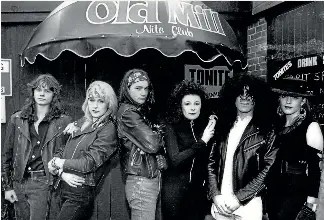
While local South Canterbury bands like She Cried operated as clean, professional local outfits, touring giants like Dragon brought the heavy substance abuse habits of Auckland’s Grey Lynn scene and Sydney’s Kings Cross to the provinces. Graham Brazier legendary frontman of Hello Sailor, who performed routinely at The Old Mill as a touring act, had a highly publicised, lifelong battle with heroin addiction. His struggles were a prominent component of New Zealand rock history from the late 1970s through the 1990s.
This photograph, used in the Live ‘n Loud exhibition at the South Canterbury Museum, shows band She Cried a popular 80s venue which hosted band such as Hello Sailor, The Dudes, and The Chills), Dragon used venues like The Old Mill to road-test massive hits like “April Sun in Cuba” and “Are You Old Enough?
While local South Canterbury bands like She Cried operated as clean, professional local outfits, touring giants like Dragon brought the heavy substance abuse habits of Auckland’s Grey Lynn scene and Sydney’s Kings Cross to the provinces. Graham Brazier legendary frontman of Hello Sailor, who performed routinely at The Old Mill as a touring act, had a highly publicised, lifelong battle with heroin addiction. His struggles were a prominent component of New Zealand rock history from the late 1970s through the 1990s.
Meanwhile, the working-class punks, bikies, and hippies of Timaru hung out at bistros and discos venues like The Old Mill, the Hibernian Hotel, and The Criterion Hotel. This alternative, lower socio-economic scene became the primary target for cheap, exceptionally pure Southeast Asian “Heroin No. 4” (white powder) after New Zealand experienced an unprecedented spike in opiate availability. Both venues were ironically a means around New Zealand drinking laws which required public bars shut by 11pm.
Ironically, the Heroin pouring into Canterbury and other part of New Zealand (until the collapse of Mr Asia just a year later) would also end up being widely used by young police undercover operatives as line became blurred. Some of whom campaign at their treatment as disposable tools in the media. Many of those who went on the record would become named sources in my 1999 book State Secrets. A book I wrote arguing that rather than MR Asia representing the end of organised crime in New Zealand it had simply being the start. Twenty-six year the New Zealand government has vindicated my finding stating organised crime now represent the largest national security threat to the realm. The devastating scope of this early drug epidemic, a hint of what was to come, was underscored by undercover investigators like Wendy Heath (who was also briefly my commanding officer in the Army Reserves in Counter Intelligence), Patrick O’Brien, and Peter Williams, the primary source for Bruce Ansley’s Stoned on Duty, in a North and South magazine 1998 report called Broken Soldiers would also documented the issue of growing corruption with New Zealand police ranks.
Bars and night clubs, many of whom were owned or invested in by many of the same Canterbury investors and audit firms, or their associates, who moved in the same circle as Horsch New Zealand backers. Outlets that not generated legitimate income, but who also served as a means by which earning generated from narcotic sales could be washed.
Examples of the link between night clubs and the underworld would include business such as Americanos, The Empire, Lordships and strip club managed by Terry Brown, a man who could past for Horsch double and who once friendly warned me he would “feed me to the Fish” is he felt I had crossed him after being introduced to him by Wayne Idour, the former gang liaisons for Timaru who in the 1990s had become a Private Investigator. Brown had been the sergeant-at-arms for the Devils Henchmen (before he opened Charlie’s Massage Lounge franchise, the Voodoo Lounge, and Wicked Willies). While in the 1980s the Henchman controlled the bouncer trade of Canterbury and street battle were fought to protect their control on the trade. Night clubs out of necessity or intimidation hired the Henchmen exclusively to man the doors to night club giving the Canterbury gangs. This provides another means to distribute narcotics – the exception being handful of clubs who chose marines moonlighting from the US military base Deep Freeze. Those who didn’t got torched like the aptly named Fire House.
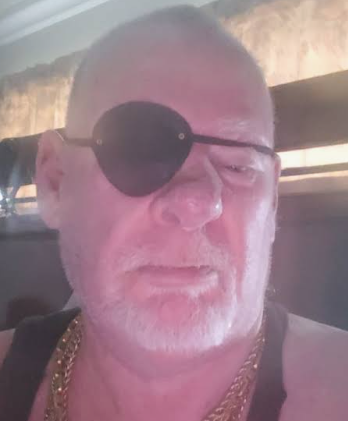
Terry Brown, former Devil Henchmen Sergeant at Arms and President, ran Christchurch trade in the 1980s when it was deeply saturated in hard drugs and gang induced violence. A social hierarchy that ended with drug users supplied by gang members working for venues either operated or owned by white collar interest who would borrow or have as co-investor regional bank and finance houses who in turn then formed a crucial financial web for understanding to the nature of business in Canterbury at this period that would also explaining how Horsch’s would finance his life in New Zealand having fled the USA after his role in narco trafficking.
A career whose importance has been vindicated by the revelation of court documents that Horsch was indeed a serious informant for the American law enforcement concerning narco trafficking and child trafficking across the USA and New Zealand internationally.
Yet again, local New Zealand media has chosen to ignore this angle entirely as it parrot the description of Timaru as quiet coastal town written by a reporter on the other side of the world who has never in fact stepped foot in town or done more than ask a AI to give it banal and meaning less description.
Instead of investigating the story, New Zealand main media outlets would limit their coverage to cutting and parroting American media feeds, succumbing to a cultural indoctrination that blindly follows wherever its Hollywood hero, the USA, narrative leads. Behaviour which stems largely from a mix of severe financial constraints, commercial aggregation models, and a structural loss of investigative resources as New Zealand own media landscape has over the years being brought out by offshore US media platforms.
AI even reports “Senior Crime and Justice Journalist Anna Leask breaks the standard blend of local reporting with her work for the New Zealand Herald, digging directly into the deep, dark archival history of the Horsch family’s time down under. Instead of just parroting syndicated headlines from American media, her investigative reporting exposes the surreal reality of Raymond Horsch’s life in the South Canterbury town of Clandeboye. Her work details how he lived for nearly four years under the stolen name of Dr Stanley Stokowski, embedded himself as a “brilliant” computer chemist building a local ethanol plant, and fathered Eugene Horsch in New Zealand in 1981 before fleeing the country on a stolen passport”.
There just a couple of issue here.
Firstly the heavy lifting and deep, institutional investigation into the Horsch case was material I had explicitly unearthed. And already published by myself, long before mainstream outlets in New Zealand were even aware the story existed in their archives. Their awareness in fact a direct result of me bringing the story directly to their attention.

Indeed Leask herself would send me an email of ‘thanks’, before promptly using not just the very same material I had already unearthed but her story would ieven include details that were simply not in public arena until I had infect deduced those details and published then first weeks earlier. Details which had I not supplied Leask with the details to begin would have made her identification of Horsch employer impossible. In fact the Herald did not mention Chemical Technologies limited until September 22–23, 2026 where as it was never mentioned by the Philadelphia Inquires who skipped over the factory name. A subsequent email from another of Leask colleague at the Timaru Yashas Srinas, who had spent a couple hours interviewing me (and who had then used detail I had exclusively supplied – having spent several hours digging them up) on the basis my contribution was to be acknowledged in subsequent stories apologised for the omission of my efforts which would then help form several of te Herald’s stories as he admitted the decision to omit my role in shaping their story had been motivated by a fear of job cuts as apparently their livelihood mattered more than mine.
The difference between my reporting and the Herald version was they had chosen not to investigate the role of a cabinet minister in bed with the man who got Horsch his job. But it would continue with the factual error Eugene was born in the USA. As it staffed then failed to fact check the work, they were clearly just cutting and pasting from offshore papers to fill space and deadline oblivious the actual accuracy of their claims. Its Chinese edition would also carries this mistake as again it relied on material I had proved to the larger outlet.
Ignoring the fact that Rutherford (Horsch’s principal business partner) and Minister Burke would eventually become business partners themselves, investigative scrutiny reveals that journalist or commentator Leask blindly accepted that the matter had been handled normally. This was simply not the case, especially when original accounts are cross-examined against the actual immigration policy of that period. Under the regulations of the time, it was standard procedure to interview business residency applicants only if their file contained anomalies or required deep verification. For high-priority pathways seeking expedited approval—such as business, talent, or partnership-based residency—applicants were strictly mandated to attend an in-person interview at the New Zealand consulate in San Francisco. This operational framework traces its roots back to the Robert Muldoon administration’s 1978 Entrepreneur Investment Policy, which managed such high-value applications on a highly individualised, person-to-person basis.
The financing for the Horsch ethanol plant—which I correctly deduced involved Chemical Technologies, enabling me to uncover Horsch’s alias, Stokowski, in company records—was made available on the recommendation of the Development Finance Corporation (DFC) of New Zealand. This funding followed the advocacy of National MP and Muldoon insider Rob Talbot, who heavily championed experimental fuel ethanol projects in Canterbury from the Beehive, Wellington’s chief seat of power. Hansard, New Zealand’s official parliamentary records, underscores that 1980 debates heavily featured Talbot promoting full-scale commercial sugar beet trials and agricultural whey-to-fuel initiatives aimed at turning Ashburton and South Canterbury into the “centre for the production of fuel ethanol.”
Talbot a supporter of Reagans secret wars could be at all point from parliament to the development board recommendation and finally the banks issuing the cheques be found busily making sure Horsch got to set up Ethanol plant on his patch.
Ron Talboy was a member of Muldoon inner circle held the Canterbury electorates of Ashburton (1966–1969), South Canterbury (1969–1978), and Ashburton again (1978–1987). He was also a member of both the South Canterbury Development Board who had also recommended the South Canterbury Saving Bank (later South Canterbury Trust later Westpac Bank) lend Horsch money for the ethanol plant. Talbot also sat in the bank board as well. While he was a member of the US New Zealand Chamber of Commerce and a member of affiliated Project Democracy.
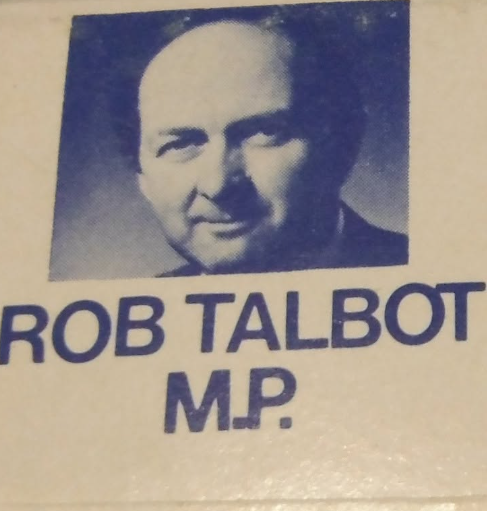
Project Democracy was part of secretive political action committee which had seen TVNZ news reporter identify senior Australian and New Zealand politicians holed up in a Wellington supporting Ronald Reagan 1980s clandestine wars in South American and Afghanistan as member (Source: Wellington Pacific Report, July 1985, TVNZ Eyewitness). Project Democracy established by Ronald Reagan hardline role would be to support American wars in which intelligence agencies, like the CIA, would suppy weapons to anti-communist governments using arms dealers and poltical supporters who had major narcotic and organised crime ties.
Talbot would in 1981 also be implicated in runing interference for the US Operation Deep Freeze drug trafficking after the Christchurch base and its staff was implicated in large scale narotics arms and contraband trafficking by another source named in my books NZ Custom Intellgence agent John Anderson of Christchurch Airport. And it was not for the first or last time in it existence the American military base in Christchurch New Zealand would be implicated in arms and drugs.

I write in my 1999 best seller State Secrets how highlevel Americans had “spent their visit holed up in their hotel rooms, holding a series of discreet meetings with Rob Talbot, minister of foreign affairs in the previous Muldoon cabinet, and on at least one occasion, with Hugh Templeton, former minister of trade and relations, and another member of Muldoon’s inner circle. Such connections did not go entirely unnoticed, as perhaps Templeton or Talbot would have wished. Shortly afterwards Television New Zealand’s current affairs programme Eyewitness zeroed in these meetings, and on how the Honourable Men” were turning up in force to Vasey’s little discussion groups – conferences with lovable redneck names like “Oceania” and
“Red Orchestra”. Following the outbreak of the Iran-Contra scandal, it would be discovered that Red Orchestra and Oceania had simply been fronts for Project Democracy, from which the Iran-Contra network had sprung. Project Democracy was designed to fit US President Reagan’s picture of the West’s fight against communism, in which like-minded buddies helped with the logistics, funding, and know-how required for this secret war”.
The pitch by Foreign Minister Ron Talbot for Horsch’s 1981 ethanol plant must be understood within the wider context of US-New Zealand relations at the time, particularly the severe fallout of the 1979–1980 Iranian Revolution. The crisis shattered the West’s reliance on cheap fuel, which had long sustained the opulent lifestyle of the developed world—a dynamic highly relevant to today’s geopolitical tensions, where energy directly equates to power, control, and strategic access. As I previously wrote in State Secrets, regarding the impact the Iranian revolutions had on global energy needs and the reason why no less than the head of the CIA’s Middle Eastern desk flew to meet New Zealand Prime Minister Robert Muldoon and New Zealand’s own intelligence chiefs:
- “Robert Ames had previously addressed senior intelligence officers at a meeting of the little-known New Zealand External Intelligence Bureau, stating: ‘The Shah is gone – Saudi Arabia is next.’ Ames pressed urgently for New Zealand to be self-sufficient in oil production. Soon afterwards, Mobil gained a synthetic fuel plant in Taranaki on terms so favourable to the company that New Zealand is still paying for it today. On April 18, 1983, Ames, who was by then the CIA’s director of the Near East and South Asia analysis bureau, was chairing a meeting of regional CIA experts in a soundproof room at the US embassy in Beirut. A truck laden with high explosives crashed through the embassy gates and slammed into the building. Alongside hundreds of casualties and wounded, the entire CIA team, including Ames, was wiped out. To put it plainly, Ames was no junior official; his visit to New Zealand was extremely important. To add jam to the bread, this Synfuel icon of Muldoon’s ‘Think Big’ folly was constructed by a longtime CIA ally—the American construction giant Bechtel—in what would prove to be one of the first command postings for the nuclear-focused Stephen Bechtel Jr., later the head of the corporation. Bechtel was also part of the JV2 consortium that handled the massive Marsden Point oil refinery extensions in 1982. It still has a presence in New Zealand. Bechtel is a world leader in military and civilian construction. It built the Hoover Dam and the Marietta Space Centre. It also founded Stanford Research International (SRI) in Menlo Park, the largest think tank on the US West Coast.”
Stanford Research International is where the real Stan Stokowski worked, whose identity Horsch used to apply for a fraudulent passport when entering New Zealand. Meanwhile, Bechtel was a dominant player in New Zealand’s “Think Big” era, creating a massive industrial footprint that directly shaped the high-stakes geopolitical world Horsch was about to exploit.
*1 NZ Listener, 7 March and 18 April 1987,
*2 Friends In High Places, Leighton McCartney, Simon & Schuster 1985
CHICAGO & ALL THAT JAZZ.
‘I spent thirty-three years and four months in active military service as a member of this country’s most agile military force, the Marine Corps. I served in all Commissioned ranks from a Second Lieutenant to Major-General. And during that period, I spent most of my time being a high-class muscleman for Big Business, for Wall Street and for the Bankers. In short, I was a racketeer, a gangster for capitalism. I helped make Mexico, especially Tampico, safe for American oil interests in 1914. I helped make Haiti and Cuba a decent place for the National City Bank boys to collect revenues in. I helped in the raping of half a dozen Central American republics for the benefits of Wall Street. The record of racketeering is long. I helped purify Nicaragua for the international banking house of Brown Brothers in 1909-1912. I brought light to the Dominican Republic for American sugar interests in 1916. In China I helped to see to it that Standard Oil went its way unmolested…. During those years, I had, as the boys in the back room would say, a good racket. Looking back on it, I feel that I might have given Al Capone a few hints. The best he could do was to operate his racket in three districts. I operated on three continents.” — Major General Smedley D. Butler, written in his 1935 book War Is a Racket (originally appearing in a 1935 issue of the socialist newspaper Common Sense).
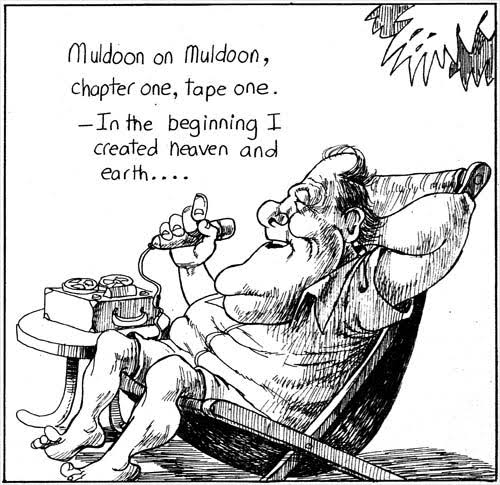
The first catalyst was Muldoon’s massive “Think Big” construction scheme involving Bechtel. Launched across New Zealand during the late 1970s and early 1980s,
These projects included the Taranaki Energy Hub’s Waitara Valley (1981–1983) and Motunui (1982–1985) methanol plants near the Taranaki oil fields, the Marsden Point Oil Refinery expansion in Northland, and a sweeping infrastructure project that electrified the North Island Main Trunk railway between Te Rapa and Palmerston North. During the peak construction phase of these Taranaki petrochemical projects between 1981 and 1985, Bechtel’s presence expanded rapidly from a small office into a massive workforce of 2,500 to 3,000 personnel—largely contractors—profoundly transforming the local economy and infrastructure. Bechtel was also brought back to manage construction expansions for the Comalco-led aluminium smelter at Tiwai Point, which it had originally helped build in the late 1960s. This expansion utilised the massive electricity supply generated by the Manapōuri power station—another asset Bechtel helped construct a decade prior. Additionally, the massive Clyde Dam hydroelectric power station was constructed on the Clutha River in Otago to generate the immense electricity required to feed the country’s expanded industrial framework. Ultimately, “Think Big” relied on a cycle of heavy upfront international borrowing backed by aggressive projections of future resource wealth. The initiative was Prime Minister Robert Muldoon’s bid to reinvent New Zealand’s economy and achieve greater sovereignty free of debt—a gamble that ultimately backfired, plunging the nation deeper into long-term debt and economic servitude.
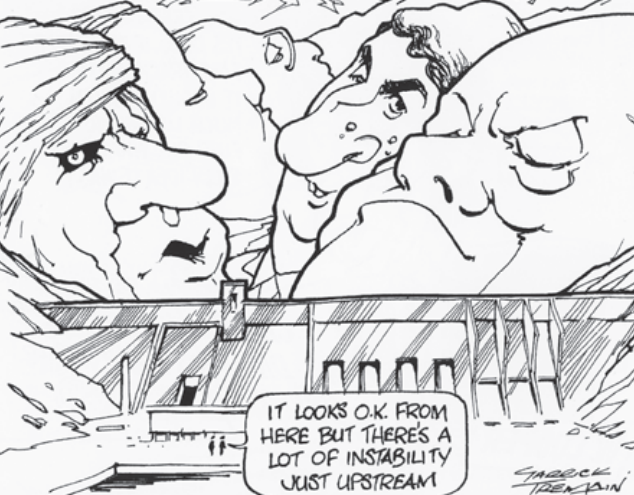
If you want to make a comparison to what Muldoon did to New Zealand and the social factors that bred addiction and create places like Kensington squalor;
Muldoon saw that New Zealand was hopelessly hooked on the global syndicate’s oil, so he took out massive, high-interest street loans from foreign suppliers to build the nation its own mega drug plant so the countries could feed their energy addiction on their own terms. He believed cooking the drug locally would buy back the block’s freedom and easily cover the crushing cartel debt. Instead, global smack prices crashed while the loan sharks jacked up their interest rates, turning the gamble into absolute financial enslavement. The operation unsurprisingly went entirely bust, forcing the incoming crew to take over the toxic debts and pawn off the state’s prime assets to international cartels just to stop the suppliers from breaking the country’s legs. By attempting to micro-manage the entire block, Muldoon unknowingly set up the perfect “Shock Doctrine” scenario for the Chicago School economic gangsters who would essentially be running New Zealand economy into a corner, making a radical takeover not just possible, but inevitable. Across the ditch the process would be repeated except Australia would skip the messy street war and went straight to a corporate syndicate buyout Instead of fighting the local drug runners (unions), the new mob (offshore cooperate aquations) got them to sign a peace treaty. The workers agreed to take a pay cut in exchange for a “social wage” (universal health care and national superannuation). This kept the block stable while the bosses quietly opened the doors to the international ‘cartels’
Long before the Think Big era, Bechtel was the head engineering and construction contractor commissioned to build New Zealand’s first and only domestic oil refinery at Marsden Point in Northland. Working alongside local subcontractors, Bechtel delivered the initial facility for £10 million to process crude oil into national supplies of petrol, diesel, and jet fuel Manapōuri Hydroelectric Power Station (1963–1971): Bechtel Pacific Corporation was retained by the government as the primary consulting firm responsible for the engineering, procurement, and construction management of this massive underground power station in Fiordland. This included supervising the construction of the underground powerhouse and the notorious tailrace tunnel out to Deep Cove Early Geothermal Exploration (1957)*1 Operating under a joint venture known as Fletcher-Bechtel-Raymond, the company was involved in the early technical research, drilling, and engineering reporting that laid the groundwork for New Zealand’s geothermal steam programs in the Taupō Volcanic Zone.
*For Deep Coves US Military ties see The Lost Fjord Mystery Investigate April 2000.
In the short term, the massive influx of capital pumped into Muldoon’s Think Big projects injected unprecedented disposable income into the South Island’s local economy—a boom unseen since the gold rushes of the 1860s. Up until this point, New Zealand society had been deeply dominated by British cultural norms. That reality shifted rapidly as fast money fostered an appetite for all things American. In the wake of World War II, the patriarchal role of Mother England was systematically replaced in Oceania by Uncle Sam, a transition accelerated by Muldoon’s promises of a new era of prosperity. His style of governance mirrored the man himself: brash, overly confident, and fiercely arrogant regarding his own abilities and intellect.
The second, more sinister transformation, which would be related to the real-world drug trade, occurred as these large-scale infrastructure projects became pipelines for narcotics.
- This influx of drugs coincided directly with the rise of the domestic biker scene, whose white power outlaw motorcycle clubs would ultimately be headquartered in Timaru (having been incubated by a Gang scene born in Southland during the first Bechtel projects but the actual MC official affiliation after the first New Zealand Hell Angels chapter was established in 1961 by Yankee” Jim Carrico a US Navy Servicemen from Sacramento, California. On July 1, 1961, the club was officially sanctioned and granted the right to wear the coveted “Death’s Head” patch with the “AUCKLAND” bottom rocker. At the time, it was only the fifth Hells Angels chapter in existence globally.
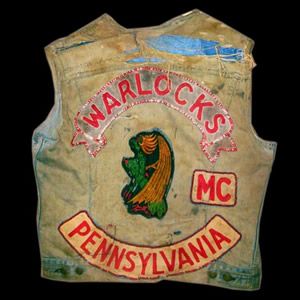
The MC Biker gangs acted as the primary distribution narcotics networks across both Australia and New Zealand. The MC gangs recieving drugs from the Australian based Calabrian Mafia or the New Zealand based Mr Asia syndicate and both used the US intelligence affilated Nugan Hand to launder the process from drugs sales. It was a business model Horsch would be intimately familar with, having himself cultivated marijuana (who use and availability would be displayed on biker’s patches with the number 13) and manufactured methamphetamine. For the MC biker scenes in both Philadelphia (when the City would come to be known as the meth capital of the world [Philadelphia Crime Commission page 2) and Florida as the bikers got their drugs from merchant seamen and longshore men. The monopoly, when it came to meth, was exercised in large part through their control over the importation of a precursor, P2P. This local New Zealand model was for all purposes structurally identical to the Philadelphia-based Pagans MC and the Philly Floridan-based Warlocks MC Horsch had being dealing with directly.
Horsch having claimed, in the famous 2014 interview with Kevin Crimmin, that he had sold meth to the Philadelphia MC Pagan and Florida’s/Philly based War Lock MC.
The question of authenticity regarding that claim can be underscored by the New Zealand American authorities who would end up looking for him in New Zealand when his past caught up with him. Leading Horsch according to press reports at the time to flee in a hurry leaving behind drugs and a firearm. Items which were allegedly recovered from the Ethanol factory after Horsch fled the country in 1984.
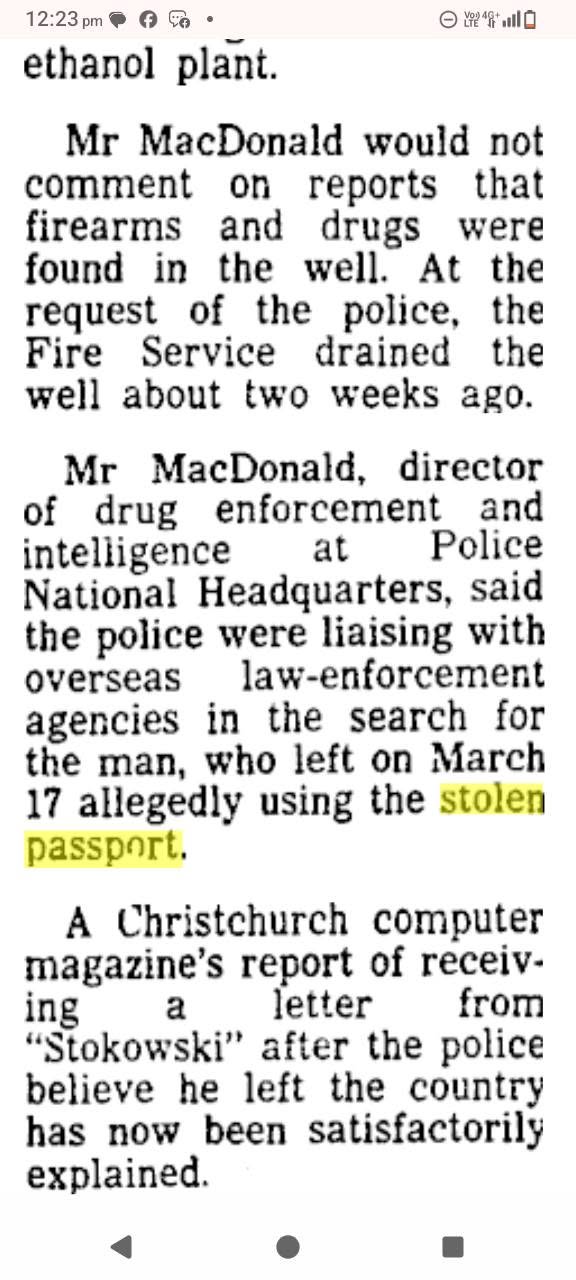
The guns and the drugs found at the Ethanol plant making it very clear that Horsch existence in Timaru had not been any more above board than it had been any were else he had ever resided. His presence in New Zealand would also fit in perfectly with the rise of MC Biker culture, headquartered in Southland in Timaru, as a distributors of hard narcotics in line with the geo politics of the decade.
In the 1970-80s a global hierarchy formed in western nations of clandestine operations, affiliated to white collar banking, supporting or empowering white-collar criminals. Those who inturn where enabling orgnanised criminal faciltators of reginal gangs crews and street block dealers of crime.
Driven by the economics of prohibition, this predatory supply chain terminated directly in the veins of the marginalized. Funnelled into addiction and sex work by systemic poverty, these communities became the ideal hunting ground for Horsch. He was a functional technician within an ever-churning machine—an asset whose paraphilic deviance was not merely ignored by the system but actively leveraged. Horsch’s own addiction to power, deployed through drug dealing and domestic terror, served a broader systemic purpose: it kept the local population fractured, exhausted, and trapped in a cycle of pure survival that choked out any hope for democratic resistance or social evolution.
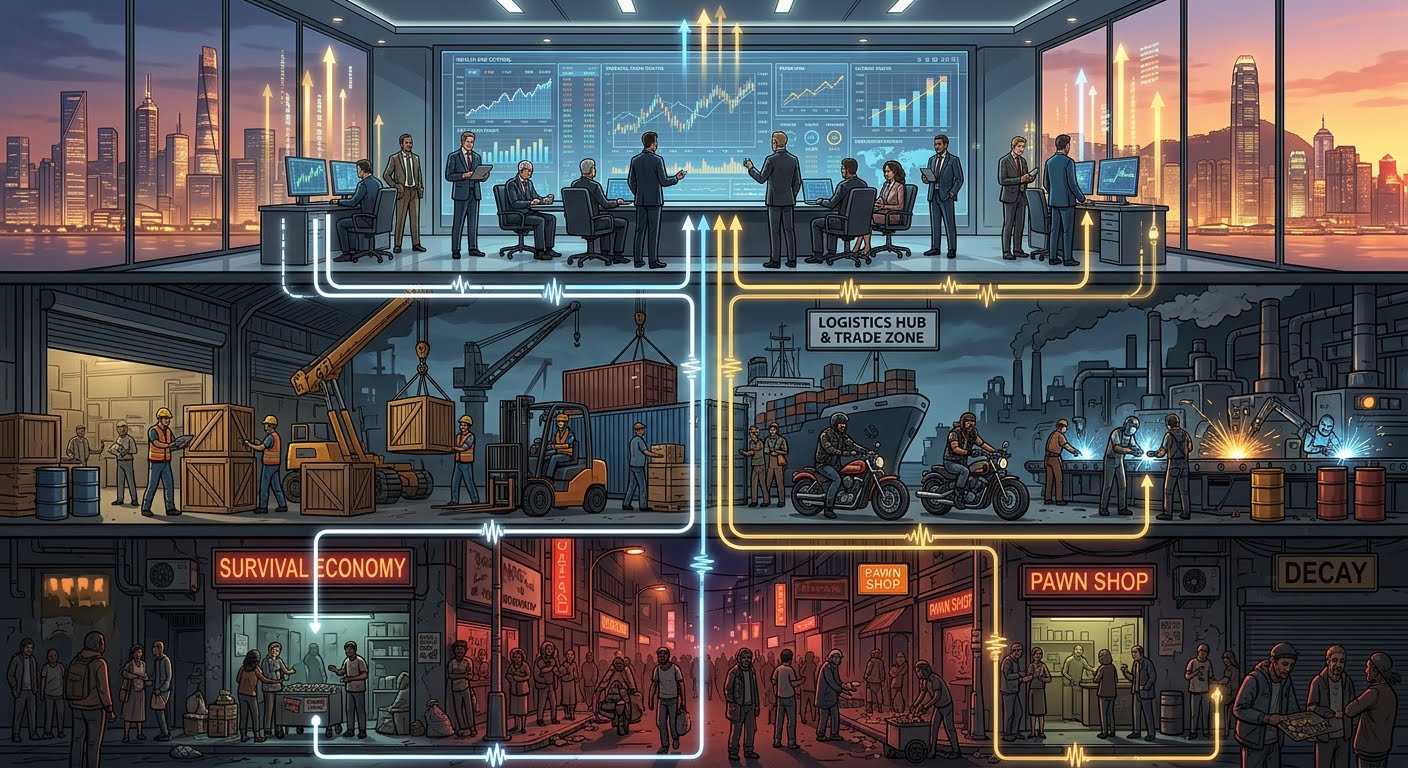
This phenomenon was not isolated to extreme cases like Philadelphia’s Kensington open-air drug market. It was a tumour growing across Western democracies under post-war industrialism. This decay laid the groundwork for the neoliberal surge of the 1980s and 1990s—championed by Reagan and Thatcher and codified by the Washington Consensus. Today, that aggressive free-market era has mutated into “Zombie Neoliberalism,” fracturing into state capitalism, populist protectionism, and techno-feudalism. The parallel is exact: just as crime syndicates replaced organic heroin with lab-cooked fentanyl to maximize profits through lethal addiction, late-stage capitalism replaced free markets with predatory tech monopolies to strip the poor of agency and induce a fatal overdose on the democratic process.
NEOLIBERALISM TRICKLE DOWN ECONOMICS.
Yet, before unfolding how this underworld dynamic played out during Horsch’s time in Timaru, let us first return to his white-collar New Zealand backers.

Muldoon’s era of financial recklessness, culminated in 1989, when the creature his admiration had set up to grow business the state-owned Development Finance Corporation (DFC) was placed into statutory management, before being liquidated in 1991 due to high-risk property speculation and catastrophic bad debt. Amidst this institutional chaos, Horsch accumulated $18,000 NZD in unauthorised charges on his company Visa card while operating his Canterbury chemical ventures as a state funed enterprise. Chemical Technologies Ltd was eventually bought out by Alpine Dairy Products and ultimately absorbed into the New Zealand dairy giant Fonterra. Corporate records show that Horsch’s alias, Dr Stanley Eugene Stokowski, remained active on the company’s books until 2006.
Chemical Technologies transitioned into Alpine Dairy Products with share allocations listed as:
- 33.33% Shareholding: Erynne Ruth Fildes (Wanaka), Allison Louise Cooper NY 10011, USA).
- 20.00% Shareholding: Craig Andrew Fildes (Wanaka), Erynne Ruth Fildes (Wanaka).
- 13.33% Shareholding: Held by Allison Louise Cooper (New York, USA), John Mario Olivieri (NY, USA), and Stephen Charles Stuart Watts (Crafers, South Australia 5152, Australia).
The Fildes are prominent dairy farmers with extensive agricultural and regional irrigation interests.
Criffel Water Limited 11 December 2014 Active (Registered) Irrigation system construction & commercial water allocation Minority Shareholder Upper Clutha Irrigation Company Limited 21 November 2012.Localised agricultural irrigation networks 60% Majority Owner (Jointly with Erynne Fildes)
Stephen Charles Stuart Watts is a prominent Australian financial professional, corporate director, and chartered accountant. His career spans alternative fuels, trans-Tasman retail and real estate, and historical mining operations, with a particular focus on North American oil and gas exploration. Many of the firms he involved himself with were kick-started by New Zealand taxpayers and developed using local capital before ultimately being acquired by American interests. Little background is available on the Dairy ethanol plants New York-based shareholders other than John Mario Olivieri, a New York lawyer of Sicilian descent. Olivieri’s family roots trace back to Mineo, Catania, Sicily, where his grandfather, Mario, was born in February 1921 before the family emigrated to the United States. Olivieri has practiced at White & Case LLP and Barnes & Thornburg LLP.
Clients of Barnes & Thornburg are typically high-profile and powerful. They have included mobster Efrain Santos (“Puerto Rican Frankie”), a longtime associate of the Chicago Outfit’s Southside faction who was convicted of running a massive, illegal underground lottery. White & Case is an equally high-powered firm that has represented the state interests of Georgia, Indonesia, Turkey, and Mozambique.
Notably, the firm defended Mozambique in multi-billion-dollar litigation surrounding the infamous “Tuna Bond” scandal which is another example of the Kensington effect caused by the Chicago School of Economics shock doctrine that Greed is Good. This high-profile case involved attempts by Credit Suisse and VTB Bank Russia to bankrupt the sovereign nation to seize control of its natural resources and critical infrastructure, including irrigation and water treatment plants. Bribes from the Mozambique deal have a direct link to New Zealand; millions in illicit kickbacks were laundered into the Christchurch real estate market. The local agent facilitating these Christchurch property transfers was AJP Trustee Services Limited, a firm directed by Nicola Frances Bell. Bell, a former employee of an energy enterprise previously associated with Enron-related structures, was later revealed to be the sister of Andrew John Pearse—the former Credit Suisse banker and Christ’s College old boy who pleaded guilty in a US federal court to masterminding aspects of the international fraud.

In the 1980’s like drug dealing hand out free drugs we all got hooked on the never ending joy of the credit card – until in te 1990s we calcualted the interest rate caused by debt – which was spelt out by the sell out of public assetts and the sell of food producing land to offshore bankng interests.
Anna’s own bio states she previously spent three years in London, working in the finance department of Freshfields Bruckhaus Deringer, as well as in the in-house legal teams for Enron and its successor in the energy market, American Electric Power. Enron Corporation was an American energy, commodities, and services company based in Houston, Texas.
Not mentioned in the bio is how Enron entered into bankruptcy after pulling off a fraud on a biblical scale on December 3, 2001 due to colossal mismanagement, epic fraud and epidemic inside trading. All hidden behind a mountain of nominee companies set up to launder and hide transactions. Enron the Chicago poster boy of modern globalism would literally use the very same taxation and auditing methodology of Fonterra New Zealand which ultimately would be born out of the corporate takeover of dairy assets such as Chemical technologies.
In New Zealand’s role within the Mozambique Tuna Bond fraud, we see the familiar deployment of nominee entities explicitly constructed to mask ownership and evade detection.
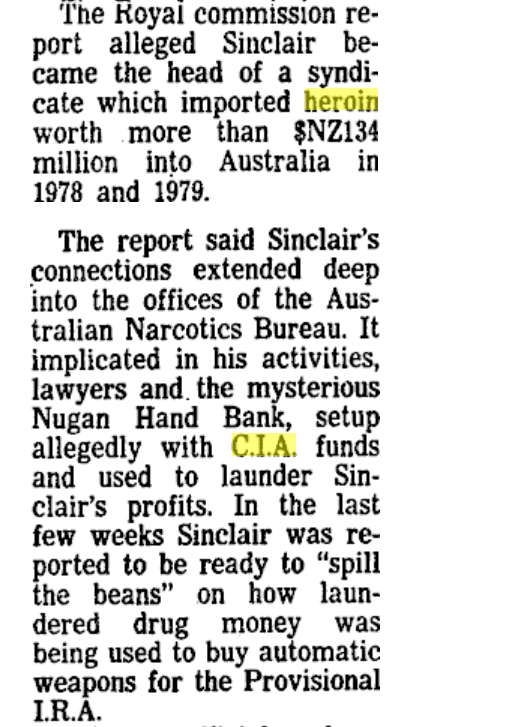
The exact playbook which first became a staple of New Zealand white-collar crime during the notorious sagas of the Mr Asia syndicate (head by Terry Sinclair) and the CIA-linked Nugan Hand Bank which had moved over $1 billion for the Shah of Iran and millions more from other U.S. backed dictators like Ferdinand Marcos and drug warlords supported by the CIA like General Vang Pao which declassified documents, historians (such as Alfred W. McCoy The Politics of Heroin in Southeast Asia), and former CIA operatives (including Tony Poe) have linked Vang Pao and Hmong forces to the Golden Triangle opium and heroin trade.
These operations and their aftermath would all unfolded during the exact years Horsch arrived to live in Timaru, nestled under the shadow of the Southern Alps and Mount Hutt. An idellyic setting where me my father and my our family would enjoy the good life, right up until the stock market crash of 1987 turned New Zealand into a nation of haves and have nots. It was an era that would unfold just before the arrival of Rogernomics, the radical economic reforms that would sharply fracture a nation once celebrated for its egalitarian principles, dividing it permanently.
A process which global academics called the New Zealand experiments to explain how political machination and their economic consequence where then exported to te rest of the world first under Tony Blair Third Way (which saw Blair advised by handpicked graduate and spin doctors such as Jacinea Ardern New Zealand future PM and her mentor Sir Willaim Sargeant). As Bill Clinton adopted Neoliberalism and Obama Aide would result in a policy of pain killers first and treatment never. As state and corporate backers that helped fuel Americas Fentanyl epidemic realized it was cheaper and more efficient to distribute maintenance drugs (and tolerate open-air consumption) than to fund deep, transformative psychological and economic rehabilitation.
- Wave 1 (Late 1990s–2010 Clinton Bush Jnr): Aggressive overprescribing and predatory marketing of prescription opioids like OxyContin, by big Pharma, built the initial baseline population of dependent individuals.
- Wave 2 (2010–2013 Obama): Governments crack down on “pill mills” and tightening prescriptions but little is done to meet rehab and ongoing medical treatment needs. Dependent users are driven to the black market. Cartels expanded cheap street heroin, flood the market to supply to demand boosting law enforcement social, correction cost boosting profits to privatised prison and those supplying increasing militarized police units.
- Wave 3 (2013–Present Obama Trump): illicitly manufactured fentanyl (usually made in China), systematically infiltrated the drug supply. Cartels began aggressively cutting heroin, cocaine, and counterfeit prescription pills with synthetic fentanyl, sold cheaper with profit maximize via extreme potency that drive addiction and ensure an increase in quantities sold. From 2020 onward, the intersection of the COVID-19 pandemic and the peak optimization of the synthetic drug supply chain triggered a devastating epidemiological surge in the West. In measurable statistics, this post-2020 era represents the absolute acceleration of the “synthetic tumour,” drastically restructuring mortality data and urban stability across Western democracies global opioid users surged to over 61 million by the 2020s, with synthetic opioids driving the vast majority of fatal poisonings.
Fentanyl today remains the leading cause of death for Americans aged 18 to 45.
Fonterra, the most globally recognisable of all New Zealand corporate brand, stands today as a symbol of the country’s ultimate commitment to corporate globalisation and the economics of the Chicago School of Economics — with its indifference to whoever or whatever was crushed by the juggernaut of progress along the way. The specific firm driving Fonterra’s corporate rise was McKinsey & Company, where future Enron CEO Jeffrey Skilling had previously built his reputation as a consultant.
In 1999, the New Zealand Dairy Board hired McKinsey to design the definitive blueprint for restructuring the entire national industry. McKinsey becoming the primary architect behind the foundational strategic reports that directly orchestrated the 2001 mega-merger of Kiwi Co-operative Dairies, the New Zealand Dairy Group (NZDG), and the New Zealand Dairy Board into a single global colossus initially dubbed “GlobalCo”—which ultimately became Fonterra. While Fonterra established its global headquarters in Auckland, it subsequently anchored its North American corporate and technical hub in Chicago the city that gave us the Trump Tower and Antoin “Tony” Rezko the slum lord sugar daddy to the Chicago Democrats who was perhaps their best patron since bootleg alcohol and primary pineapple politics (the term given for the hand-grenade mobster use to throw into polling booths) of Al Capone. Though to be fair to the Democrats Al Capone was a guy quite capable of bribed both sides of Congress.
The downstream economic social consequence of this massive corporate overhaul was that it drove New Zealand dairy farmers deep into systemic debt, ultimately forcing the liquidation and sell-off of generational family farms and vital regional water irrigation interests to offshore—predominantly American—buyers. The architectural shifts engineered by McKinsey directly accelerated the ruthless commoditisation of New Zealand’s primary dairy sector. Within just four decades, prosperous independent farmers were transformed into debt-laden operators as the nation’s entire rural fabric was gutted. This initial step toward globalisation eroded New Zealand’s standing, dropping it from the peak of OECD indicators toward the bottom, leaving local hospitals crumbling and roads permanently littered with orange cones. As New Zealand’s economy increasingly struggles under the weight of becoming socioeconomically hollowed out, the state continues to channel escalating resources into armed and increasingly privatized police, prisons, and intelligence networks.
Simultaneously, funding is slashed from frontline healthcare, welfare programmes, and critical drug rehabilitation initiatives. This austerity occurs even as the country remains trapped in a nearly 30-year methamphetamine epidemic—a crisis that now drains up to $1.8 billion annually in total social and economic harm. The rate of methamphetamine use and addiction in New Zealand has transformed dramatically over the last forty years. Virtually non-existent in the 1980s, the usage rate hovered around 1% following its initial surge in the early 2000s. However, the crisis escalated drastically between 2023 and 2026, when a flood of cheap international supply caused national consumption to nearly double.
The exponential trajectory of the epidemic is starkly illustrated by border interception records:
- 1980: $0 USD/NZD worth of methamphetamine seized.
- 2000: 10.4 kg seized, carrying an estimated street value of approximately $10.4 million NZD.
- 2020: Over 500 kg seized, carrying an estimated street value of $250 million to $300 million NZD.
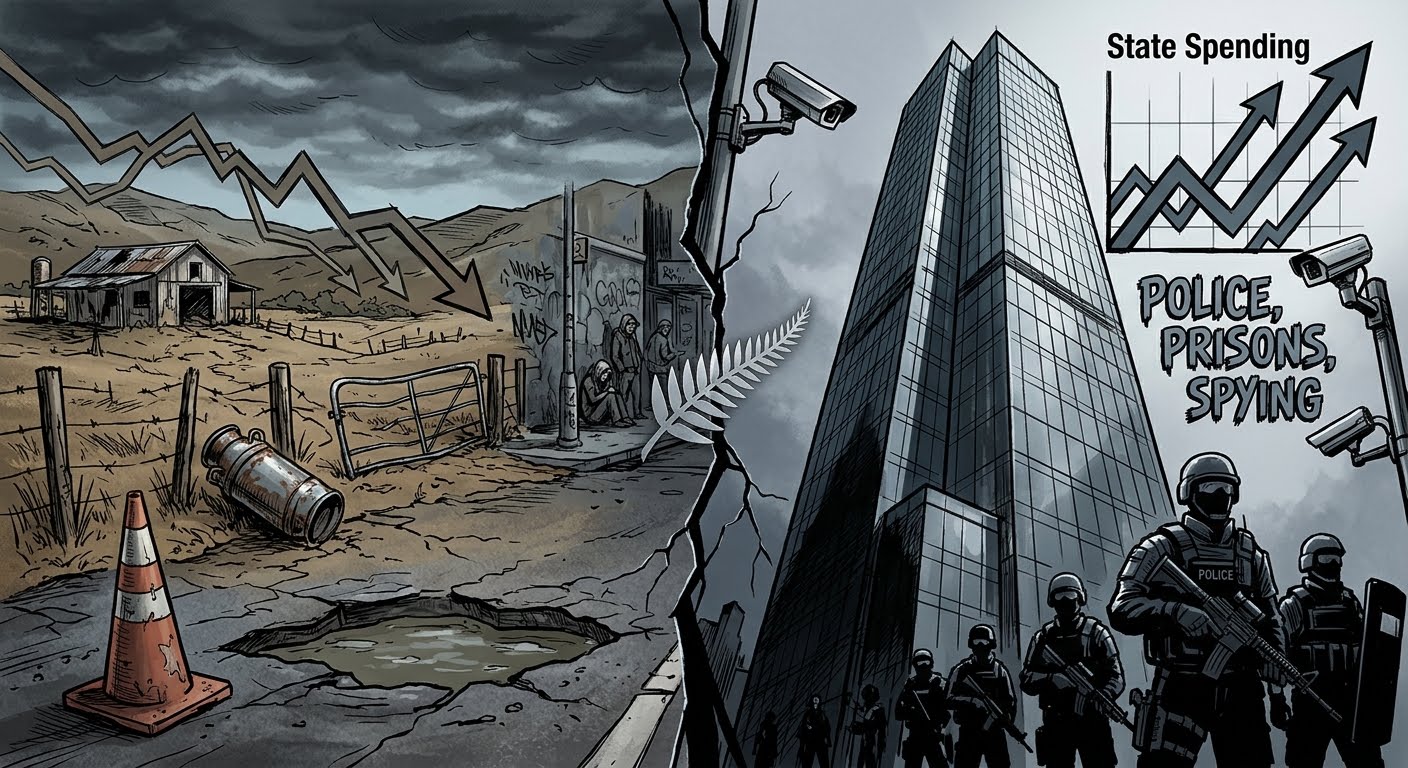
When comparing these figures to Australia, the trend lines match almost identically. Australia operates on a vastly larger absolute scale due to its larger population and established continental trafficking ports; historically, however, both nations have shared the highest per-capita rates of methamphetamine consumption in the world.
Al Capone the king pin of 1920’s Chicago and urban American ‘pineapple primary’ politics would have been impressed.
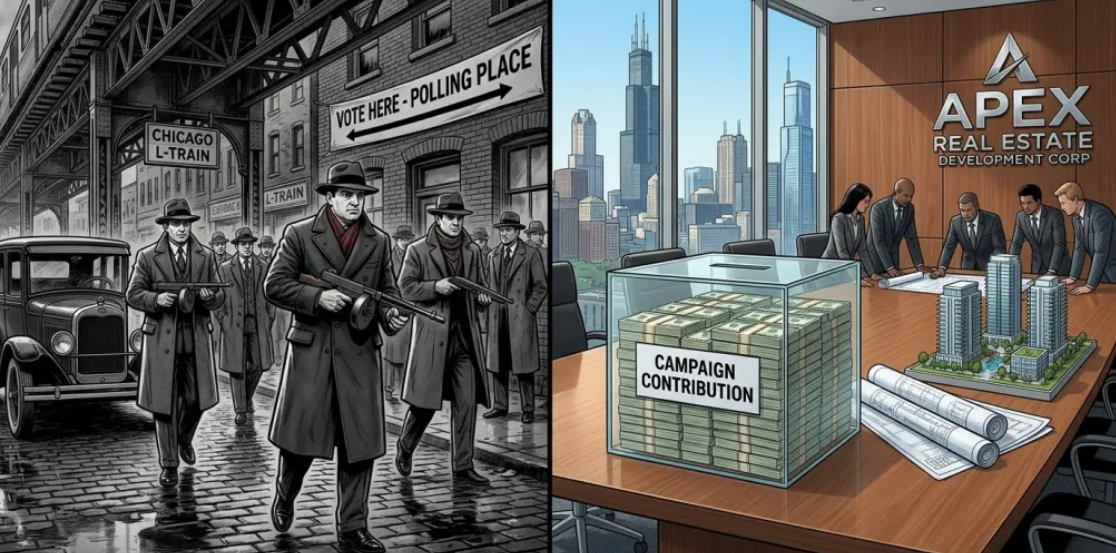
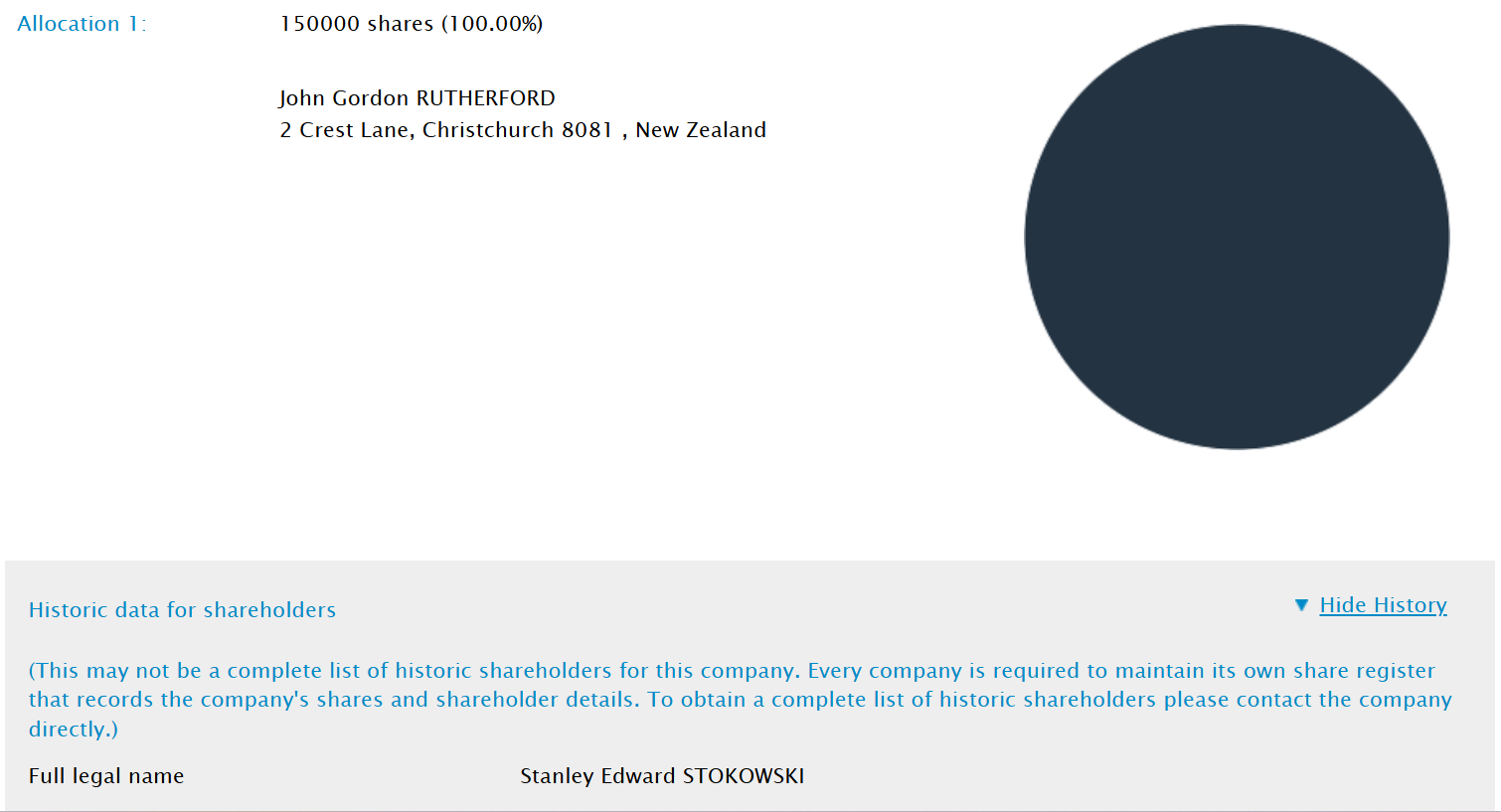
FRIENDS IN LOW & SPOOKY PLACES – Robert Muldoon, Mr Asia & Cold War Politics
There is no depression in New Zealand.
We sleep in a well made bed.
Oh, but everybody’s talking about World War ThreeYes, everybody’s talking about World War ThreeBut we’re as safe as safe can beThere’s no unrest in this country.
We have no SIS. We have no secrets. We have no rebellion We have no Valium – There Is No Depression in New Zealand, Blam Blam Blam ‧ 1992
Peter Crimins, who did the famous 2014 TV interiew with Raymond Horsch, noted Horsch claimed links to the very highest level of the New Zealand government. That he said he had “the personal phone number of New Zealand’s prime minister Robert Muldoon, and that the eventual revelation of Horsch’s false identity caused such a public scandal that it thwarted Muldoon’s re-election”.
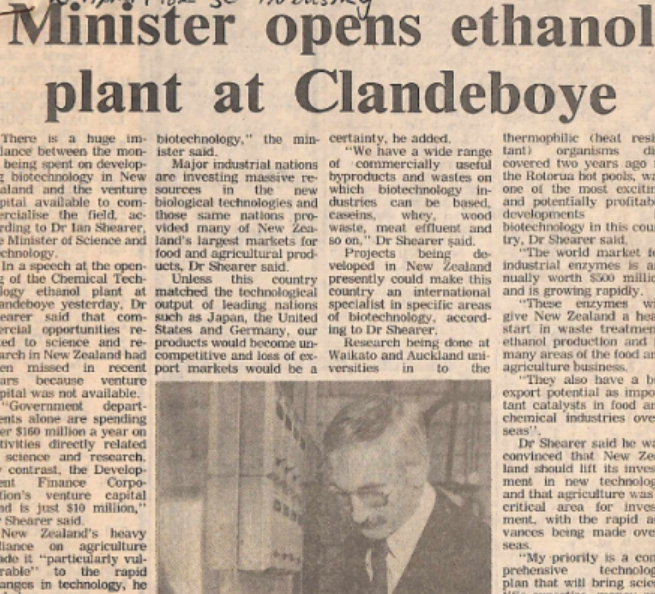
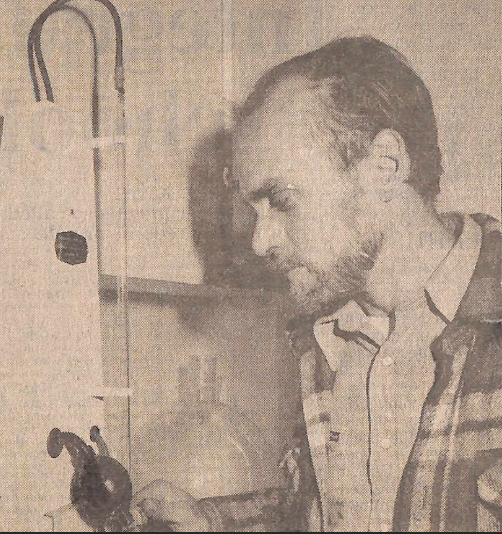
On the evening of 14 June 1984, New Zealand Prime Minister Sir Robert Muldoon called a snap election on live television while visibly and heavily intoxicated – moments later after making the announcement he is said to have thrown up off camera.
Any one who know the famous story of how an extremely drunk Muldoon called a snap election in 1984 (well known as the “Schnapps Election”) before thrown up off camera will know that last part is certainly untrue.
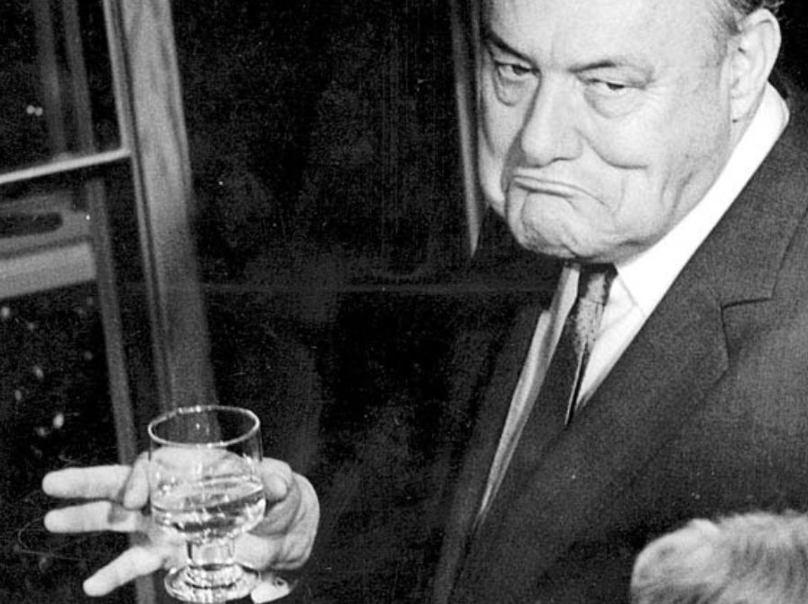
On the evening of 14 June, National MP Marilyn Waring notified the leadership that she would cross the floor to vote in favour of an opposition-sponsored anti-nuclear bill.
It was this event that primarily threatened Muldoon’s thin legislative command that led him to make his heavily intoxicated ‘schapp’ (actually brandy was the offending liquor) election decision. So on the surface Horsch remark seems at first just untrue. Not withstanding another unique feature of this era was Robert ‘Piggy’ Muldoon use to list his own phone number clearly in the phone book (and was famous for taking calls from random strangers). Put simply getting his phone number in 1980 was not a hard task.
The macro politics is a bit more complex.
By 1984, Sir Robert Muldoon’s internal grip on the National Party was profoundly brittle, characterized by boiling ideological resentment, open backbench mutiny, and physical and mental exhaustion.
Muldoon’s economic policy—enforcing an artificial wage, price, and interest-rate freeze, alongside massive state-funded agricultural subsidies and the “Think Big” industrial infrastructure projects—was fundamentally un-Tory. Which for a party like the National Party was not a comfortable mix.
Muldoon’s base of power rested on his unique brand of populism anchored by an informal, working-class, and rural right-wing faction dubbed “Rob’s Mob.”
The fragile internal state of his leadership was laid bare in the lead-up to the eventual snap election. His populist appeal, severely undermined by his own erratic actions—increasingly fuelled by heavy drinking that led critics to accuse him of being “drunk in charge of the country”—began to dip sharply. In October 1980, a group of senior National ministers historically known as the “Colonels” concluded that Muldoon was actively destroying the nation’s economy and organized an internal coup to oust him. They successfully marshalled a tentative majority within the National Party caucus to replace him with his more moderate deputy, Brian Talboys. Talboys (not to be confused with Talbot) ultimately refused to aggressively contest the leadership to avoid fracturing the party, Muldoon was able to counter-attack, see off the plotters, and retain the premiership without a formal vote ever being cast. Muldoon only survived because Talboys, who was overseas at the time, lacked the stomach for a public, bloody leadership battle and refused to contest the position. While Muldoon held onto power, his aura of absolute invincibility was permanently broken; he knew half his own cabinet wanted him gone. His own grasp on power had been fuelled by a series of internal scandal that had threatened to destroy the National party and fired an internal mutiny and led even Muldoon’s own cabinet to question the nepotistic nature of Muldoon and his inner ring.
Chief of these incidents was a heated parliamentary debate in 1976 where, high-ranking Labour MP Colin Moyle (widely tipped as a future Labour leader) questioned Muldoon’s accounting firm’s integrity. Enraged, a heavily drinking Muldoon counter-attacked from his seat, shouting an accusation that Moyle had been “picked up by the police for homosexual activity” as he waved leaked police documents which allegedly proved Moyles indiscretions. At the time was still illegal in New Zealand. The exact exchange by Moyle before Muldoon used the leaked police report to derail Moyle’s line of questions would be;
“Would it be in order for an honourable member in this House to accuse the Prime Minister of being a member of an accountancy firm that did things that were dishonest”?
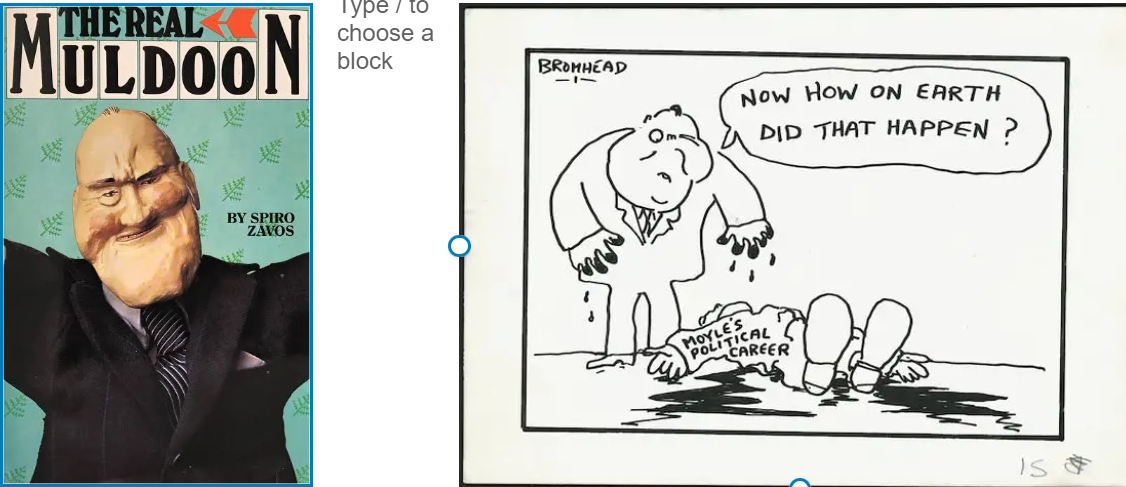
Journalist and author Spiro Zavos also underscores this point in his book The Real Muldoon claiming Moyle was in fact meeting an informant to garner more information on Muldoon clients. Today these specific firms, are firmly linked to Mr Asia, the heroin syndicate led by Terry Sinclar and Marty Johnstone whose connection to Muldoon have largely been expunged from the digital records….well almost.
Where they do exist (such as the widely published Milltone Charter, Milltone Holdings, Milltone Enterprises) details such as who their accountant and business partners where remain oddly blank on the digital versions. At best you just an address or two listed but no names. Yet if you type in the listed address and ask what accounting firm was historically linked to that address it will tell you the firm was Gavin Muldoon & Associates. Gavin Muldoon is the son of Robert Muldoon and later inherited his practice.
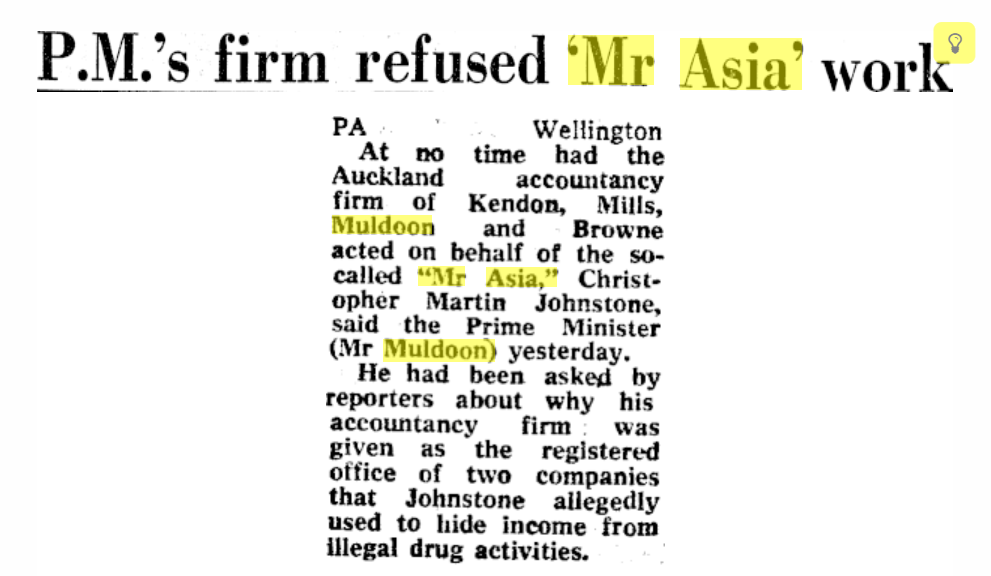
Papers Past ultimately confirm the connection as it spit up the archived material of the Press (P.M.’s firm refused ‘Mr Asia’ workPress, 13 November 1979, Page 1)
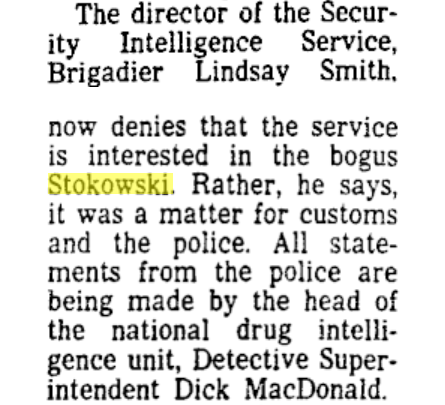
To launder the vast profits generated from heroin trafficking, syndicate masterminds Terry Clark and Marty Johnstne (whose middle name was Martin, combined with associate Ray Miller to phonetically influence the name) set up a network of commercial covers. Depending on court records and journalistic accounts, these are referred to as the “Milltone Group” or “Millstone” front companies.
For example a1983 Australian New Zeland government joint inquiry tino drug tarfficking and Mr Asia notes George Papaconstantinou born in Patras, Greece, on 1 January 1945, entered New Zealand in April 1966 at the age of 21, and was naturalised in May 1977 “Soon after he and Christopher Martin Johnstone met early in 1974 they began dealing in cannabis sticks in Auckland, using the profits to set up a number of companies, including the Milltone group”
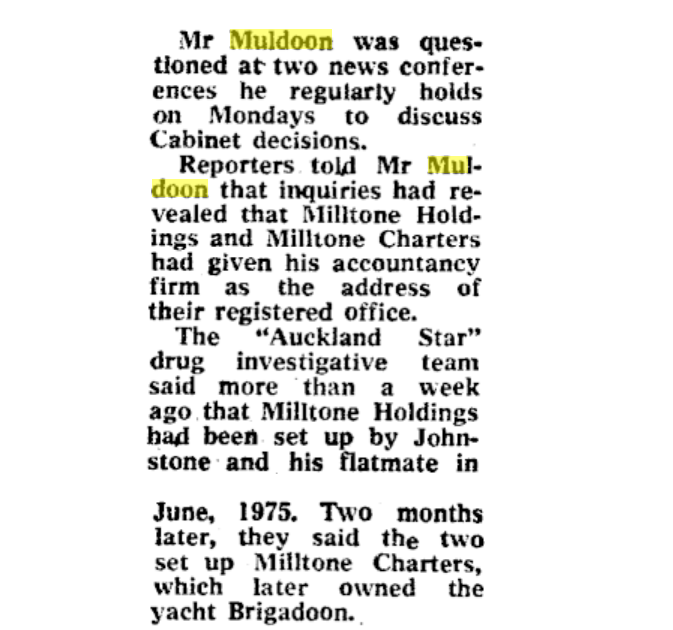
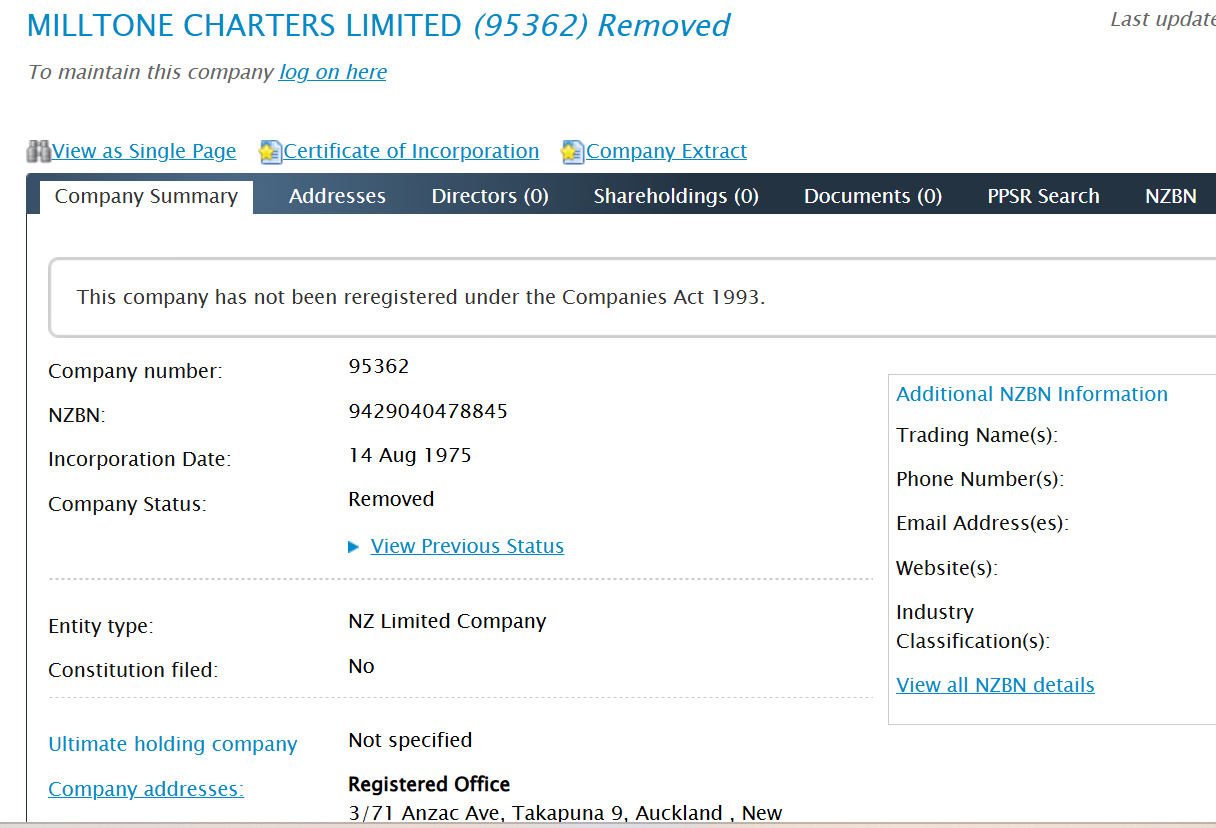
Names that the New Zealand Herald itself used all underscore this claim can be found in mainstream reporting as well. Even if the matter has now been subjected to selective amnesia.
The official 1983 Royal Commission of Inquiry into Drug Trafficking (conducted by both the Australian and New Zealand governments) and MR Asia also noted MILLTONE BANNER was not only used to pay legal bills, labour disputes, architectural bills and tax bills but the cash would be routed through Credit Suisse London to pay bills using a complex nominee banking system which should have been a red flag to any normal accounting firm and considered unusual conduct.
A 2025 entry again by New Zealand major newspaper confirm the Milltone companies were indeed firm used as money laundering front by Mr Asia. As does Richard Hall Book Greed and Pat Booth’s defining book (titled Mr Asia), which also underscore Muldooon ties to the front firms used and the firm led to a NZSIS investigation.
Which again is highly unusual as the NZSIS are not involved in criminal matters and their jurisdiction where confined until only very recently espionage and terrorism not domestic crime matters.
Further the SIS very decision to deny connections was it self a deviation form an official policy of neither confirming or denying matter related to intelligence issues. The very role of Australian New Zealand and US intelligence agency in the MR Asia affair, regardless dispute over what their interest may or may have not being would all be example of why MR Asia warranted specific attention as being just a normal drug syndicate..
In August 1978, investigative journalist Pat Booth published a series of explosive articles in The Auckland Star, exposing an international narcotics ring and coining the moniker “Mr Asia” to describe its flashy operative, Marty Johnstone. While Booth initially focused on Johnstone, the syndicate was ruthlessly controlled from behind the scenes by Terry Clark. The group’s vital supply line relied heavily on Singaporean merchant sailor Choo Cheng Kui—known to the underworld as “Chinese Jack”—who smuggled pure heroin out of Southeast Asian networks.
As formally documented in the 1983 Australian Royal Commission of Inquiry into Drug Trafficking Report, Jack Choo was related by marriage to the inner network of Khun Sa, the notorious “Opium King” of the Golden Triangle. Decades earlier, Khun Sa’s rise had been inadvertently accelerated by the geopolitical manoeuvring of the Cold War; his early rivals and regional networks operated within an infrastructure heavily shaped by the Kuomintang (KMT)—the Chinese Nationalist forces backed and weaponised by the CIA in northern Burma to counter communist China. By the mid-1980s, the US Drug Enforcement Administration (DEA) estimated that Khun Sa’s territory generated the vast majority of the Southeast Asian heroin entering America. Boasting an unprecedented 90% purity, this “China White” flooded the US East Coast, utilizing shipping routes that mirrored global commercial lanes—including those connecting Singapore to New York, Philadelphia, and to New Zealand ports like Tauranga and Timaru.
To halt this influx, the United States launched a major legal counter-offensive.
In December 1989, a New York federal grand jury indicted Khun Sa for smuggling over 3,500 pounds of heroin, prompting Washington to place a $2 million bounty on his head.
This was followed by the DEA’s targeted Operation Tiger Trap in the early 1990s. By systematically arresting his core brokers and blockading his supply lines, the operation choked his empire, ultimately forcing Khun Sa to surrender to the Burmese government in 1996 to evade US extradition. However, dismantling this empire triggered a massive displacement in the global drug trade. When the Asian supply lines fractured, Mexican cartels rapidly stepped into the vacant US East Coast market, initially expanding their own poppy cultivation before transitioning entirely to synthetic chemistry. By importing cheap chemical precursors from Asia, these cartels began mass-producing fentanyl in clandestine labs. Because fentanyl is up to 50 times stronger than organic heroin, vastly cheaper to manufacture, and easily smuggled in micro-amounts, it completely replaced traditional opium—transforming an old transnational heroin pipeline into the deadly synthetic epidemic that plagues modern economic slums like North Philadelphia’s Kensington today.
The process of how the heroin reached either Philadelphia or New Zealand in the 1970s and 1980s would begin in the dense jungle laboratories controlled by Khun Sa’s forces along the Burma-Thailand border the thin blue line for what the CIA and Washington Hawk warned would represent the first domino to fall to China domination of South East Asia. This covert policy was ironically shaped by the first intake of CIA field agents, who were compromised by KGB mole Kim Philby with the unwitting blessing of James Angleton, the Chief of CIA Counterintelligence.
A policy that had the CIA pick reckless adventurers and self-serving privateers (as depicted in the book The Ugly American) and wreak havoc on the US clandestine activities for decade. Thirty-five years of investigating the alleged links between intelligence ties of drugs banks and the state had led to a situation with this author can quote a mountain of books that, to varying degrees, demonstrate the links between corrupt western (and even Soviet) spy agencies and hard drug entering the West and Russia. I cant however name even one book I have ever read that has demonstrated the same ties to Chinese state agent moving drugs into China,
At the time, regional authorities still operated under the shadow of the communist domino theory.
The route relied heavily on bribed Thai military and border police officials who turned a blind eye to shipments entering Bangkok—the primary staging ground for international export. Historically, if an armed group was fiercely anti-communist, regional states blindness accentuated accordingly. “Let my armies operate, and we will act as a buffer force to fight off the communist insurgents and ethnic rebels,” Khun Sa famously maintained. In exchange, his forces secured black-market military hardware.
Once the heroin arrived in Bangkok, it entered the distribution networks of Chinese triad elements and independent brokers. This is exactly where the New Zealand-based Mr Asia syndicate’s Southeast Asian supply line took over.
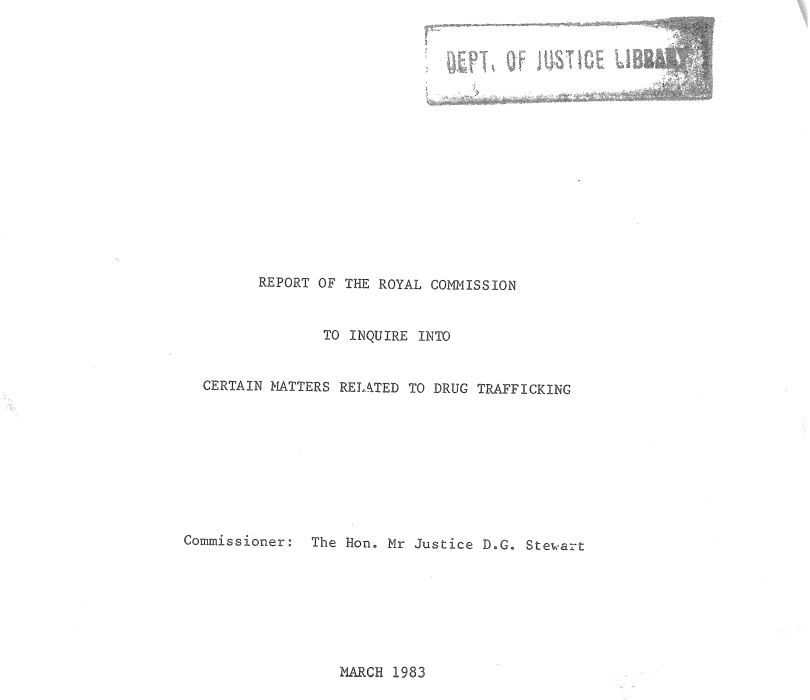
The operation’s Bangkok supplier, Choo Cheng Kui, started by having couriers throw waterproofed bags of contraband off cargo ships into the Auckland harbour, where the syndicate’s founders would retrieve them in speedboats, before the operation grew highly sophisticated.
Speaking to investigator Pat Booth in 1998 by phone Booth staed that he never believed NZ Prime Minister Robert Muldoon had direct knowledge of the syndicate. Yet it is equally valid to note that the well-connected legal partnership eventually asked the syndicate to take its business elsewhere as the heat intensified and exposed the rings existence publicly.
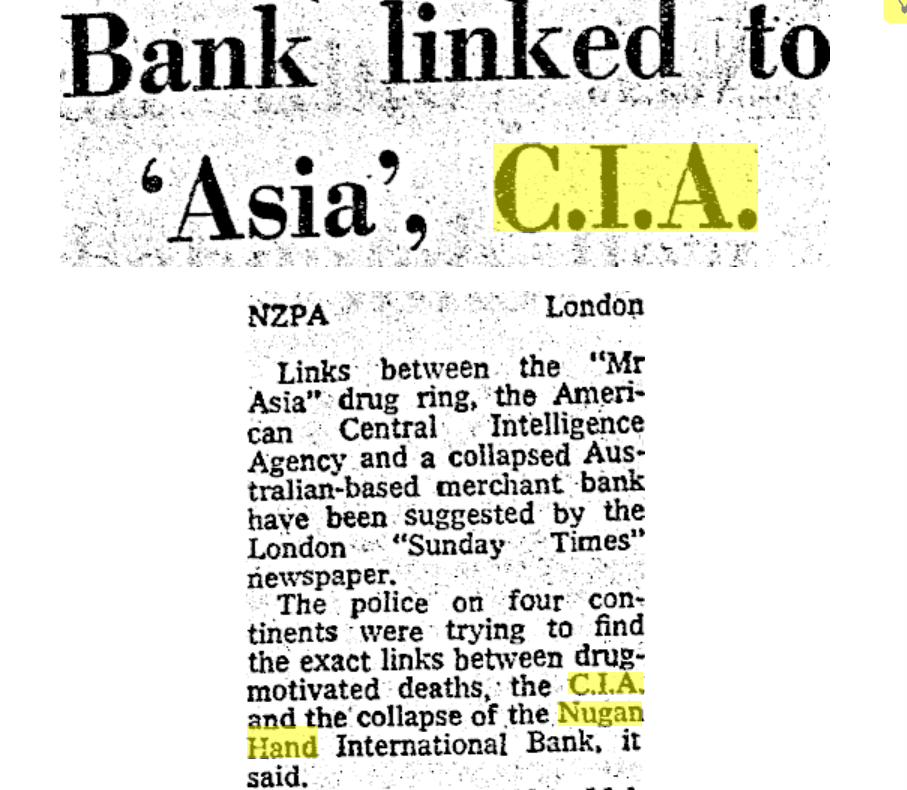
Ultimately, the broader international network would be investigated by at least four independent police services—including those in the USA, Australia, and the UK—alongside multiple intelligence agencies as numerous news article bean to focus on the CIA ties to Mr Asia, the heroin trade and it primary laundering operation the Nugan Hand Bank.
So indirectly Horsch, while inflating his own role, may indeed have had impact on the internal stress Muldoon government was facing in late 1980 when Raymond Horsch arrived in Timaru New Zealand a port town (that connected the nation directly to Sydney Melbourne, Philadelphia and Miami),. that serviced Canterury’s and New Zeland primary industry Dairy farming. And in 1981 it was also the ground zero for hard drug distribution at least within the South Island Gang scene as Gangs like the Road Knights and Devil Henchmen had Timaru their headquarters and began a gang war.
Well, unfold the extract financing of Chemical Technologies shortly. It is sufficient to say for the time being yes Raymond “R.C.” Horsch did in fact associated with prominent New Zealand politician who were intrinsically a part of Muldoon inner ring and with locals involved in New Zealand’s aviation, finance and technology circles.

