
Through the army, traveling as a stranger in a strange land and being the youngest of five I have learned my SOS. For when crisis strikes be it flooding fire or losing your pass port and phone (after taking photos of the sign that says don’t take photos – but that’s another story) the only who will Save Ones Self and your loved one is you.
These are my top 10 low paranoid, highly practical SOS tips for use in any crisis you can name.
1. Don’t Panic it worked for Arthur Dent the space ship traveling hitch hiker. It will work for you. If you panic you reduce circulation and you reduce the ability to think clearly and calmly. So in ANY crisis take a great big breath Don’t rush in but ponder the situation and make sure you have spotted any additional hazard before taking your next steps. And yes having a towel helps too.
2. Have a fixed Civil Defense box and mobile go bag both carefully packed and labeled. These are fundamentally the same but in the case of water food clothing the quantities vary. Your go bag needs to last a minimum of 48 hours per person it’s sustaining. The Civil Defense box should be stocked for two works. Make sure both are rugged and durable.
Content:
A)Water is advised to have at least one gallon per person, per day, for drinking and cleaning.
B) Food: Non-perishable best easy-to-prepare items. Plus manual can opener:
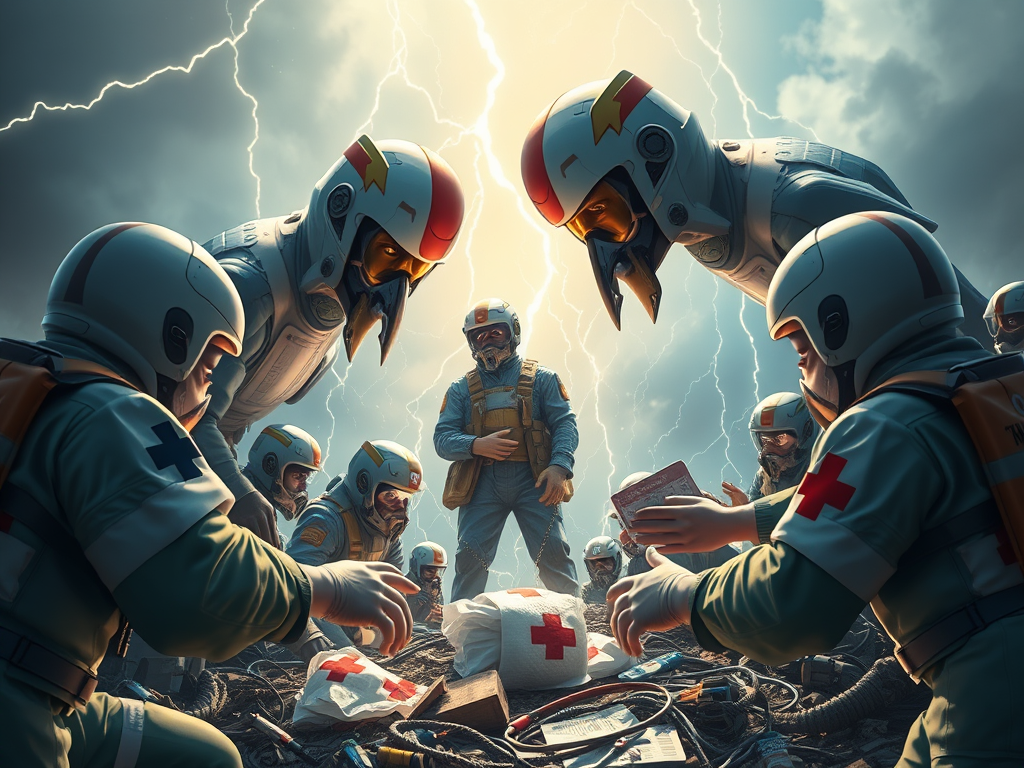
C) First Aid Kit: Including bandages, antiseptic, pain relievers, and any necessary prescription medications blood type and other essential medical data. And here is the biggy of some one who knows first aid. In the Falklands war an estimated 80 percent of lives saved came as a result of soldiers getting timely first aid.
D) Flashlight: Battery-powered or hand-cranked. Extra Batteries: For flashlights and radios. Torches Candle lamp ect all work but don’t forget to include more than one lighter. I favour solar lamps that cost approx 40 dollars at Hammer hardware.
E) Sanitation and Hygiene: Toiletries, hands..,0 sanitizer, and items for maintaining personal hygiene. And yes lippy and or a razor for those who candle any apocalypse as they look good.
F) Clothing Hot water bottles and Blankets: Appropriate to the weather. Remember better to have it and not need it than not have it and then find the weather flips out on you.
G) Other Important Items:Communication Devices: Cell phone, charger, and a portable power bank. Small communities might want to invest in CB walkies talkies but note make sure whatever you buy is legal and understand you get what you buy
H) Copies of Important Documents: Identification, insurance information, passwords, and other essential documents.
I) Cash: In small denominations. Silver coins (50is) work in smaller communities and have the advantage of being inflation proof. But the key is don’t rely on ATM or eftpos often knocked out in flooding or storms
J) Whistle flares and brightly coloured clothing. The cavalry gotta see you
K);Multi-tool: A versatile tool like a Swiss Army knife and duct tape. Lots of duct tape.
L) Local Maps: Again Google Maps goes when the power goes. To help navigate if needed.
M) Personal Items: Glasses, hearing aids, and other items needed for daily living.Pets need their own food, water supplies leash,and other pet stuff for your kitty doggy go bag.
N) Entertainment: Books, cards games, or activities especially for children. Don’t underestimate. Entertained kids are not frightened kids
O) Needle and threadQ) Home work play Zombie Apocalypse with your friends and ask what else would be useful to have in you box go bag. See if you can get to Z.
3. Exit strategy. Be polite be professional have a plan to kill every one in the room says 007. Same thing but swap kill for rescue. A place loved ones know to go to if crisis occurs and normal communication lines are cut .What is the most probable threat for your hood.? And begin preparing for that first.
4. Neighbourhood collective clout – Many hands make light work. Community building CD exercise/ slash team builder ( get out of the bubble). Whose got a chain saw, who has a tractor, how can you support each other. The first line of defense in Civil Defense planning is 5Ps at an individual and community level. Preparation Prevents Piss Poor Performance Individuals and families need to take steps before emergencies including creating emergency plans.
9 out of 10 times the plan that is prepared well will work for most other contingencies. In many cases local groups and volunteer civil defence have already done this for you. But that is no good to you if you haven’t already reached out and found who your local Thunder Birds are. Community panning needs not be boring or tedious, Hold a BBQ and host a party/pot luck and make future proofing groovy and empowering.
5. Assumption is the mother of all donkeys. Don’t assume a potential well known danger to a community is well recognized and proactively prepared for by the authorities ” the mayor is frustrated he is not getting guidance or planning data from Wellington”. A direct quote overheard recently from someone involved in regional planning in South Island district.
If the mayor isn’t getting that data then don’t expect anyone else below them to. Spot a potential problem ask questions and public awareness on a situation until you get a satisfactory answer.
I’mare almost as versatile as a Swiss army knife and the essential first line of defence in any flood. In an ideal world would be provided automatically by councils at a prearranged point. Sorry not an ideal world. Plastic rubbish bags also work well.
7. Hygiene when there something stinky in the neighbour where ya gonna poop. WW2 major killer wasn’t bullets it’s was disease. Crisis bread chaos. Chaos bred bugs so also have gloves, disinfectant, mask ( worn properly not shoved in pockets or around your neck) boil water dig a pit and make sure your poop pot is not near your chow pot. Wah hands boil water. Get a gas bottle and put the door cooker to make this possible. Should will be probably closed in an actual emergency.
8. Hard Copy Preparation A printed copy of your plan including contact data such as New Zealand Civil Defence is 0800 22 22 00. This number connects you to the National Emergency Management Agency (NEMA). However, for local emergencies, it’s often best to contact your local council’s Civil Defence or Emergency Management office directly, or dial 111 for emergency services. But again, my emergency help may not come quickly.
9. If you’re in serious life threatening trouble do what you need to. Don’t worry about the red tape. Better to ask forgiveness than to die. Ruffling bureaucratic feathers last a while. Dead lasts forever. Which is not the same as ignoring authorities or experts warnings or direct orders.
10. Be Realistic Understand when dealing with a crisis or trying to create a threat response plan there are things you can control and you should plan accordingly And there are situations beyond our individual control or resources. Don’t overthink it or over plan it Nothing makes the gods of fortune laugh as someone makes a plan.
#Civil Defence # Community # Threat planning # First Aid # Help your self
 BEN VIDGEN -- The Consulting 'Oartistic' Dyslexic Detective.